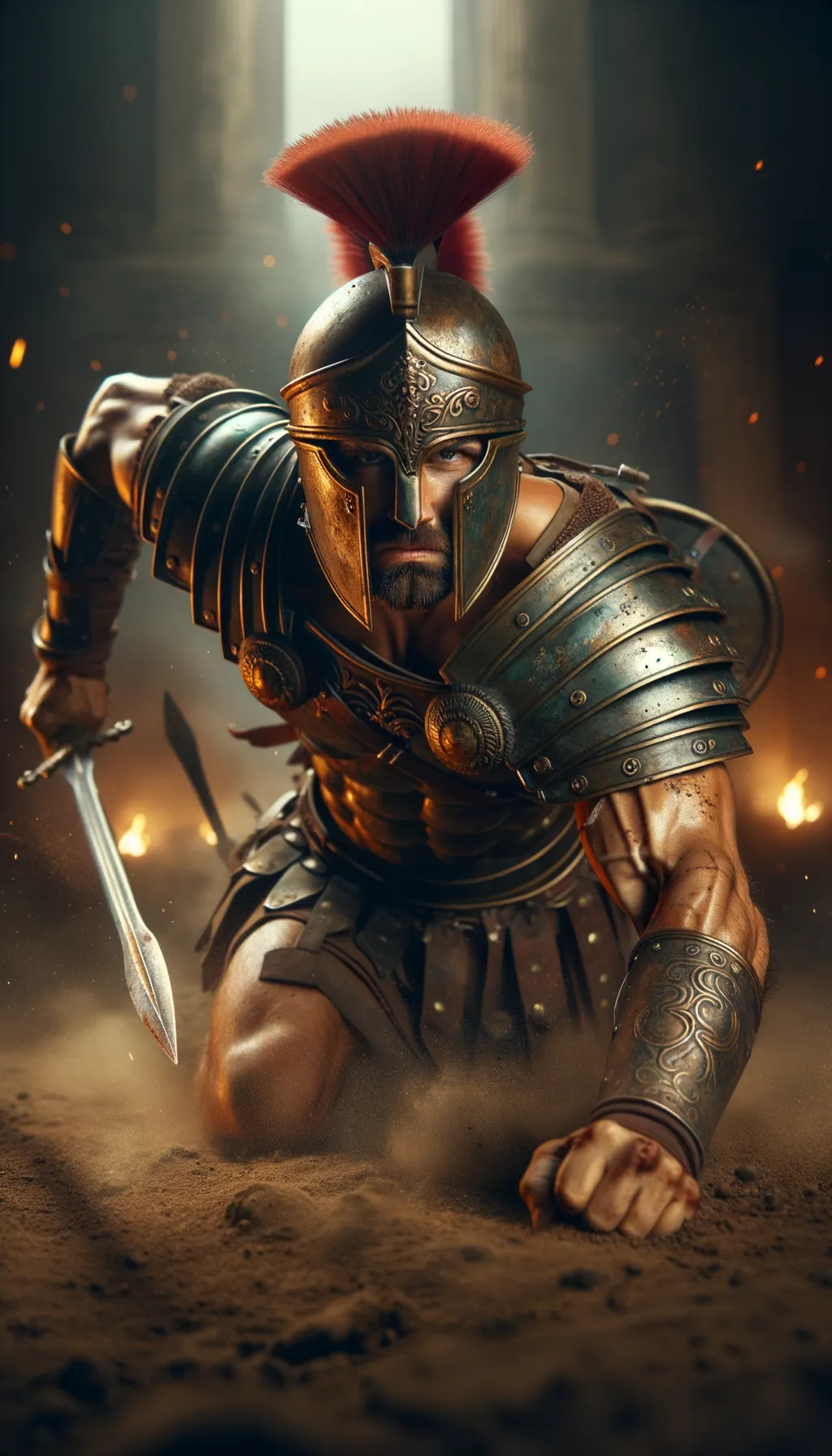
In the vast mosaic of Greek mythology, one figure stands out for its unique role: Aeolus, the god of the winds. This divine character, less well known than deities such as Zeus or Apollo, is nevertheless essential to the ancient conception of the world and the cosmos. In this article, we’ll explore what the myth of the god Aeolus tries to explain, his role in mythology, and his influence on contemporary culture.
Who is the god Aeolus?
The god Aeolus is the king and god of the winds. He was the son of Hippotes and Melanippe, and is credited with fathering six sons and six daughters with his wife Enarete. He is famous for his wisdom and hospitality, as well as for his crucial role in controlling the winds.
He lived on the Aeolian Islands, a group of volcanic islands in the Tyrrhenian Sea, north of Sicily. He is credited with their creation, and his palace was said to be located on one of them, surrounded by a bronze wall.
Aeolus, although less well known than other Greek gods, is a central figure in ancient mythology. His importance is reflected in the numerous myths and legends that mention him, as well as in the persistent influence of these stories on contemporary culture.
The myth of the god Aeolus
The myth of the god Aeolus is based on the ancient beliefs of Greek civilization. As with many myths, it is a combination of natural elements, unexplainable phenomena, and cultural traditions. Although there is no historical evidence to support the existence of Aeolus as a real being, his figure remains alive in literature and art.
It is important to remember that, for the ancient Greeks, myths were a way of explaining the world and its phenomena. The god Aeolus, as controller of the winds, personified the natural forces that humans could not understand or control. In this sense, his figure is a product of human imagination, designed to make sense of the world.
Although the figure of Aeolus is a myth, his influence extends beyond ancient Greek beliefs. Today, he remains a symbol of the winds and the forces of nature, and his myth has left an indelible mark on Western culture and art.
The controller of the winds
Aeolus’s main power was control over the winds. He could summon or calm any wind at will, and was said to keep them locked away in his cave, releasing them only when he considered it necessary. This power gave him a crucial role in navigation, since the winds were essential for sailing.
The ancient Greeks believed that the winds were living beings that Aeolus could control at his command. Depending on his will, he could unleash favorable winds that would help sailors on their journey, or release destructive winds that would cause storms and shipwrecks.
Aeolus’s power over the winds also gave him considerable influence over the weather and the seasons. According to mythology, he could direct the winds to change the weather, and it was said that his control over the north winds allowed him to bring winter.
What does the name Aeolus mean?
The name Aeolus comes from the ancient Greek Αἴολος (Aiolos), meaning “quick” or “changeable.” This name reflects the shifting, volatile nature of the winds he controls. It also conveys the speed with which winds can change direction and strength.
The choice of this name for the god of the winds is no accident. In Greek mythology, names often carry a deep meaning that reveals something about the character or powers of the god in question. In Aeolus’s case, his name underscores his dominion over the ever-changing forces of the wind.
The name can also be interpreted as a metaphor for human nature, which can be just as unpredictable and changeable as the wind. In this way, the name Aeolus serves as a reminder of the volatility of the natural world and the human condition.
How does Aeolus control the wind?
According to Greek mythology, Aeolus controlled the winds by keeping them locked away in his cave. When the gods or other mythological characters needed the winds for some purpose, Aeolus would open the cave and release the winds in question.
This control over the winds was not arbitrary; it was governed by the laws and rules of the gods. Aeolus could not release the winds at will, but had to follow the instructions of the higher gods. For example, in the Odyssey, when Odysseus (Ulysses in the Latin translation) visits Aeolus, he can only release favorable winds by following the orders of Zeus.
Where did Aeolus keep the winds locked up?
As mentioned, Aeolus kept the winds locked away in his cave, located on the Aeolian Islands. This cave, also known as the “bag of winds,” was a mysterious and powerful place where the winds were controlled and contained.
The cave functioned as a kind of prison for the winds, which were only released when Aeolus ordered it. Each of the winds was assigned to a specific corner of the cave.
The idea of the cave as the place where Aeolus locks away the winds is highly suggestive. It represents Aeolus’s power over the forces of nature and his ability to control something as uncontrollable as the wind. The cave also serves as a metaphor for order and organization within the chaos and unpredictability of nature.
What happened to Aeolus in the Odyssey?
Aeolus appears in Homer’s Odyssey, where he plays a crucial role in Odysseus’s journey. After escaping the cyclops Polyphemus, Odysseus and his men arrive at Aeolus’s island. He receives them warmly and provides them with lodging and food for a month.
At the end of their stay, as Odysseus and his men prepare to leave, Aeolus gives them a gift: an oxhide bag in which he has sealed all the winds except the west wind, which will blow in favor of the Greeks and carry them home.
However, the story takes a tragic turn when Odysseus’s men, thinking the bag contains gold and silver, open it while Odysseus sleeps. The winds escape in fury and push the ship back to Aeolus’s island. Aeolus, angered by the recklessness of Odysseus’s men, refuses to help them again and expels them from his island.
How many children did Aeolus have?
Aeolus married Enarete, and together they had numerous sons and daughters. According to Greek mythology, Aeolus had a total of twelve children, who were known as the Aeolids and played important roles in various Greek stories and myths. Among them were figures such as Sisyphus, founder of Corinth; Athamas, king of Orchomenus; and Cretheus, king of Aeolis.
These children are often associated with specific winds, for example, Boreas (the north wind), Notus (the south wind), Eurus (the east wind), and Zephyrus (the west wind). In this sense, Aeolus’s offspring can be seen as a personification of the different winds and compass directions.
Myth versus modern science
In antiquity, myths like that of Aeolus were a way of explaining natural phenomena that people did not understand. Winds, in particular, were unpredictable and invisible, and were therefore perceived as divine or supernatural.
Today, modern science has provided more detailed and precise explanations for these phenomena. Wind patterns are now understood in terms of differences in atmospheric pressure and the rotation of the earth, among other factors.
Nevertheless, the myth of Aeolus still retains its cultural and literary value. It offers a narrative and symbolic framework for exploring themes such as power, responsibility, and the consequences of defying the gods or nature.
The myth’s influence on contemporary culture
Despite its antiquity, the myth of the god Aeolus continues to influence contemporary culture. His name has become synonymous with wind, and is used in various disciplines, including meteorology, to refer to wind-related phenomena.
In literature, Aeolus has appeared in works such as Homer’s “Odyssey,” Ovid’s “Metamorphoses,” and Dante’s “Divine Comedy.” His story has also been adapted in numerous films, television programs, and video games.
He has also influenced the field of music. There is a musical instrument called the “aeolina” named in his honor, and his name has been used as the title of several musical pieces. He even appears in art, in paintings and sculptures, often depicted as a mature man holding a bag of winds.
Myths related to Aeolus: the four winds
One of the most fascinating myths related to Aeolus is that of the four winds. Aeolus’s children are believed to represent the four main winds: Boreas, the north wind; Notus, the south wind; Eurus, the east wind; and Zephyrus, the west wind.
These winds are not merely elements of nature, but also personifications with their own personalities and narratives. For example, Boreas is a harsh, violent wind, while Zephyrus is seen as a gentle, benign wind.
These wind myths provide a rich mythology that explains and personifies the winds from a human perspective, giving a face and a story to the invisible and often unexplainable elements of nature.

Subscribe
If you want to receive in your mailbox stories, curiosities and legends of the most fascinating creatures of classical mythology just fill in this form.
Continue reading
If you liked this article, you like mythology. And in this case, we have much more to offer you. Discover new adventures, heroes, nymphs, gods, battles, teachings… Just click on the button.

The Mythical Hippocrene Spring
Greek mythology is full of stories in which the divine and the natural intertwine in ways that continue to amaze entire generations. Some of these stories tell of sacred mountains, celestial creatures, or springs that not only quench thirst but awaken dormant talents....
Short Greek Myths for Children
Short Greek myths for children are an excellent way to introduce little ones to this wonderful world full of gods, heroes, and fantastic creatures. These stories not only entertain, but also convey values and lessons and spark curiosity about ancient culture. In this...
Ino, the Goddess of the Sea
Immersed in the rich tapestry of Greek mythology, we find Ino, a mysterious figure who represents both human tragedy and the divinity of the sea. This complex and intriguing figure plays a fundamental role in numerous ancient legends and myths, and remains relevant in...
The Myth of Chrysippus
Greek mythology is a rich tapestry of heroes, gods, and monsters that have fascinated humanity for thousands of years. However, some characters who, though less well known, play a crucial role in these ancient stories are often overlooked. One such character is...

Erebus, the God of Shadow
Erebus, a mysterious and enigmatic figure in Greek mythology, has fascinated historians, archaeologists, and mythology enthusiasts for centuries. His role in the Greek cosmos, his relationship with other gods and goddesses, and his lasting influence on contemporary...
Phobos, the God of Fear
In the vast annals of Greek mythology, where gods and goddesses, heroes, and monsters intertwine in a dance of legends and myths, we find Phobos, a peculiar and often overlooked figure. Less well known than Zeus or Hercules, Phobos nevertheless offers a fascinating...
Deimos, the God of Terror
If we venture into the fascinating universe of Greek mythology, we find Deimos, one of the least explored deities but with undeniable relevance. Deimos, whose name means "dread," is an enigmatic god linked to the darkest and most frightening aspects of human...
Tiresias, the Blind Prophet
One of the most intriguing and multifaceted characters in Greek mythology is Tiresias, the blind prophet of Thebes. This seer, who spent seven years as a woman before becoming a man again, plays a fundamental role in several literary works, including tragedies by...
The Sacrifice of Iphigenia
Greek mythology is full of heroes, gods, and complex characters, each with their own stories and lessons. One of these figures, perhaps somewhat less well known, is Iphigenia, the unfortunate daughter of Agamemnon and Clytemnestra. Although her story is tragic, her...
mitologiaclasica.com is a website dedicated to explore and spread the fascinating richness of mythology, offering a vast compendium of stories, characters and legends.
Explore
Greek Mythology
Roman Mythology
Norse Mythology
Egyptian Mythology
Hindu Mythology
Chinese Mythology
Japanese Mythology
Celtic Mythology
Privacy Policy
Privacy Policy
Copyright mitologiaclasica.com