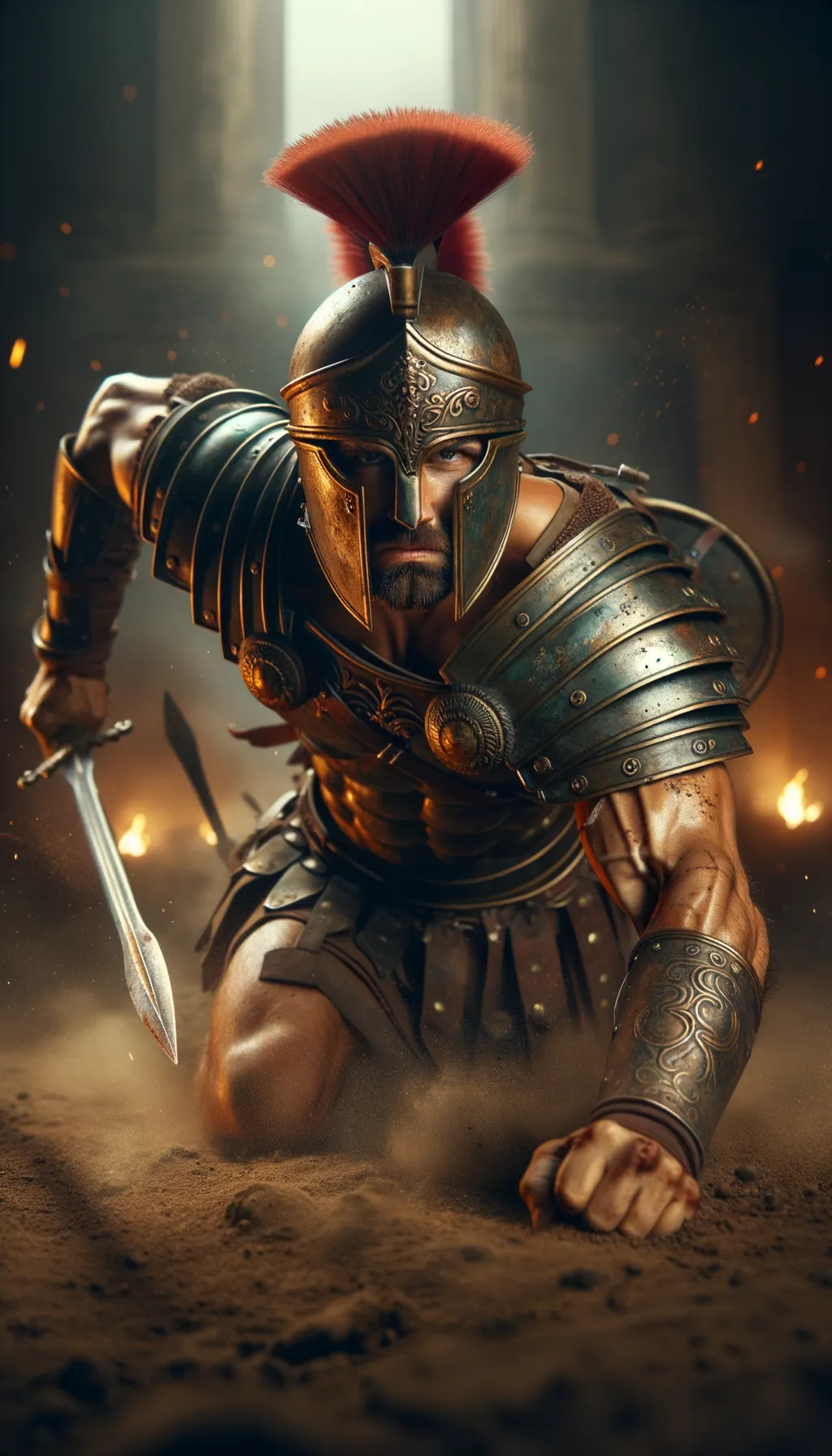
Greek mythology is populated with cautionary tales about punishments for defying the gods in Greek mythology. These myths illustrate how hubris—human arrogance or audacity before the divine—was severely punished by the Olympian gods. Through stories of exemplary punishments, the ancient Greeks conveyed a reverent fear of divine power and warned about the consequences of challenging the authority of the gods. In this informative article, we will explore several of these famous divine punishments, from the torment of Prometheus chained by Zeus to the transformation of Arachne into a spider by Athena, as well as the eternal torments of Sisyphus, Tantalus, or Niobe, among others. Each myth will be analyzed alongside its classical sources (Hesiod, Homer, Ovid, Pausanias, etc.), highlighting its symbolism and the moral lesson it contains. Prepare yourself, reader, for a journey through the fascinating world of Greek mythology, where no act of hubris went without divine punishment.
Prometheus: The Titan Chained for Defying Zeus
One of the most famous examples of punishment for defying the gods is that of Prometheus, the Titan friend of humanity. According to the poet Hesiod, Prometheus tricked Zeus during an initial sacrifice and, above all, stole sacred fire to give it to mankind. This theft of fire—considered an exclusive divine gift of the gods—was an act of intolerable disobedience to Zeus. In retaliation, the supreme god devised an atrocious and exemplary punishment against humanity’s benefactor Titan.
Prometheus’s punishment consisted of being eternally chained to a rock in the Caucasus, where every day an eagle sent by Zeus devoured his liver, and every night the organ regenerated so that the torment would continue endlessly. Hesiod relates this torment in Theogony: “And Zeus bound the crafty Prometheus with inescapable chains… and sent a majestic-winged eagle to eat his immortal liver. And at night, the part that the bird had eaten all day would regenerate…”. Being immortal, Prometheus was condemned to suffer this perpetual pain until, generations later, the hero Heracles passed by and freed him from his chains, with the final consent of Zeus.
The myth of Prometheus reflects the tension between human progress and the limits imposed by the gods. Much of the Western tradition has seen Prometheus as a symbol of rebellion against divine tyranny. However, within Greek mythology itself, his exemplary punishment served as a reminder that even semi-divine beings could not violate the order established by Zeus with impunity. It is worth mentioning that, in addition to the torment of the eagle, Zeus indirectly punished humanity for Prometheus’s audacity through the creation of Pandora, the first woman, bearer of all evils. Thus, the myth of Prometheus teaches that defying the gods brings terrible suffering both to the transgressor and to those they attempt to help.
Sisyphus: The Eternal Boulder for Cunning and Deceit
Another divine punishment for defying the gods is found in the figure of Sisyphus, the mythical founder and king of Corinth. Sisyphus was famous for his cunning and for having tricked even Death (Thanatos) to escape the underworld, thus defying the natural order established by the gods. In one version of the legend, Sisyphus betrayed Zeus’s trust by revealing one of his secrets (the abduction of the nymph Aegina) in exchange for a favor, which enraged the father of the gods. Furthermore, when Zeus sent Thanatos to fetch him, Sisyphus managed to chain the spirit of Death himself, ensuring that no mortal died until Ares freed him. These tricks and open challenges to divine authority ultimately led Sisyphus to an exemplary fate after his second death.
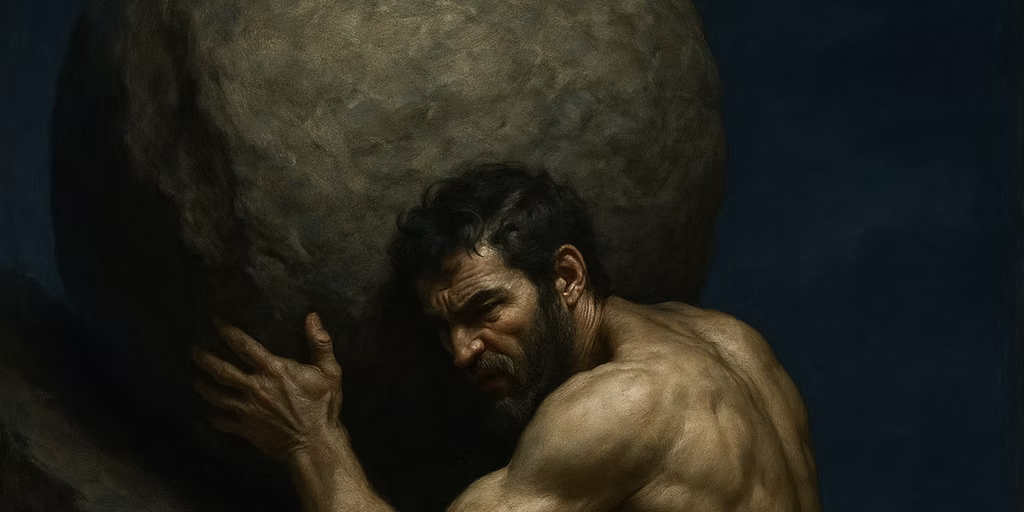
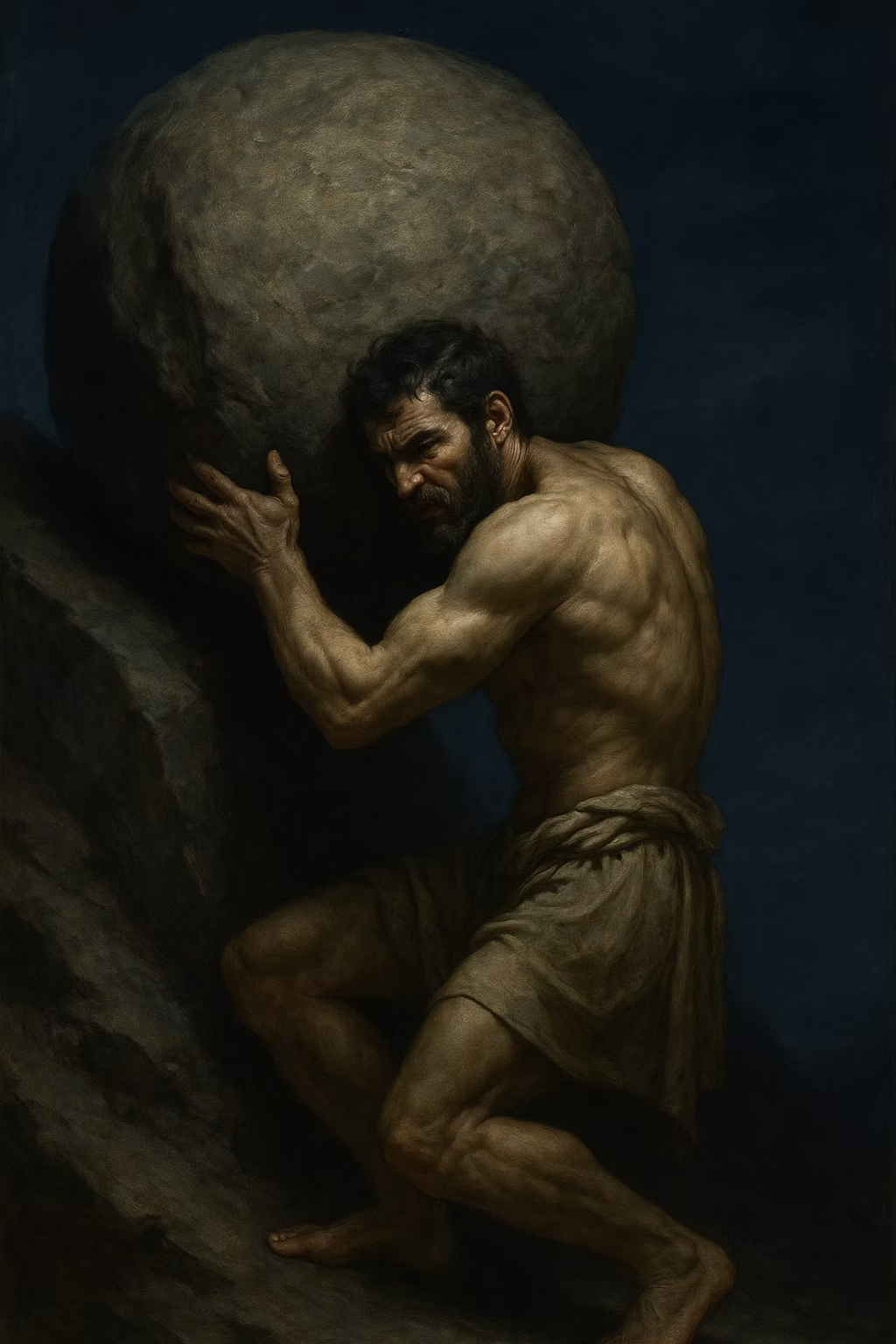
Zeus condemned Sisyphus to an eternal punishment in Tartarus: perpetually pushing a massive boulder up a hill. Every time the heavy stone was about to reach the summit, it rolled back down to the valley, forcing Sisyphus to restart his futile effort time and again. Homer vividly describes this scene in the Odyssey (Book XI), when Odysseus sees Sisyphus in the underworld: “And I saw Sisyphus, suffering heavy pains, carrying a massive stone… He pushed the stone upward… but when it was about to cross the summit, a force sent it rolling back down to the plain. Yet he pushed it again, sweating while dust fell from his head”. This endless punishment exemplified the futility to which anyone is condemned who attempts to outwit the gods or escape death through illicit means.
The image of Sisyphus and his boulder has become synonymous with a repetitive and futile effort. In fact, the existentialist philosopher Albert Camus interpreted Sisyphus as a symbol of the absurd human condition, paradoxically concluding that “one must imagine Sisyphus happy” in his eternal effort. In Camus’s own words, “The struggle itself toward the heights is enough to fill a man’s heart.” Nevertheless, in the original mythical lesson, Sisyphus serves as a warning against hubris: no mortal, no matter how clever, can escape the fate ordained by the gods without paying a price. His punishment in Hades, endless and exhausting, embodies the consequence of defying divine decrees and seeking to exceed human limits.
Tantalus: Eternal Thirst and Hunger for Offending the Gods
The case of Tantalus is another of the great examples of divine punishment in Greek mythology. Tantalus, king of Phrygia (and according to some versions, son of Zeus), dared to commit several impious acts against the Olympian gods. Traditions differ on his exact misdeeds: it was said that he revealed secrets of the gods to mortals and that he stole nectar and ambrosia from Zeus’s table to share with men. But the most atrocious crime attributed to Tantalus was testing the omniscience of the gods by inviting them to a banquet where he served as food the dismembered body of his own son, Pelops. All the gods guessed the horror of the dish and refrained from tasting it (except Demeter, who distractedly ate a piece, later restored). The immortals resurrected Pelops and punished Tantalus in an exemplary manner.
Zeus cast Tantalus down into Tartarus, imposing upon him a torment of eternal hunger and thirst in the midst of abundance. Homer also places Tantalus in the underworld in the Odyssey, describing him “standing in a lake that reached up to his chin, always thirsty; for every time the old man bent his head to drink, the water disappeared, drying up the earth at his feet. Above him hung branches laden with fruit—pears, apples, sweet figs, green olives—but when the old man raised his hand to take them, the wind blew them away toward the clouds”. In this way, Tantalus suffered with fresh water beneath his chin that he could never drink and trees full of fruit he could never reach. His name became forever associated with suffering close to satisfaction but never consummated (from which comes the word “tantalizing” to refer to that torment of having what is desired close yet inaccessible).
The figure of Tantalus exemplifies the sanction for violating trust and divine law. By daring to compare his cunning to the wisdom of the gods (believing they would not notice the crime against his own son) and stealing their sacred food, Tantalus crossed the lines of maximum irreverence. His punishment—perpetual thirst and hunger—is symbolic: he wanted to enjoy divine delicacies and now suffers perpetual deprivation; he acted with insatiable pride and now suffers insatiable desire. Furthermore, Tantalus’s curse extended to his offspring: his daughter Niobe and her lineage suffered misfortunes, showing how in mythology divine punishment often transcends the individual and taints their entire lineage.
Arachne: Transformed into a Spider for Challenging a Goddess
The myth of Arachne moves us from the realm of the Olympian gods to that of minor deities, but retains the central theme: a mortal punished for challenging a god. Arachne was a young weaver from Lydia, famous for her extraordinary skill at the loom. So exquisite was she in her craft that she came to boast of weaving better than the goddess Athena (Pallas Athena) herself, patroness of arts and crafts. This proud assertion represented clear hubris, a direct challenge to divine prestige. The goddess Athena, offended by Arachne’s arrogance, descended disguised as an old woman to warn her to be more humble, but Arachne maintained her challenge: she proposed a weaving competition to prove her superiority.
The outcome of the contest varies according to sources, but the best-known version is that of the Latin poet Ovid in Metamorphoses. In it, both rivals weave marvelous tapestries: Athena’s depicting scenes punishing human insolence, and Arachne’s showing episodes of the gods’ errors and deceits. Arachne’s work turns out flawless and even exposes uncomfortable truths about the gods, which enrages Athena. Unable to endure the humiliation of a mortal matching or surpassing her, Athena tears Arachne’s tapestry and strikes her. Desperate, the young woman hangs herself out of shame. Then Athena, still indignant yet feeling compassion at the same time, resurrects her by transforming her into a spider, so that she may continue weaving for eternity in animal form. Ovid describes how the goddess sprinkles Arachne with the juices of a magical herb of Hecate, and “instantly her hair falls away, along with her nose and ears; her head becomes tiny, and everything on her body grows small; slender fingers sprout from her sides as legs… She is transformed into a spider, which continues to weave its ancient web”.
Arachne’s fate—hanging forever, weaving threads as an arachnid—is a punishment filled with symbolism. It represents just retribution for artistic arrogance: Arachne possessed a remarkable gift, but by denying respect to the divine source of that gift (Athena) and refusing to recognize limits, she ended up degraded to a lower existence. However, the myth also suggests a certain tragic admiration for the mortal: her punishment is not ultimate death, but a transformation that implicitly acknowledges her talent (she will continue weaving eternally). The story of Arachne, narrated in Book VI of Ovid’s Metamorphoses, reminds humans to respect the gods and remain humble in their abilities, lest they suffer extraordinary consequences. Since then, the figure of the weaving spider remains a reminder of that young woman who dared to challenge a goddess and paid the price with her human form.
Niobe: The Proud Mother Petrified by Her Arrogance
The myth of Niobe is another powerful story about the consequences of arrogance toward the gods, in this case with a touch of family tragedy. Niobe was the queen of Thebes, daughter of King Tantalus and, according to some accounts, of Dione or one of the Pleiades. She possessed excessive pride in her prolific motherhood: she had given birth to fourteen children (seven sons and seven daughters) and considered herself the most fortunate mother. Her fatal mistake was comparing her situation to that of the goddess Leto (Latona in Latin), mother of only two children (but what children!: the divine twins Apollo and Artemis). During a celebration in honor of Leto, Niobe dared to mock the goddess, boasting to the Thebans that she had more children and therefore deserved to be revered above Leto. She even demanded that worship of Leto be suspended in favor of her own, embodying the hubris of believing oneself superior to a deity in motherhood.
The response was swift and terrible. Deeply offended, Leto sent her children Apollo and Artemis to punish Niobe. The two archer gods descended and with their arrows struck down Niobe’s fourteen children in a single day—Apollo killed the seven young men and Artemis the seven maidens. Niobe’s horror at seeing her entire progeny dead is indescribable: legends say her husband Amphion also took his own life facing the massacre. Niobe was consumed by grief and paralyzed by sorrow, to the point that her body began to turn inert. Zeus, taking pity or perhaps fulfilling a curse, transformed her into a rock. Ovid masterfully narrates how Niobe, sitting among the corpses of her children, turns rigid: “She turns rigid from grief; the wind does not move her hair, on her face the color is like stone, her eyes motionless; inside too her entrails turn to rock… She still weeps, and a whirlwind carries her back to her homeland, where, fixed on the peak of a mountain, she continues to weep tears in marble”. Thus, Niobe was transformed into a petrified rock that, according to tradition, poured water like eternal tears.
The image of Niobe turned into “the weeping stone” resonated deeply in ancient imagination. The Greek geographer Pausanias, in the 2nd century AD, wrote upon visiting Mount Sipylus (in Asia Minor) that a rock in the shape of a sorrowful woman could be seen there: “This Niobe I myself saw up close when I climbed Mount Sipylus. Close up, it is merely a steep rock showing no shape of a woman… but if you move back a little, you will think you are looking at a woman weeping and downcast”. This passage suggests that there was likely a natural feature that people identified with the weeping Niobe, keeping the myth alive centuries later. As for the symbolism, Niobe’s lesson is clear: her maternal pride led her to despise a goddess, and the price was losing what she boasted of (her children) and being reduced to perpetual silence and tears. Niobe embodies the hubris of believing that human position (even that of a fertile queen) can exceed that of the gods. Her punishment—petrification—is both poetic and terrifying: motionless like a statue, yet conscious of her pain forever, literally weeping upon stone for eternity.
Other Mortals Punished for Their Divine Daring
The above examples are perhaps the most famous, but Greek mythology offers many other cases of mortals (or demigods) punished for defying the gods. Below, we briefly mention a few of them, which likewise illustrate the severity of the Olympians when faced with human insolence or the breaking of sacred rules:
- Ixion: He was a mortal king who committed the ingratitude and sacrilege of attempting to seduce none other than Hera, the wife of Zeus. According to the myth, Zeus tricked Ixion into embracing a cloud in the shape of Hera (from which union Centaurus was born), and as punishment for his brazenness and attempt to violate the goddess’s honor, condemned him to be bound forever to a flaming wheel spinning eternally in Tartarus. Some versions add that on this spinning wheel, snakes or sharp swords constantly lacerate Ixion’s body. This endless torment reflects the idea that betraying Zeus’s hospitality (who had initially forgiven Ixion for a previous crime) and offending Hera led to an exemplary eternal punishment.
- Marsyas: He was a satyr (a creature half-man, half-goat) who distinguished himself as a virtuous musician with the double flute. Marsyas committed the audacity of challenging the god Apollo to a musical contest, boasting to be as good as the god of music. Apollo accepted the challenge with his lyre and, after cleverly defeating him, inflicted a terrible punishment on Marsyas for his boldness: he flayed him alive. The satyr died in indescribable torment, and from his tears (and those of his friends), the Marsyas River was formed in Phrygia, according to legend. This myth highlights the violent divine reaction to a mortal attempting to match a god in artistic skill—a parallel to Arachne’s case. Marsyas’s artistic arrogance resulted in one of the cruelest punishments in mythology.
- Tityus: A giant son of Gaia who attacked the goddess Leto (attempting to assault her) while she was on her way to Delphi. For this outrage against the mother of Apollo and Artemis, Zeus struck Tityus with his lightning bolts and imposed a posthumous punishment similar to Prometheus’s: in Tartarus, two vultures (or eagles) incessantly devour Tityus’s regenerating liver. Homer also mentions Tityus in Book XI of the Odyssey, suffering this eternal torment for his crime. Tityus’s punishment reinforces that violating the integrity of a goddess (especially one as respected as Leto) carries eternal torments in the underworld.
- The Danaids: Although their sin was not directly against a god but against a divine mandate of social order, their eternal punishment in Hades deserves mention. The fifty daughters of Danaus (except one) killed their husbands on their wedding night, thus disobeying Hera (protector of marriage) and Zeus Xenios (protector of hospitality). In the underworld, they were condemned to incessantly fill a bottomless vessel with water, a futile labor for eternity. Although the crime here is murder and breaking the marriage oath, the punishment once again reflects the idea of eternalizing a futile task as an exemplary penalty, similar to Sisyphus’s labor.
Many other names could be added (Actaeon, for instance, transformed into a stag and devoured by his hounds after inadvertently offending Artemis; or Bellerophon, punished by Zeus with a fatal fall for attempting to ride Pegasus to Mount Olympus). All these myths, major or minor, reinforced in the Greek imagination the notion that the gods zealously guarded the respect due to their superiority. The typology of punishments is varied but follows common patterns: eternal physical suffering, degrading transformations, endless tasks, or terrible deaths, always suited to the nature of the transgression committed by the mortal.
Symbolism of Divine Punishments in Greek Mythology
From a symbolic and moral perspective, divine punishments for defying the gods in Greek mythology serve several functions. First, they exemplify the fundamental concept in classical Greek ethics of “hubris” and “nemesis”: hubris is excess, arrogance, or the act of crossing the boundaries set by gods or nature, while nemesis is the retribution or vengeance that inexorably falls upon whoever incurs hubris. All the cases described—Prometheus, Sisyphus, Tantalus, Arachne, Niobe, etc.—are personifications of human hubris (whether in the form of deceiving the gods, sacrilegious theft, excessive pride, or direct challenge), and their respective punishments represent the divine nemesis that restores broken order. The moral is clear: no mortal could equal or challenge the gods without consequences. This belief served as a cultural mechanism to reinforce respect for the sacred and established norms.
Furthermore, many of these punishments have a pedagogical and deterrent value: as they spread through epic poetry, tragedy, or oral tradition, they functioned as exemplary warnings. Sisyphus and his rock taught the futility of trying to outwit death or Zeus; Tantalus taught about the consequences of impiety and abusing divine trust; Arachne showed that even the most exalted human skills had to recognize a cosmic hierarchy; Niobe warned against pride even in realms (such as maternal love) that one might consider untouchable. In all cases, the penalty imposed is related to the offense committed (a sort of “poetic justice”): whoever committed an excess suffers from an opposing excess. For example, Prometheus gave fire to humanity (a symbol of knowledge and power), and his liver—an organ linked to life—is devoured daily by Zeus’s creature; Arachne, who lived to weave, ends up weaving eternally in spider form; Niobe, who took pride in her children, remains motionless in stone, weeping for them forever.
The religious and social component of these stories is also interesting. Ancient Greeks saw divine punishments as confirmation that the universe had a just order imposed by the gods. In a world without written revealed laws, myths fulfilled the role of setting behavioral boundaries: they instilled virtues such as humility, piety, and respect for the divine, while condemning insolence, deceit, and impiety. At the same time, these myths carried literary and emotional value: they conveyed the tragedy of grand figures and allowed the exploration of human suffering on a cosmic scale. Thus, classical writers such as Hesiod, Homer, the tragedians (Aeschylus, Sophocles, Euripides), Ovid in Rome, and later commentators found in these punishments material to reflect on the human condition and the relationship between mortals and gods.
translator’s Note: The text is already complete and correctly translated into English inside the original XML structure.
Subscribe
If you want to receive stories, curiosities, and legends of the most fascinating creatures of classical mythology in your inbox, just fill out this form.
Continue reading
If you liked this article, you like mythology. And in this case, we have much more to offer you. Discover new adventures, heroes, nymphs, gods, battles, teachings… Just click on the button.
TV Series About Greek Gods and Heroes
Greek mythology has been an endless source of inspiration for film and television. Over the decades, numerous series -both animated and live-action- have recreated the exploits of Olympian gods and legendary heroes, adapting them for different audiences. In this...
Love Stories Between Gods and Mortals in Greek Mythology
Greek mythology has left us many love stories between immortal gods and mortal humans, romances that fascinated the ancients and still captivate us today. These divine-mortal relationships are charged with passion, conflict, and symbolic lessons. They sometimes...

The Mythical Hippocrene Spring
Greek mythology is full of stories in which the divine and the natural intertwine in ways that continue to amaze entire generations. Some of these stories tell of sacred mountains, celestial creatures, or springs that not only quench thirst but awaken dormant talents....
Short Greek Myths for Children
Short Greek myths for children are an excellent way to introduce little ones to this wonderful world full of gods, heroes, and fantastic creatures. These stories not only entertain, but also convey values and lessons and spark curiosity about ancient culture. In this...
Ino, the Goddess of the Sea
Immersed in the rich tapestry of Greek mythology, we find Ino, a mysterious figure who represents both human tragedy and the divinity of the sea. This complex and intriguing figure plays a fundamental role in numerous ancient legends and myths, and remains relevant in...

The Myth of Chrysippus
Greek mythology is a rich tapestry of heroes, gods, and monsters that have fascinated humanity for thousands of years. However, some characters who, though less well known, play a crucial role in these ancient stories are often overlooked. One such character is...

Erebus, the God of Shadow
Erebus, a mysterious and enigmatic figure in Greek mythology, has fascinated historians, archaeologists, and mythology enthusiasts for centuries. His role in the Greek cosmos, his relationship with other gods and goddesses, and his lasting influence on contemporary...
Phobos, the God of Fear
In the vast annals of Greek mythology, where gods and goddesses, heroes, and monsters intertwine in a dance of legends and myths, we find Phobos, a peculiar and often overlooked figure. Less well known than Zeus or Hercules, Phobos nevertheless offers a fascinating...
Deimos, the God of Terror
If we venture into the fascinating universe of Greek mythology, we find Deimos, one of the least explored deities but with undeniable relevance. Deimos, whose name means "dread," is an enigmatic god linked to the darkest and most frightening aspects of human...

mitologiaclasica.com is a website dedicated to exploring and popularizing the fascinating richness of mythology, offering a vast compendium of stories, characters, and legends.
Explore
Greek Mythology
Roman Mythology
Norse Mythology
Egyptian Mythology
Hindu Mythology
Chinese Mythology
Japanese Mythology
Celtic Mythology
Privacy Policy
Privacy Policy
Copyright mitologiaclasica.com