Short Greek myths for children are an excellent way to introduce little ones to this wonderful world full of gods, heroes, and fantastic creatures. These stories not only entertain, but also convey values and lessons and spark curiosity about ancient culture. In this article, we’ll go through some of the most beautiful mythological tales adapted especially for children, discovering why they remain so relevant today.
Why Share Short Greek Myths with Children?
Short Greek myths for children have immeasurable educational value. These ancient stories, born to explain natural phenomena and human behavior, continue to fascinate young readers with their ability to transport them to a world where anything is possible. Through these tales, children develop their imagination, learn life lessons, and become familiar with cultural concepts that will be useful to them throughout their lives.
These mythological stories also foster a love of reading, enrich vocabulary, and help children understand that we are part of a cultural tradition shared by many Mediterranean peoples. Short Greek myths for children are, in short, a window into our common cultural heritage.
Short Greek Myths for Children: A Special Selection
The Myth of Echo and Narcissus: The Consequences of Vanity
This beautiful story teaches us about the terrible consequences of vanity. Narcissus was an extremely handsome but very proud young man. He rejected everyone who fell in love with him, including the nymph Echo, who had been punished by Hera and could only repeat the last words she heard. One day, Narcissus saw his reflection in a pond and fell so in love with his own image that he could not tear himself away, until he finally transformed into the flower that bears his name. Meanwhile, heartbroken Echo faded away until only her voice remained.
The myth of Echo and Narcissus teaches children the importance of humility and the dangers of excessive self-love, a valuable lesson delivered through a fascinating tale.
Demeter and Kore: A Mother’s Love
This moving myth shows us what a mother’s love can achieve. Kore, the beautiful daughter of Demeter (goddess of agriculture), was abducted by Hades, god of the underworld. Desperate, Demeter searched for her daughter everywhere, and in her sorrow, she caused the crops to stop growing.
Finally, Zeus intervened, and an agreement was reached: Kore (now called Persephone) would spend part of the year with her mother and part with Hades. This arrangement explains the seasons: when Persephone is with her mother, the earth blooms (spring and summer); when she returns to the underworld, the cold arrives (autumn and winter).
This short Greek myth for children teaches about the cycles of nature and the power of a mother’s love.
King Midas and the Golden Touch
The tale of King Midas shows us that valuing material things above all else can bring unexpected consequences. After helping Silenus, a friend of the god Dionysus, King Midas was granted a wish as a reward. He asked that everything he touched turn to gold. At first, he was delighted with his new power, but he soon discovered its dark side when his food and drink turned to gold, and he even accidentally turned his daughter into a golden statue.
Regretful, he begged Dionysus to take the gift away. The god told him to bathe in the Pactolus River to free himself from the spell.
This myth teaches children that true happiness does not come from riches, but from appreciating what truly matters in life.
Icarus and the Flight Toward the Sun
This fascinating myth tells the story of Daedalus, a brilliant inventor, and his son Icarus. Both were imprisoned in a labyrinth that Daedalus himself had built for King Minos. To escape, Daedalus built wings of feathers and wax for himself and his son.
Before flying, Daedalus warned Icarus not to fly too low, near the sea, or too high, near the sun. However, intoxicated by the thrill of flying, Icarus ignored his father’s advice and flew higher and higher. The sun’s heat melted the wax on his wings, and the young man fell into the sea.
The Greek myth of Icarus and Daedalus teaches about the dangers of recklessness and the importance of listening to the advice of those with more experience.
Arachne and Athena: A Lesson in Humility
Arachne was a young weaver of extraordinary talent who boasted of being better than Athena herself, goddess of wisdom and patron of the arts. Annoyed by her arrogance, Athena challenged her to a weaving contest. Although Arachne created a marvelous work, in it she mocked the gods.
Furious, Athena destroyed the tapestry and struck Arachne, who tried to hang herself out of shame. Athena then transformed her into a spider, condemning her to weave for all eternity.
This myth shows children that arrogance and excessive pride can have serious consequences.
The Origin of Medusa: Transformation and Punishment
Medusa was not always a monster with snakes for hair. Originally, she was a beautiful young woman who served as a priestess in Athena’s temple. Her beauty caught Poseidon’s attention, which stirred Athena’s jealousy. After Poseidon forced himself on Medusa, Athena punished her by transforming her into a horrifying being with snakes instead of hair and the power to turn to stone anyone who looked into her eyes.
This myth, appropriately adapted for children, can teach them about injustice and how appearances can sometimes be deceiving.
The Myrmidons: The Ant Men
This fascinating story tells how King Aeacus lost all his subjects to a plague sent by the goddess Hera. In despair, Aeacus begged Zeus to repopulate his island. In a dream, he saw ants falling from a sacred tree and then transforming into men.
Upon waking, he discovered that his dream had come true: the ants had turned into people, whom he called Myrmidons (meaning “ants”). These brave warriors would later fight alongside Achilles in the Trojan War.
This short Greek myth for children teaches about hope and perseverance in the face of adversity.
The Myth of Pandora: Curiosity and Hope
Pandora was the first woman, created by order of Zeus as part of a plan to punish humans after Prometheus gave them fire stolen from the gods. The gods endowed Pandora with many talents and beauty, but they also gave her a box (or jar) with strict instructions never to open it.
Driven by curiosity, Pandora eventually opened the box, releasing all the evils of the world: disease, war, hunger, and sorrow. However, at the bottom of the box remained hope, humanity’s only comfort in the face of so many misfortunes.
This myth teaches children about the consequences of our actions and the importance of hope even in the most difficult moments.
How to Share Short Greek Myths with Children
For short Greek myths to be an enriching experience for children, it is important to adapt them to each child’s age and sensitivity. Here are some recommendations:
- Adapt the language: Use understandable vocabulary without losing the essence of the story.
- Use images and visual aids: Illustrations help children connect with the stories.
- Draw connections to everyday life: Relate the myths’ lessons to situations children can understand.
- Encourage dialogue: After each story, ask what they understood and what they found most interesting.
- Complement with activities: Drawings, plays, or crafts related to the myths reinforce learning.
The Educational Value of Short Greek Myths for Children
Short Greek myths for children are a first-rate educational resource. Through these stories, children learn about:
Universal values: Courage, honesty, humility, perseverance.
History and culture: They become familiar with one of the most influential civilizations in history.
Critical thinking: They analyze situations and draw conclusions.
Emotional expression: They identify and name emotions through the characters’ experiences.
Creativity: They stimulate their imagination and capacity for wonder.
These mythological stories also help children understand that many of our expressions, symbols, and ideas have ancient roots that survive to this day.
The Timeless Charm of Short Greek Myths for Children
Short Greek myths for children represent a cultural treasure that continues to captivate new generations. Their ability to explain the world through fascinating tales makes them perfect for introducing little ones to the universe of literature, history, and universal values.
Despite having been created thousands of years ago, these myths remain relevant because they speak of emotions, challenges, and human dilemmas that remain unchanged over time. Sharing short Greek myths with children opens a door to knowledge and culture, plants in them the seed of curiosity, and gives them tools to better understand the world around them.
There is no better gift for a child than immersing them in these ancient stories that have captivated the imagination of countless generations and will undoubtedly continue to do so for many centuries to come.
Subscribe
If you want to receive stories, curiosities, and legends of the most fascinating creatures of classical mythology in your inbox, just fill out this form.
Continue reading
If you liked this article, you like mythology. And in this case, we have much more to offer you. Discover new adventures, heroes, nymphs, gods, battles, teachings… Just click on the button.
TV Series About Greek Gods and Heroes
Greek mythology has been an endless source of inspiration for film and television. Over the decades, numerous series -both animated and live-action- have recreated the exploits of Olympian gods and legendary heroes, adapting them for different audiences. In this...

Love Stories Between Gods and Mortals in Greek Mythology
Greek mythology has left us many love stories between immortal gods and mortal humans, romances that fascinated the ancients and still captivate us today. These divine-mortal relationships are charged with passion, conflict, and symbolic lessons. They sometimes...
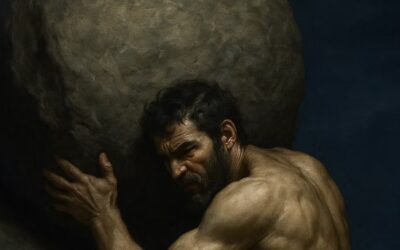
Divine punishments in Greek mythology for defying the gods
Greek mythology is populated with cautionary tales about punishments for defying the gods in Greek mythology. These myths illustrate how hubris—human arrogance or audacity before the divine—was severely punished by the Olympian gods. Through stories of exemplary...

The Mythical Hippocrene Spring
Greek mythology is full of stories in which the divine and the natural intertwine in ways that continue to amaze entire generations. Some of these stories tell of sacred mountains, celestial creatures, or springs that not only quench thirst but awaken dormant talents....
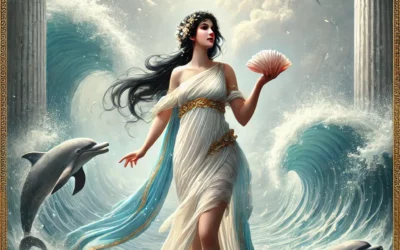
Ino, the Goddess of the Sea
Immersed in the rich tapestry of Greek mythology, we find Ino, a mysterious figure who represents both human tragedy and the divinity of the sea. This complex and intriguing figure plays a fundamental role in numerous ancient legends and myths, and remains relevant in...

The Myth of Chrysippus
Greek mythology is a rich tapestry of heroes, gods, and monsters that have fascinated humanity for thousands of years. However, some characters who, though less well known, play a crucial role in these ancient stories are often overlooked. One such character is...

Erebus, the God of Shadow
Erebus, a mysterious and enigmatic figure in Greek mythology, has fascinated historians, archaeologists, and mythology enthusiasts for centuries. His role in the Greek cosmos, his relationship with other gods and goddesses, and his lasting influence on contemporary...
Phobos, the God of Fear
In the vast annals of Greek mythology, where gods and goddesses, heroes, and monsters intertwine in a dance of legends and myths, we find Phobos, a peculiar and often overlooked figure. Less well known than Zeus or Hercules, Phobos nevertheless offers a fascinating...
Deimos, the God of Terror
If we venture into the fascinating universe of Greek mythology, we find Deimos, one of the least explored deities but with undeniable relevance. Deimos, whose name means "dread," is an enigmatic god linked to the darkest and most frightening aspects of human...

mitologiaclasica.com is a website dedicated to exploring and popularizing the fascinating richness of mythology, offering a vast compendium of stories, characters, and legends.
Explore
Greek Mythology
Roman Mythology
Norse Mythology
Egyptian Mythology
Hindu Mythology
Chinese Mythology
Japanese Mythology
Celtic Mythology
Privacy Policy
Privacy Policy
Copyright mitologiaclasica.com