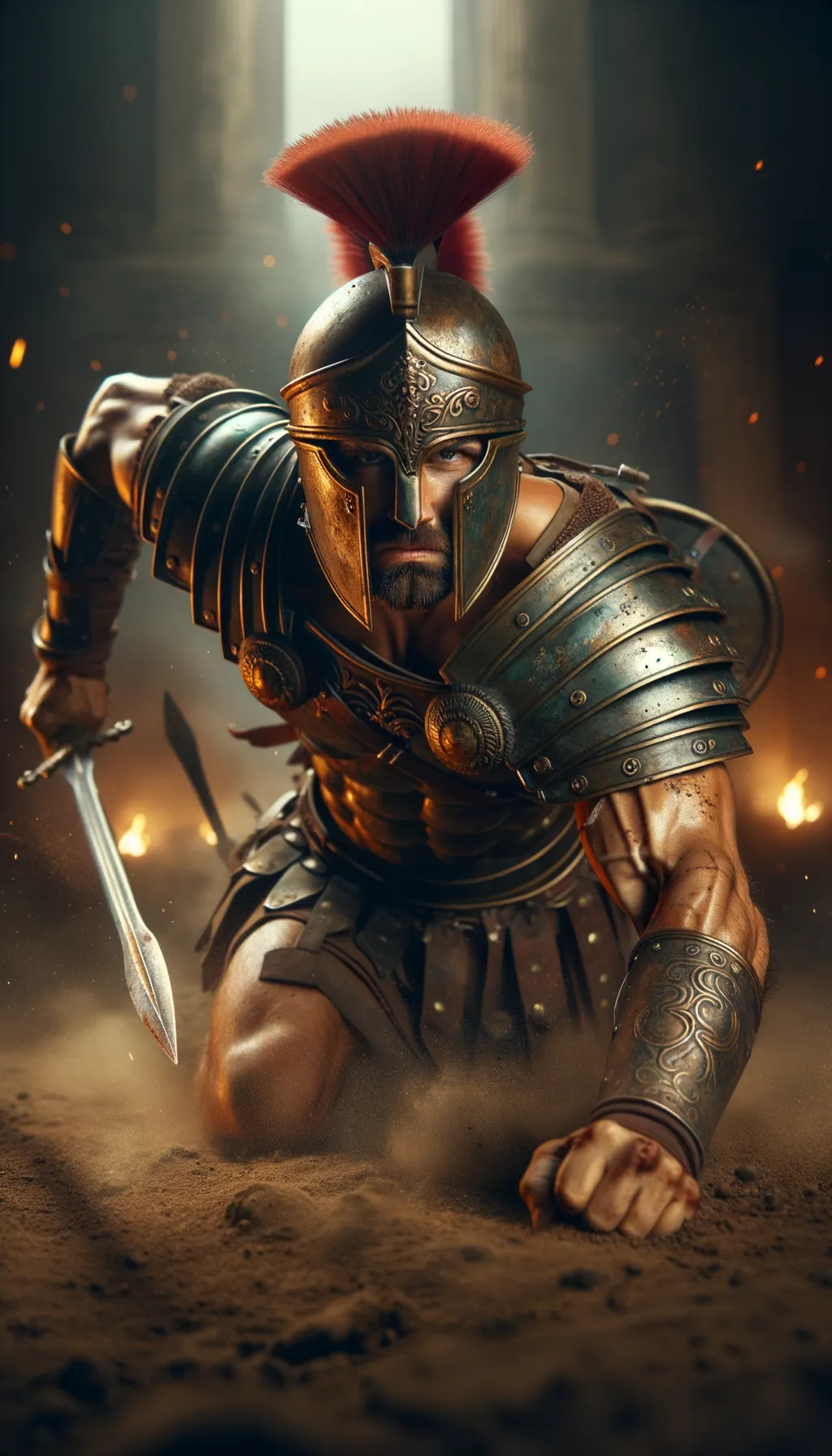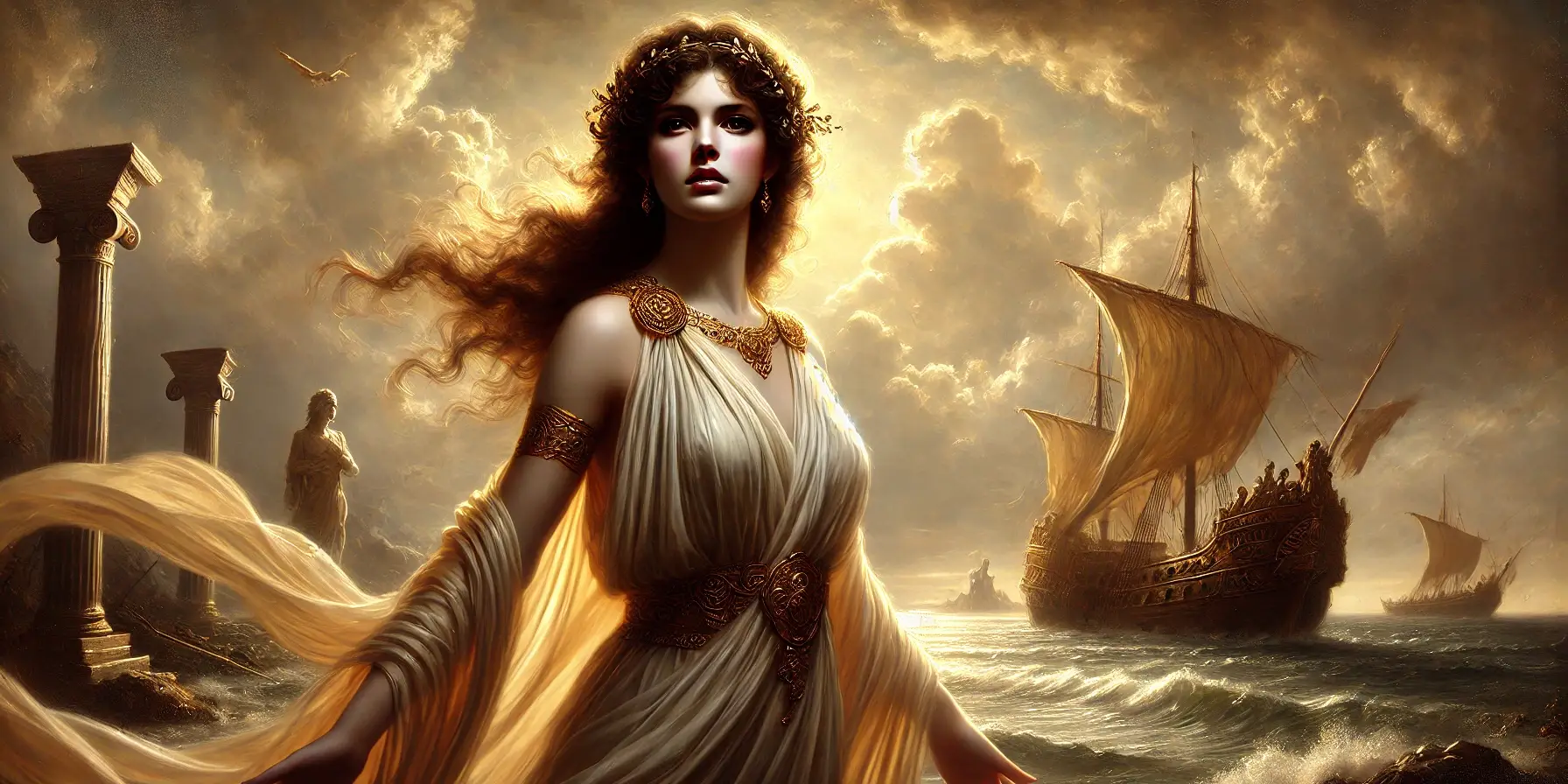
Greek mythology is full of heroes, gods, and complex characters, each with their own stories and lessons. One of these figures, perhaps somewhat less well known, is Iphigenia, the unfortunate daughter of Agamemnon and Clytemnestra. Although her story is tragic, her sacrifice is an example of devotion and resilience, and her legacy endures over time.
Who Was Iphigenia in Greek Mythology?
We are dealing with a fascinating and tragic figure in Greek mythology. Her story is an example of the role women played in mythology and how their lives were often sacrificed in the name of men’s desires and ambitions. However, she is not simply a victim; through her sacrifice, she becomes a figure of devotion and resilience. Despite her tragic end, Iphigenia is remembered as a heroine who faced her fate with courage and determination.
The Daughter of Agamemnon and Clytemnestra
Today we discuss Iphigenia, the daughter of Agamemnon, king of Mycenae, and Clytemnestra. Agamemnon, known for his role as commander in the Trojan War, was a man of great ambition and pride. Clytemnestra, on the other hand, was a woman of strong will and cunning, known for her revenge against Agamemnon. Iphigenia, as their daughter, inherited both her father’s courage and her mother’s determination.
The Sacrifice of Iphigenia: An Act of Devotion
Iphigenia’s best-known story is her sacrifice to the goddess Artemis. When Agamemnon killed a deer in a sacred grove, he enraged Artemis, who halted the winds and left the Greek fleet stranded. The seer Calchas revealed that the only way to appease the goddess was to sacrifice Iphigenia. Agamemnon, though initially reluctant, eventually gave in and deceived her into coming to the camp under the pretext of marrying Achilles.
Divine Intervention: Artemis Saves Iphigenia
Before Iphigenia could be sacrificed, Artemis intervened and saved her, substituting a deer for her on the altar. According to some versions of the story, Artemis took her to Tauris, where she became her priestess. Although her life was spared, she was torn from her family and home and taken to a foreign land.
A Priestess of Artemis
In Tauris, Iphigenia served Artemis as her priestess. Far from her home and family, she lived a life of devotion and service to the goddess who had saved her. Although her life in Tauris was solitary and often sorrowful, she accepted her fate with courage and determination, once again demonstrating her strength and resilience.
Orestes and Iphigenia: An Unexpected Encounter
Iphigenia’s story takes an unexpected turn when her brother Orestes arrives in Tauris. Sent by the Oracle of Delphi to retrieve the statue of Artemis, Orestes is reunited with her under extraordinary circumstances. Although they do not recognize each other at first, their true identities are eventually revealed, leading to an emotional reunion between siblings.
The Liberation of Iphigenia and the Killing of Thoas
The moment arrives when Iphigenia and Orestes plan their escape from Tauris, but they must confront King Thoas. She deceives Thoas and manages to flee with Orestes, taking the statue of Artemis with her. In the process, Thoas is killed, marking a victory for Iphigenia and Orestes, who manage to escape and return home.
Return to Greece: Iphigenia and Orestes at Home
Back in Greece, they are welcomed as heroes. She is finally freed from her duty as priestess of Artemis and can live her life as a mortal. However, her life will never be the same after her sacrifice and her time in Tauris.
Theatrical Depictions
Iphigenia’s story has been portrayed in several Greek tragedies, including Euripides’s “Iphigenia at Aulis” and “Iphigenia in Tauris.” These works explore Iphigenia’s emotions and conflicts, and her sacrifice and suffering are often used as a commentary on the role of women in Greek society. Through these depictions, she becomes a symbol of devotion and resilience.
Modern Interpretations of Iphigenia’s Story
In modern literature and art, Iphigenia is often portrayed as an innocent victim of her father’s ambitions. However, she is also seen as a figure of resistance and courage, someone who accepts her fate with bravery and determination. These interpretations reflect the complexity of her character and the relevance of her story in today’s world.
A Contemporary Approach
From a feminist perspective, Iphigenia’s story can be seen as a critique of the oppression of women in ancient Greek society. She is treated as an object, a necessary sacrifice for her father’s plans. However, despite her tragic fate, she becomes a figure of resistance and empowerment, demonstrating that women can be strong and courageous even in the most adverse circumstances.
Iphigenia’s Legacy in Greek and Western Culture
Iphigenia’s story is a testament to the power of devotion and resilience. Despite her tragic fate, her courage and determination make her a heroine. Her story has stood the test of time, and her legacy continues to influence Greek and Western culture. She is a reminder of the strength and courage that can emerge even in the most desperate situations.

Subscribe
If you want to receive stories, curiosities, and legends of the most fascinating creatures of classical mythology in your inbox, just fill out this form.
Continue reading
If you liked this article, you like mythology. And in this case, we have much more to offer you. Discover new adventures, heroes, nymphs, gods, battles, teachings… Just click on the button.

TV Series About Greek Gods and Heroes
Greek mythology has been an endless source of inspiration for film and television. Over the decades, numerous series -both animated and live-action- have recreated the exploits of Olympian gods and legendary heroes, adapting them for different audiences. In this...

Love Stories Between Gods and Mortals in Greek Mythology
Greek mythology has left us many love stories between immortal gods and mortal humans, romances that fascinated the ancients and still captivate us today. These divine-mortal relationships are charged with passion, conflict, and symbolic lessons. They sometimes...

Divine punishments in Greek mythology for defying the gods
Greek mythology is populated with cautionary tales about punishments for defying the gods in Greek mythology. These myths illustrate how hubris—human arrogance or audacity before the divine—was severely punished by the Olympian gods. Through stories of exemplary...

The Mythical Hippocrene Spring
Greek mythology is full of stories in which the divine and the natural intertwine in ways that continue to amaze entire generations. Some of these stories tell of sacred mountains, celestial creatures, or springs that not only quench thirst but awaken dormant talents....

Short Greek Myths for Children
Short Greek myths for children are an excellent way to introduce little ones to this wonderful world full of gods, heroes, and fantastic creatures. These stories not only entertain, but also convey values and lessons and spark curiosity about ancient culture. In this...
Ino, the Goddess of the Sea
Immersed in the rich tapestry of Greek mythology, we find Ino, a mysterious figure who represents both human tragedy and the divinity of the sea. This complex and intriguing figure plays a fundamental role in numerous ancient legends and myths, and remains relevant in...

The Myth of Chrysippus
Greek mythology is a rich tapestry of heroes, gods, and monsters that have fascinated humanity for thousands of years. However, some characters who, though less well known, play a crucial role in these ancient stories are often overlooked. One such character is...

Erebus, the God of Shadow
Erebus, a mysterious and enigmatic figure in Greek mythology, has fascinated historians, archaeologists, and mythology enthusiasts for centuries. His role in the Greek cosmos, his relationship with other gods and goddesses, and his lasting influence on contemporary...
Phobos, the God of Fear
In the vast annals of Greek mythology, where gods and goddesses, heroes, and monsters intertwine in a dance of legends and myths, we find Phobos, a peculiar and often overlooked figure. Less well known than Zeus or Hercules, Phobos nevertheless offers a fascinating...

mitologiaclasica.com is a website dedicated to exploring and popularizing the fascinating richness of mythology, offering a vast compendium of stories, characters, and legends.
Explore
Greek Mythology
Roman Mythology
Norse Mythology
Egyptian Mythology
Hindu Mythology
Chinese Mythology
Japanese Mythology
Celtic Mythology
Privacy Policy
Privacy Policy
Copyright mitologiaclasica.com