In the vast pantheon of Japanese mythology, where supernatural deities and spirits roam through landscapes full of mystery, there exists a unique and often overlooked figure: Haya-akitsu-hime. Although less well known than deities such as Amaterasu, Haya-akitsu-hime, the goddess of the sea, holds a special place in Japanese spirituality, and her influence can be felt in various facets of contemporary Japanese culture.
Haya-akitsu-hime: The Goddess of the Sea in Japanese Mythology
Undoubtedly, Haya-akitsu-hime is one of the most respected marine deities in Japanese mythology, a figure frequently overlooked in accounts of the nation’s spiritual customs. Despite her relative obscurity, her influence is evident in a variety of aspects of Japanese life and culture. Although her relevance is underestimated, the legends surrounding Haya-akitsu-hime are a rich blend of narrative and symbolism that offer a fascinating perspective on Japan’s spiritual and cultural convictions.
The figure of Haya-akitsu-hime has been an integral part of Japanese mythology for centuries. Her presence dates back to the oldest texts of Japanese spiritual tradition, and she is considered a goddess venerated by fishermen and sailors. In medieval Japanese society, she was a protective spirit of the sea, often invoked to ask for protection during sea voyages.
Spiritual Meaning in Japanese Culture
In Japan’s extensive pantheon of deities, Haya-akitsu-hime occupies a unique place as goddess of the sea. This reflects the intimate relationship the people of Japan have with the sea, a bond rooted in the geography of a country made up largely of islands. Thus, she symbolizes the respect and reverence the Japanese feel for the sea, and its role in people’s lives and livelihoods.
How Is Haya-akitsu-hime Worshipped in Japan Today?
Although Haya-akitsu-hime may not be as widely recognized as other deities in modern Japanese culture, she is still honored and respected in some communities, especially among fishermen and sailors. In some coastal regions of Japan, small shrines dedicated to her can be found, where locals come to pay homage and ask for protection for their sea voyages.
Is She a Forgotten Deity?
It is clear that Haya-akitsu-hime represents a lesser-known marine deity in the Japanese mythological pantheon. She differs from other ocean deities in her more discreet role and her limited presence in contemporary Shinto rituals. Her cult appears to be restricted to local and family contexts, without widely documented ritual practices or shrines specifically dedicated to her veneration.
By contrast, other marine deities such as the Sumiyoshi Sanjin have major shrines, elaborate rituals, and a deeper connection with Japanese coastal communities. While these divine figures are central to religious practices related to fishing, navigation, and maritime protection, Haya-akitsu-hime remains a more ethereal, almost marginal entity within the complex Japanese mythological system, maintaining an existence that is more symbolic than practical in contemporary spirituality.
An Analysis of Her Role in Japanese Myths
Analyzing Haya-akitsu-hime’s role in Japanese mythology is a fascinating task that reveals much about Japan’s relationship with its environment. As goddess of the sea, she represents the power and beauty of the ocean, as well as the dangers and challenges it presents for those who depend on it for their livelihood.
<h2>The Legends of Haya-akitsu-hime: Myths with a Message
The legends of Haya-akitsu-hime reveal a profound symbolic connection between humans and the sea, representing more than a simple mythological narrative. Her name evokes the image of “Princess of the Swift Waves.” It suggests a divine entity that personifies the dynamic and complex nature of the ocean, conveying messages about respect, power, and transformation.
The Balance Between Gods and Men
As daughter of the creator gods, Haya-akitsu-hime embodies the balance between the divine and the earthly. She is a reminder to coastal communities of their intimate relationship with natural forces. The myth of this sea goddess transcends simple folkloric narrative. In fact, it functions as a vehicle for cultural wisdom that highlights the importance of the sea in the Japanese worldview.
Through her figure, lessons are conveyed about the need to respect natural cycles, understand the unpredictability of the elements, and maintain a harmonious relationship with the environment. Her presence in mythology symbolizes the deep Japanese reverence for the ocean. It is presented not merely as a geographic space, but as a sacred territory full of spiritual and existential meaning.
The Rituals Associated with Haya-akitsu-hime in Japan
In Japan, there are a number of rituals and practices associated with Haya-akitsu-hime. These include offerings of food and prayers at shrines dedicated to the goddess, as well as special ceremonies performed before sea voyages to ask for her protection.
<h2>The Depiction of Haya-akitsu-hime in Japanese Art and Literature
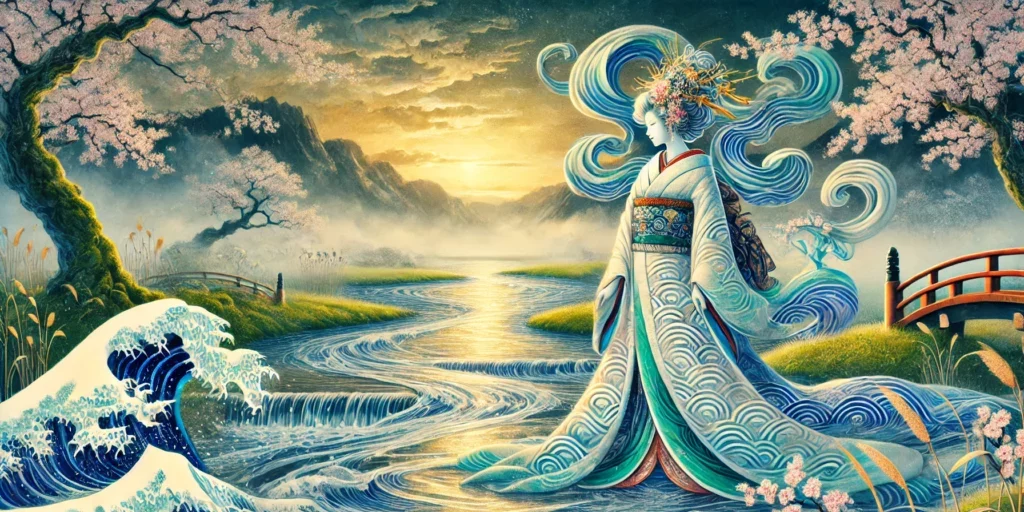
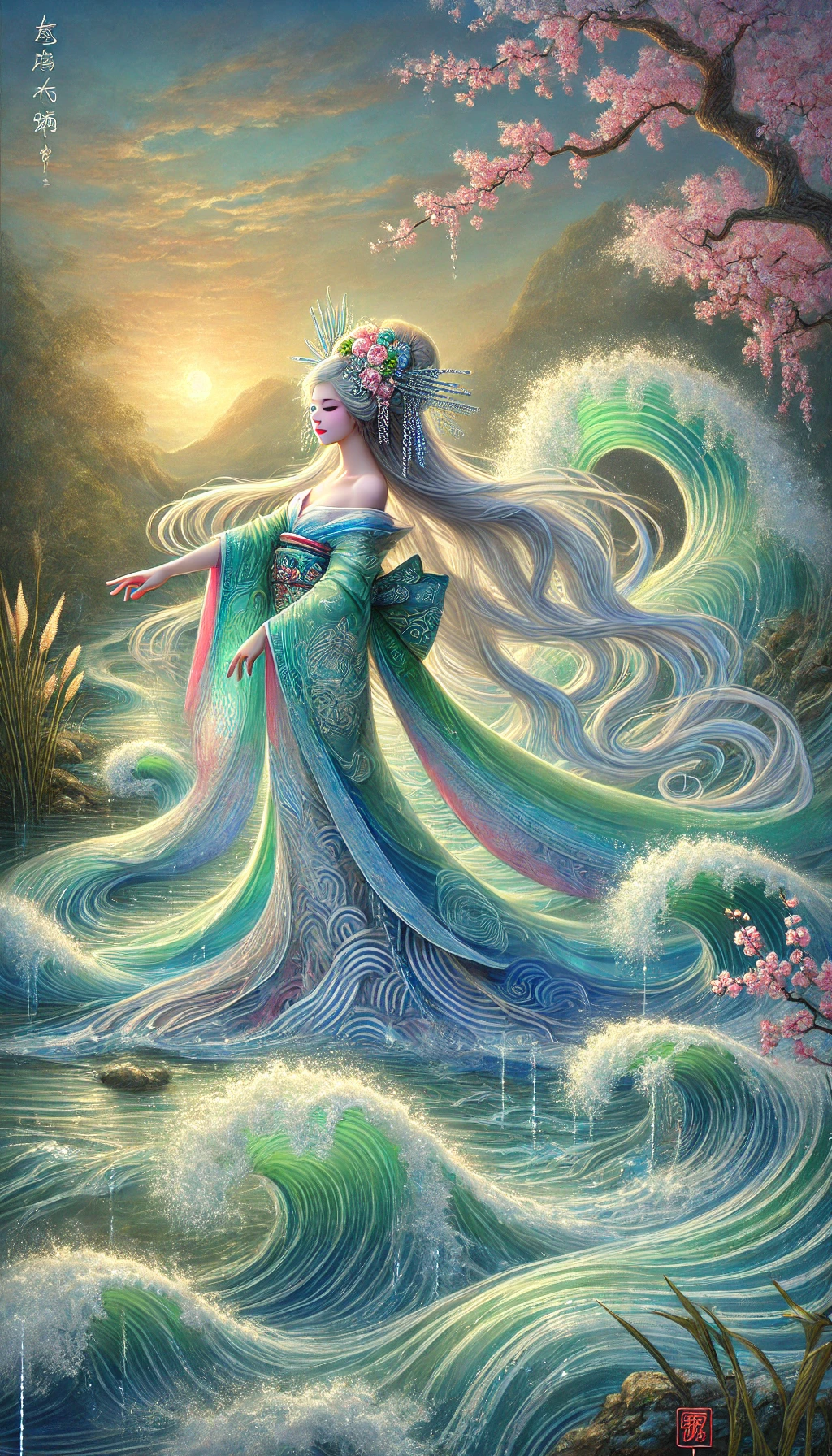
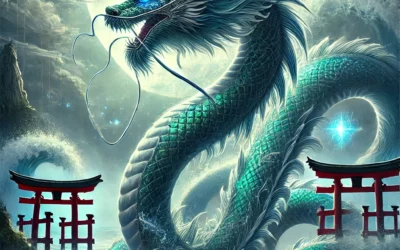
The depiction of Haya-akitsu-hime in Japanese art and literature is characterized by its ethereal, loosely defined nature. This reflects her status as a secondary marine deity in the mythological pantheon. Despite her origin as a daughter of the creator gods, her artistic presence seems to dissolve into more general depictions of the sea and its forces, where images of movement, transformation, and primal power predominate. The few available references suggest that, if any depiction of her exists, it is probably integrated subtly into compositions that evoke the essence of the ocean rather than her specific figure.
<h2>The Movement of the Waves
In the Japanese artistic context, she could be interpreted through moving waves, reflections of light on the water, or seascapes. Always, elements that convey a sense of dynamism and mystery. Her artistic depiction would presumably follow the Japanese aesthetic principles of harmony, subtlety, and connection with nature. There, the divine manifests more through suggestion than through direct representation. The Japanese artistic tradition tends to capture essence through visual and poetic metaphors. This is also the case with this little-known sea goddess.
Popular Tales About Haya-akitsu-hime: Between Reality and Fiction
Popular tales about Haya-akitsu-hime cover a wide range of themes, from stories of adventure and heroism to tales of love and sacrifice. These stories waver between reality and fiction, blending elements of Japanese history and mythology with a captivating, imaginative narrative.
Rediscovering Haya-akitsu-hime: The Rebirth of a Forgotten Deity
In recent years, there has been a resurgence of interest in Haya-akitsu-hime, as more people seek to rediscover and revalue Japan’s ancient spiritual traditions. This revival has led to greater recognition of her figure and her role in Japanese mythology and culture.
Her story and influence remain a testament to Japan’s rich and varied spiritual tradition. In her, we find a mirror of the intimate relationship Japan has maintained with the sea. It is also a reverence reflected in its culture, beliefs, and national identity. As we rediscover and revalue this forgotten deity, we are honoring a fundamental aspect of Japan’s spiritual heritage.
Subscribe
If you want to receive stories, curiosities, and legends of the most fascinating creatures of classical mythology in your inbox, just fill out this form.
Continue reading
If you liked this article, you like mythology. And in this case, we have much more to offer you. Discover new adventures, heroes, nymphs, gods, battles, teachings… Just click on the button.
Sumiyoshi Sanjin: The Triad of Sea Gods in Japanese Mythology
Who Are the Sumiyoshi Sanjin? The Sumiyoshi Sanjin (“three gods of Sumiyoshi”) are a triad of Shinto deities associated with the sea, fishing, and navigation. These three kami (spirits or gods) are venerated together as protectors of water travel and guardians of...
Watatsumi, the God of the Sea
The mysteries of the ocean have fascinated humanity since time immemorial, and many cultures have attributed its immensity and power to a maritime deity. In Japanese mythology, that deity is Watatsumi, also known as Ryūjin, the God of the Sea. This divine figure not...

Aizen, the God of Love and Wisdom
In the rich and diverse Japanese mythology, Aizen, the god of love and wisdom, is a central and fascinating figure. Over the centuries, this Buddhist figure has been the object of worship, admiration and study, and has influenced the culture, arts and spirituality of...

Susanoo: The Mighty God of the Sea and Battles
Susanoo, the god of the sea and battles in Japanese Shinto, is known for his complex relationship with his divine brothers Amaterasu and Tsukuyomi. His confrontations with the serpent Yamata-no-Orochi and his subsequent banishment to the earthly world stand out....

Nihon Shoki, history and mythology of Japan uncovered
The Nihon Shoki, also known as Nihongi, is an ancient book that narrates the history and mythology of Japan. It was completed in 720 and its pages contain accounts of Japanese gods, genealogies of emperors and historical facts.Although it has been the subject of...

Yokai: Mysterious Creatures of Japanese Mythology
Yokai are mysterious and supernatural creatures that are part of Japanese folklore. These creatures, with supernatural abilities and varied appearance, inhabit the border between the real and divine worlds. Although their relationship with humans is complex and...

Jorogumo: The Mysterious Harpy of Japanese Mythology
Jorogumo is an intriguing creature from Japanese mythology. According to legend, she is a spider woman who has the ability to transform herself. This magical being possesses supernatural powers and seduces her victims with her charm. In the article, we will explore...

mitologiaclasica.com is a website dedicated to exploring and popularizing the fascinating richness of mythology, offering a vast compendium of stories, characters, and legends.
Explore
Greek Mythology
Roman Mythology
Norse Mythology
Egyptian Mythology
Hindu Mythology
Chinese Mythology
Japanese Mythology
Celtic Mythology
Privacy Policy
Privacy Policy
Copyright mitologiaclasica.com