The mysteries of the ocean have fascinated humanity since time immemorial, and many cultures have attributed its immensity and power to a maritime deity. In Japanese mythology, that deity is Watatsumi, also known as Ryūjin, the God of the Sea. This divine figure not only governs the oceans but also plays an important role in the creation of the islands of Japan and in numerous legends of the country. This article explores the legends, symbolism, and influence of Watatsumi on Japanese culture and daily life.
The Maritime Deity of Japanese Mythology: Watatsumi
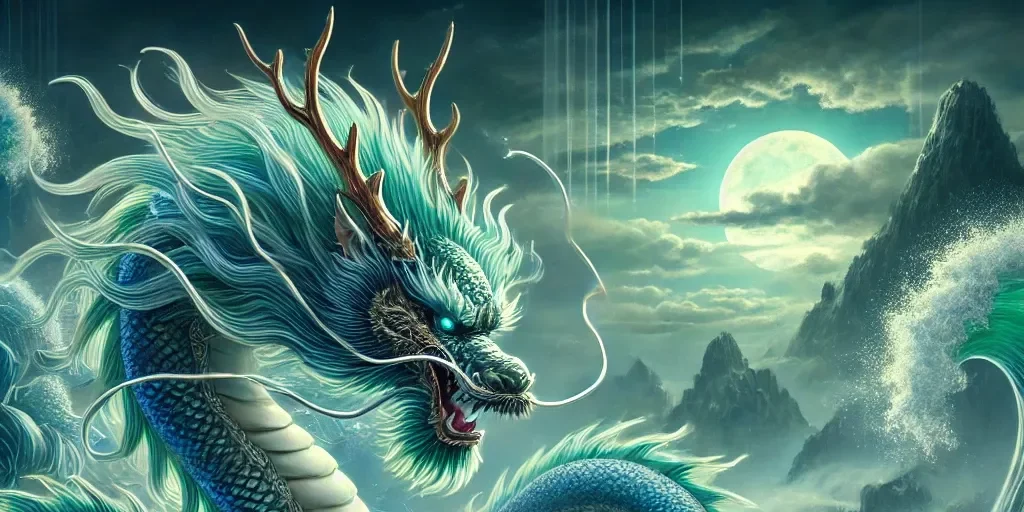
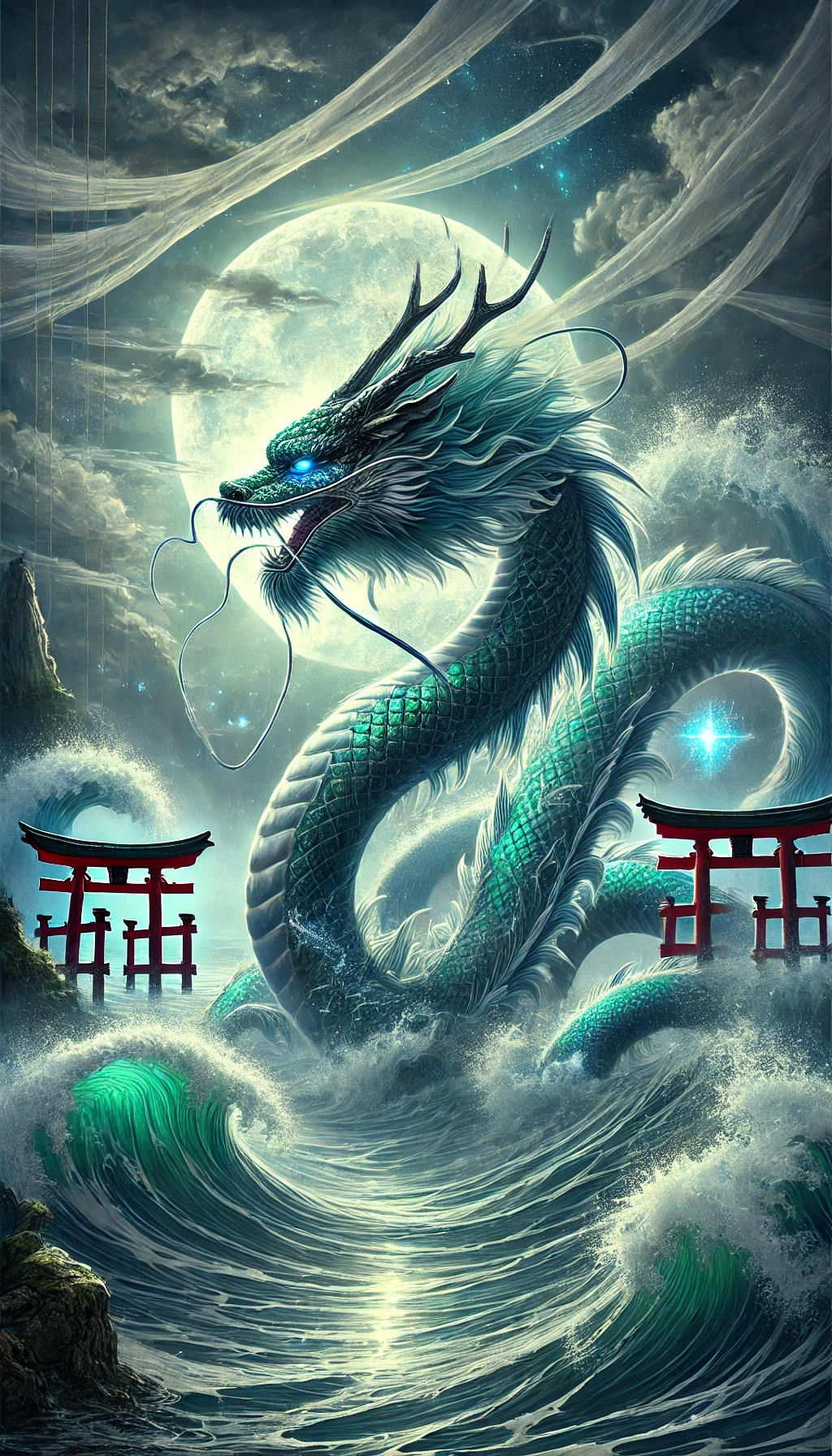
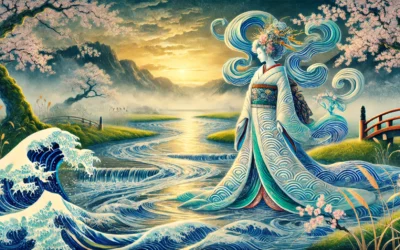
Watatsumi, or Ryūjin, is the god of the sea in Japanese mythology. This divine being is commonly depicted as a dragon or sea serpent, reflecting the power and majesty of the ocean. His name, which literally translates as “the god of the sea,” reveals his dominion over the waters and reflects the importance of the sea in Japanese life and culture. As a maritime deity, he has absolute control over the tides and sea currents, and is believed to have the ability to transform into human form at will.
The Origin of Watatsumi: The Creation of the God of the Sea
The origin of Watatsumi dates back to the earliest writings of Japan’s history, where he is portrayed as a being of great power and majesty. In the “Kojiki”, the oldest chronicle of Japanese mythology, he is described as the sovereign god of the sea, a being of incomparable beauty and power. According to legend, Watatsumi was born from the union of Izanagi and Izanami, the deities who gave rise to the islands of Japan. His creation symbolizes the powerful bond between the Japanese people and the sea, a crucial element in the survival and prosperity of the island nation.
Sea Dragons and Watatsumi: Relationship and Symbolism
Sea dragons are creatures of great power and wisdom in Japanese mythology. The depiction of Watatsumi as a dragon or sea serpent symbolizes his dominion over the oceans and his influence on marine phenomena. Moreover, dragons in Japanese culture are often considered benevolent, protective beings, reflecting his role as a protector and benefactor god for the Japanese people.
Watatsumi’s Underwater Palace: Ryūgū-jō
According to legend, Watatsumi resides in Ryūgū-jō, a majestic underwater palace made of coral and pearls. This palace is described as a place of unimaginable beauty and wealth, filled with marine treasures and populated by sea creatures and mermaids. In many stories, Ryūgū-jō is a place of great challenges and adventures for mythological heroes, demonstrating the power and majesty of Watatsumi’s realm.
Importance in Japan’s Fishing Culture
Fishing has been an integral part of the Japanese economy and culture for centuries, and Watatsumi holds a special place in the hearts of Japanese fishermen. As the god of the sea, he is believed to have the power to bless fishermen with good catches and protect them from the dangers of the sea. Prayers and rituals dedicated to this deity are a common part of fishermen’s lives, demonstrating the deep connection between the maritime deity and daily life in Japan.
The Worship of Watatsumi: Shrines and Rituals
There are numerous shrines dedicated to Watatsumi throughout Japan, where devotees can pray for the protection and blessing of the god of the sea. One of the most famous is Itsukushima Shrine, a UNESCO World Heritage Site located on an island in Hiroshima Bay. During festivals and rituals, devotees often make offerings of fish and other seafood, in gratitude for his blessings and protection.
Japanese Legends: The Benevolent God
Throughout history, Watatsumi has been portrayed in numerous legends as a benevolent, protective god. In one of the most famous stories, Watatsumi saves a young woman from a forced marriage to an evil samurai by transforming her into a mermaid so she can escape. This and other stories reflect the image of Watatsumi as a compassionate, protective god who cares for his devotees and shields them from danger.
The Creation of the Japanese Islands
According to Japanese mythology, Watatsumi played a crucial role in the creation of the islands of Japan. After his birth, he used his power over the waters to shape the islands and bring them to life. This story reflects the importance of the sea in Japan’s identity and history, and highlights his role as an essential figure in Japanese mythology and culture.
Artistic Depiction Throughout History
The god Watatsumi has been a source of inspiration for Japanese artists over the centuries. From ancient paintings and sculptures to modern anime and manga, his image has evolved and adapted to changes in Japanese culture and society. However, despite these transformations, his essence as the powerful and majestic god of the sea has remained constant.
Popular Culture: Anime and Manga
The figure of Watatsumi has found its way into Japanese popular culture, appearing in various anime and manga. In these modern depictions, he often appears as a powerful sea dragon or as a wise and benevolent old man. These interpretations reflect both the majesty and power of Watatsumi and his role as protector and guide for the Japanese people.
Influence on Contemporary Japanese Society
Although Japanese society has changed a great deal since ancient times, Watatsumi’s influence remains strong. His image as a protective and benevolent god has found an echo in the modern Japanese ethic of respect for nature and marine life. Additionally, rituals and festivals dedicated to this god remain an important part of cultural and religious life in many parts of Japan.
In conclusion, Watatsumi, the God of the Sea, is a central figure in Japanese mythology and culture. From ancient creation legends to modern depictions in anime and manga, he represents the power and majesty of the ocean, and his importance to the life and identity of Japan. Through him, we gain insight into the deep connection between the Japanese people and the sea, and how this connection has shaped the country’s history, culture, and daily life.
Subscribe
If you want to receive stories, curiosities, and legends of the most fascinating creatures of classical mythology in your inbox, just fill out this form.
Continue reading
If you liked this article, you like mythology. And in this case, we have much more to offer you. Discover new adventures, heroes, nymphs, gods, battles, teachings… Just click on the button.
Sumiyoshi Sanjin: The Triad of Sea Gods in Japanese Mythology
Who Are the Sumiyoshi Sanjin? The Sumiyoshi Sanjin (“three gods of Sumiyoshi”) are a triad of Shinto deities associated with the sea, fishing, and navigation. These three kami (spirits or gods) are venerated together as protectors of water travel and guardians of...
Haya-akitsu-hime, the Goddess of the Sea
Exploring the legend of Haya-akitsu-hime, a gem of Japanese mythology.

Aizen, the God of Love and Wisdom
In the rich and diverse Japanese mythology, Aizen, the god of love and wisdom, is a central and fascinating figure. Over the centuries, this Buddhist figure has been the object of worship, admiration and study, and has influenced the culture, arts and spirituality of...

Susanoo: The Mighty God of the Sea and Battles
Susanoo, the god of the sea and battles in Japanese Shinto, is known for his complex relationship with his divine brothers Amaterasu and Tsukuyomi. His confrontations with the serpent Yamata-no-Orochi and his subsequent banishment to the earthly world stand out....

Nihon Shoki, history and mythology of Japan uncovered
The Nihon Shoki, also known as Nihongi, is an ancient book that narrates the history and mythology of Japan. It was completed in 720 and its pages contain accounts of Japanese gods, genealogies of emperors and historical facts.Although it has been the subject of...

Yokai: Mysterious Creatures of Japanese Mythology
Yokai are mysterious and supernatural creatures that are part of Japanese folklore. These creatures, with supernatural abilities and varied appearance, inhabit the border between the real and divine worlds. Although their relationship with humans is complex and...

Jorogumo: The Mysterious Harpy of Japanese Mythology
Jorogumo is an intriguing creature from Japanese mythology. According to legend, she is a spider woman who has the ability to transform herself. This magical being possesses supernatural powers and seduces her victims with her charm. In the article, we will explore...

mitologiaclasica.com is a website dedicated to exploring and popularizing the fascinating richness of mythology, offering a vast compendium of stories, characters, and legends.
Explore
Greek Mythology
Roman Mythology
Norse Mythology
Egyptian Mythology
Hindu Mythology
Chinese Mythology
Japanese Mythology
Celtic Mythology
Privacy Policy
Privacy Policy
Copyright mitologiaclasica.com