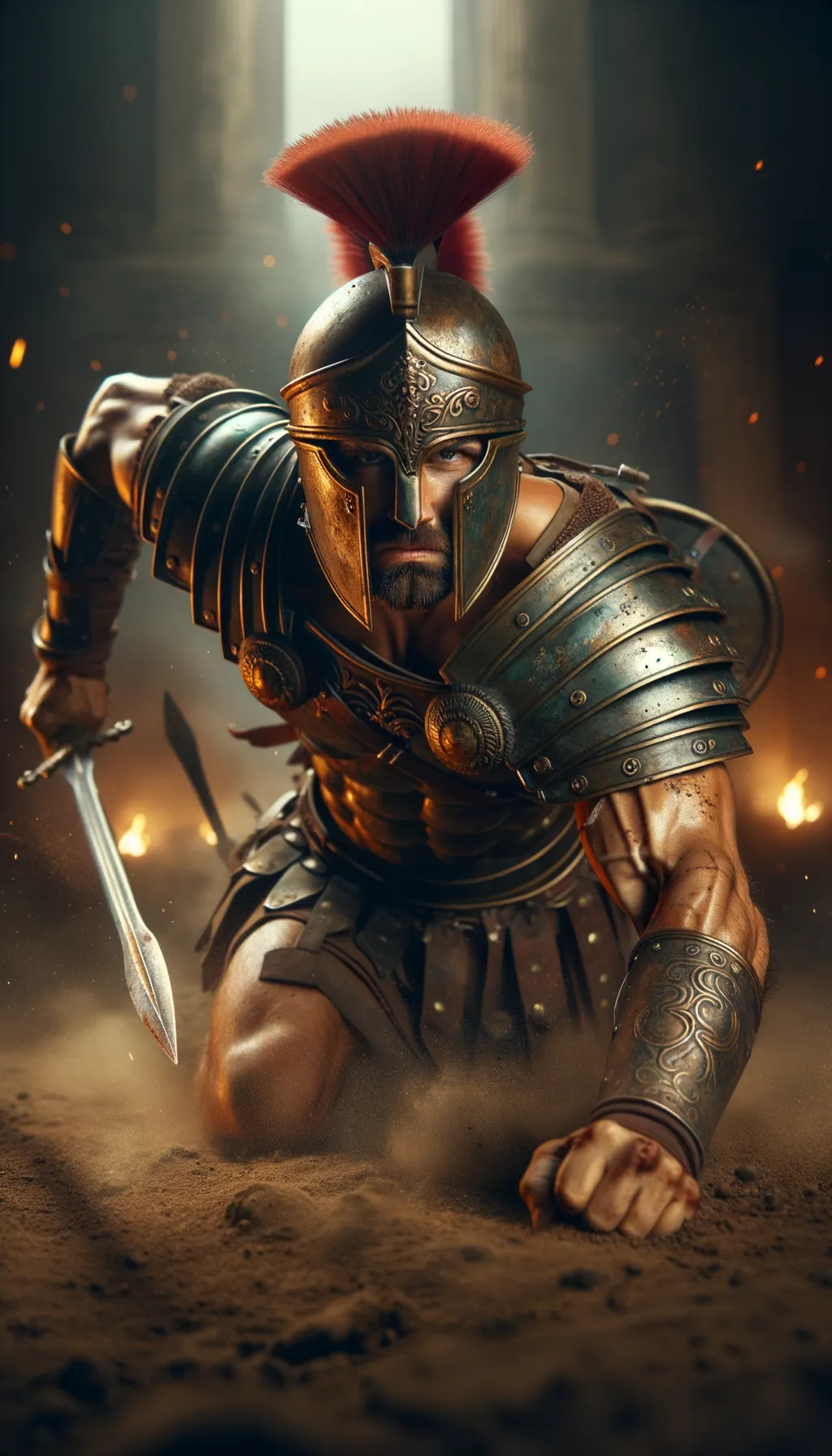
Greek mythology is full of fascinating gods and one of the most prominent is Poseidon. Known as the god of the seas and earthquakes, Poseidon was revered in ancient Greece and was part of the Olympian pantheon. Usually depicted with his trident, he was feared and respected for his power. In this article, we will explore his characteristics and his role in Greek mythology.
Poseidon, characteristics and representation
Poseidon is described as an imposing and powerful god, capable of generating both calm and chaos in the seas. His trident, an iconic symbol, represents his dominion over water and his ability to control natural forces. In addition, he is depicted riding in a chariot pulled by sea horses or serpents, highlighting his connection to the sea and his power to rule its depths.
In ancient Greek art, depictions of Poseidon show his imposing figure, with a majestic posture and sometimes surrounded by sea creatures. These depictions reflect his position as one of the most important and revered gods in ancient Greece.
Role of Poseidon in Greek Mythology
The importance of Poseidon in Greek mythology extends beyond his dominion over the seas. He was venerated in several Hellenic cities and considered a municipal god in Athens, Corinth and other cities of Magna Graecia. Although he lost the contest for the patronage of Athens, his influence and presence were recognized in various cultures and civilizations.
In addition, Poseidon played a crucial role in important mythological events. He is mentioned in the Trojan War, where he was involved in the construction of the city walls as punishment for his betrayal of Zeus. He is also considered Odysseus’ nemesis, as his grudge prevented the hero’s return to Ithaca.
Poseidon in the Trojan War
Poseidon aligned himself with the Greeks in the Trojan War. According to mythology, he was irritated by the disrespect shown to him by the Trojans. The main reason for his anger was the desecration of a temple of his by Laomedon, king of Troy.
In the course of the war, Poseidon actively helped the Greeks, although he was not always successful due to the will of Zeus, who favored the Trojans. His involvement included building the walls of the Greek camp and helping in several battles. However, he also suffered setbacks, such as when Apollo and Hades intervened to save Troy.
Odysseus, Poseidon and the voyage to Ithaca
Poseidon was one of the most prominent adversaries in Odysseus’ adventures according to Greek mythology. Although Poseidon was not his direct enemy, his anger towards him arose due to events that occurred after the Trojan War, especially on Odysseus’ return journey to Ithaca.
The main reason for the enmity between Poseidon and Odysseus was the incident with Cyclops Polyphemus, son of Poseidon. During their return voyage, Odysseus and his men arrived at the Cyclops’ island. Odysseus, cunning as ever, devised a plan to blind Polyphemus and escape from his lair. When Polyphemus cried out to his father Poseidon for revenge, the sea god’s wrath was unleashed against Odysseus.
The consequence was that Odysseus faced numerous obstacles and delays on his journey home. He suffered the hostility of the seas and faced storms and shipwrecks, all as a result of Poseidon’s fury. This conflict became a central part of Homer’s epic “The Odyssey,” where Odysseus struggles to return to Ithaca while facing Poseidon’s divine disapproval.
Despite these challenges, Odysseus eventually made it back to Ithaca and was reunited with his family.
The god Poseidon, patron saint of navigators
Poseidon is known as the patron saint of sailors in Greek mythology. The ancient Greeks, who relied heavily on navigation for trade and expansion, regarded Poseidon as a crucial god in ensuring safe sea voyages.
The god Poseidon was invoked and worshipped before sailors ventured out to sea. Sailors performed rituals and offered sacrifices in his honor to gain his favor and ensure that the god of the sea would provide protection during their voyages. These ceremonies often took place in ports and before large maritime expeditions.
Their benevolence was believed to guarantee calm waters and safe voyages, while their anger could unleash storms and maritime dangers.
Poseidon and his brothers
Brother of Zeus and Hades: Poseidon is one of the three main brothers in Greek mythology, along with Zeus and Hades. After overthrowing their father Cronus, Zeus, Poseidon and Hades shared the world, with Zeus ruling the sky, Poseidon the sea, and Hades the underworld.
Festivals and cults in honor of Poseidon
In ancient Greece, Poseidon was revered through various cults and festivals that highlighted his importance as the god of the sea and lord of earthquakes. Here are some of the most prominent cults and festivals in his honor:
- Isthmia: The Isthmian Games, held every two years on the Isthmus of Corinth, were one of the most prominent festivals in honor of Poseidon. These athletic games included sporting competitions, music and poetry, and were an important occasion to pay homage to the god of the sea.
- Posideia: This annual festival was specifically dedicated to Poseidon. It was celebrated in several Greek cities and usually included processions, rituals and sacrifices in honor of the god. It is believed that these festivals were intended to secure Poseidon’s favor and obtain his protection for the coming sailing season.
- Thesmophoria: Although the festival of the Thesmophoria was primarily dedicated to Demeter, Poseidon was also involved. This festival, celebrated in Athens, honored fertility and agriculture, and sacrifices were made to appease Poseidon, associated with the fertility of the earth.
- Panathenaeans: Although primarily a festival in honor of Athena, the athletic games and musical competitions of the Great Panathenaeans in Athens also included nautical events in honor of Poseidon. It is believed that this inclusion symbolized the importance of navigation and trade to the city.
- Local festivals: In addition to the larger, well-known festivals, many cities and regions had local celebrations in honor of Poseidon. These events varied in their specific rituals and practices, but all sought to win the favor of the sea god.
If you’re curious about what the gods smell like, we invite you to try it on your own skin with this Poseidon Gold eau de toilette for men. Let us know how it goes…
Subscribe
If you want to receive in your mailbox stories, curiosities and legends of the most fascinating creatures of classical mythology just fill in this form.
Continue reading
If you liked this article, you like mythology. And in this case, we have much more to offer you. Discover new adventures, heroes, nymphs, gods, battles, teachings… Just click on the button.
TV Series About Greek Gods and Heroes
Greek mythology has been an endless source of inspiration for film and television. Over the decades, numerous series -both animated and live-action- have recreated the exploits of Olympian gods and legendary heroes, adapting them for different audiences. In this...
Love Stories Between Gods and Mortals in Greek Mythology
Greek mythology has left us many love stories between immortal gods and mortal humans, romances that fascinated the ancients and still captivate us today. These divine-mortal relationships are charged with passion, conflict, and symbolic lessons. They sometimes...
Divine punishments in Greek mythology for defying the gods
Greek mythology is populated with cautionary tales about punishments for defying the gods in Greek mythology. These myths illustrate how hubris—human arrogance or audacity before the divine—was severely punished by the Olympian gods. Through stories of exemplary...

The Mythical Hippocrene Spring
Greek mythology is full of stories in which the divine and the natural intertwine in ways that continue to amaze entire generations. Some of these stories tell of sacred mountains, celestial creatures, or springs that not only quench thirst but awaken dormant talents....

Short Greek Myths for Children
Short Greek myths for children are an excellent way to introduce little ones to this wonderful world full of gods, heroes, and fantastic creatures. These stories not only entertain, but also convey values and lessons and spark curiosity about ancient culture. In this...
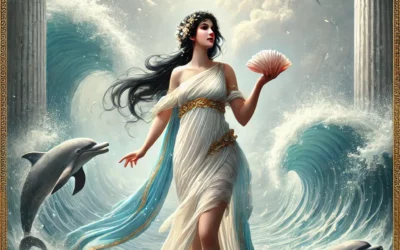
Ino, the Goddess of the Sea
Immersed in the rich tapestry of Greek mythology, we find Ino, a mysterious figure who represents both human tragedy and the divinity of the sea. This complex and intriguing figure plays a fundamental role in numerous ancient legends and myths, and remains relevant in...
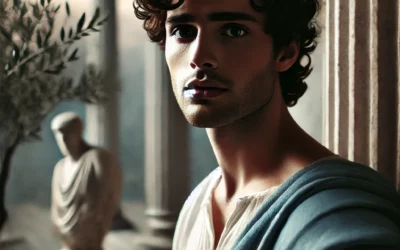
The Myth of Chrysippus
Greek mythology is a rich tapestry of heroes, gods, and monsters that have fascinated humanity for thousands of years. However, some characters who, though less well known, play a crucial role in these ancient stories are often overlooked. One such character is...

Erebus, the God of Shadow
Erebus, a mysterious and enigmatic figure in Greek mythology, has fascinated historians, archaeologists, and mythology enthusiasts for centuries. His role in the Greek cosmos, his relationship with other gods and goddesses, and his lasting influence on contemporary...
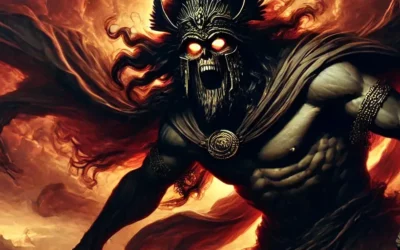
Phobos, the God of Fear
In the vast annals of Greek mythology, where gods and goddesses, heroes, and monsters intertwine in a dance of legends and myths, we find Phobos, a peculiar and often overlooked figure. Less well known than Zeus or Hercules, Phobos nevertheless offers a fascinating...

mitologiaclasica.com is a website dedicated to explore and spread the fascinating richness of mythology, offering a vast compendium of stories, characters and legends.
Explore
Greek Mythology
Roman Mythology
Norse Mythology
Egyptian Mythology
Hindu Mythology
Chinese Mythology
Japanese Mythology
Celtic Mythology
Privacy Policy
Privacy Policy
Copyright mitologiaclasica.com