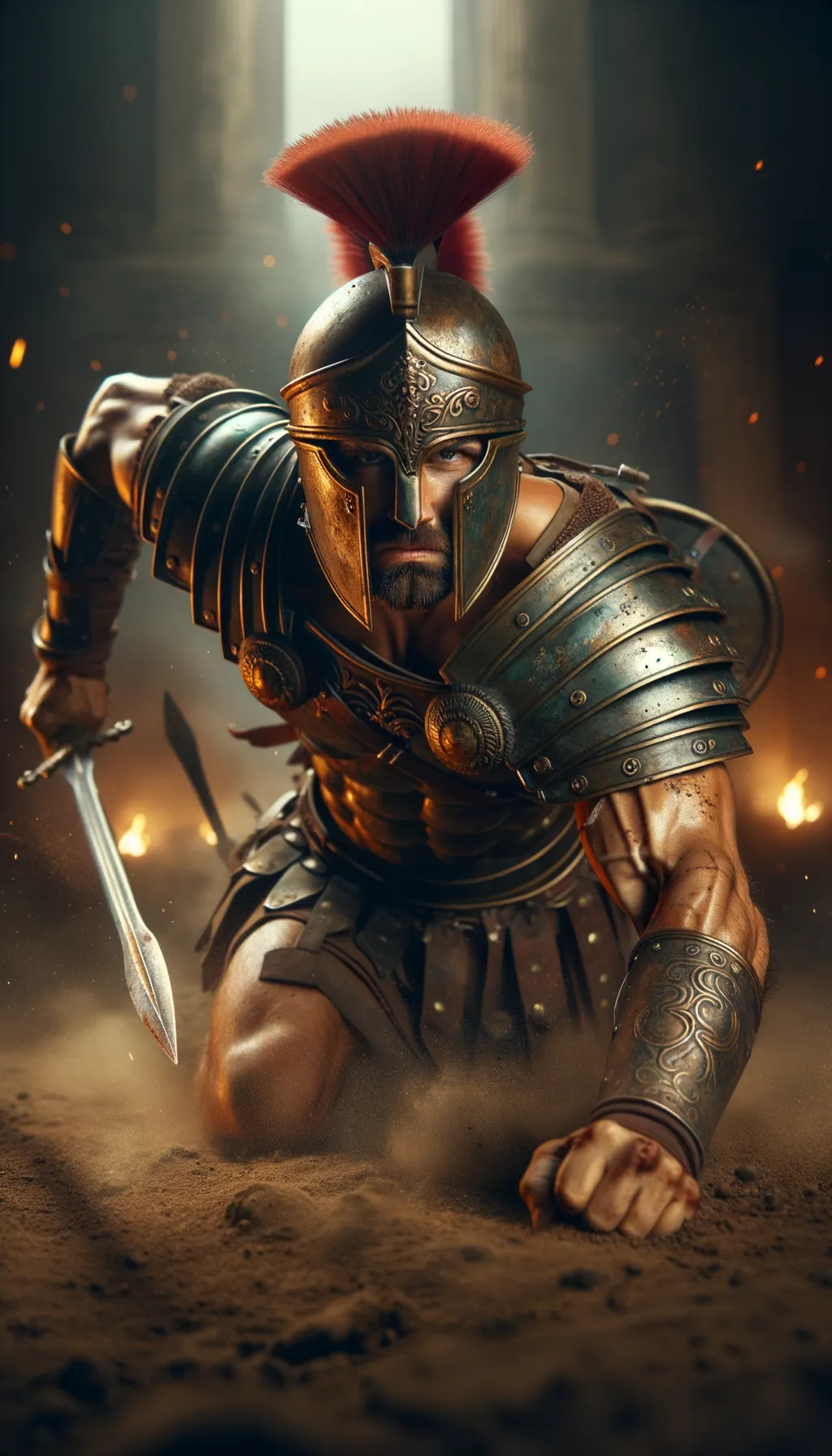
Greek mythology is a vast universe full of stories and characters that have influenced Western culture in countless ways. Among these characters, one of the most important is Tyndareus, king of Sparta. His life, full of intrigue and conflict, is a perfect example of the complex and fascinating plots that characterize Greek mythology.
Searches about Greek proper names often include “meaning” or “etymology” as a related term. This section provides that semantic coverage.
The Meaning of the Name Tyndareus
The name Tyndareus (Τυνδάρεως, Tyndáreōs in ancient Greek) has no clear Greek etymology, which has led some scholars to consider it of pre-Hellenic origin, predating the arrival of the Greek peoples in the Peloponnese. This circumstance reinforces the idea that Tyndareus represents a very ancient figure within Spartan tradition, linked to the earliest royal lineages of the region of Laconia.
Summary Sheet of Tyndareus
| Fact | Information |
|---|---|
| Name | Tyndareus (also Tyndareos or Tyndareo) |
| Nature | Mortal, king of Sparta |
| Parents | Oebalus and Gorgophone |
| Siblings | Hippocoon and Icarius |
| Spouse | Leda |
| His Wife’s Lover | Zeus (transformed into a swan) |
| Children | Castor, Pollux, Helen and Clytemnestra |
| Son-in-Law | Menelaus (husband of Helen) |
| Kingdom | Sparta |
| Main Mythological Episode | Trojan War |
| Death | At the hands of Aegisthus, according to some versions |
| Classical Sources | Apollodorus’s Library, Iliad, Odyssey, Greek tragedies |
Tyndareos, Tyndareo, or Tyndareus: The King of Sparta
Tyndareus (also known as Tyndareos or Tyndareo) was an outstanding figure in Greek mythology, known as the monarch of Sparta, one of the most influential cities of ancient Greece. He was the son of Oebalus and Gorgophone, and inherited the throne after his father. He was much more than a simple king, as he was also famous for his skill in combat and his prominent role in several episodes of mythology.
The reign of Tyndareus was marked by his strong character and his sense of justice. During his period of rule, Sparta achieved great prosperity and stability. Despite the numerous wars and conflicts that shook ancient Greece, he always managed to maintain peace in his kingdom.
In addition to his role as ruler, he is also remembered for his complicated personal life. His marriage to Leda, his relationship with the gods and his offspring were subjects of fascination and study for centuries.
King Tyndareus in Greek Mythology
King Tyndareus is a figure of considerable importance in Greek mythology. His role as ruler of Sparta gives him a prominent place in numerous stories and legends. Throughout his life, he interacted with numerous gods and heroes, and his influence extended beyond the borders of his own kingdom.
His presence in Greek mythology is key to understanding various episodes of this rich tradition. For example, the role of Tyndareus is crucial in the story of the Trojan War, one of the best-known episodes of mythology. He also plays a prominent role in the stories of his children, among them Castor and Pollux, Helen, and Clytemnestra.
He is not only a figure of Greek mythology, but also a relevant figure in the history of ancient Greece. His rule represented a period of prosperity in Sparta, and his choices and actions had a significant effect on the progress of Greek civilization.
The Marriage of Tyndareus: The Love Between Leda and Zeus
The marriage of Tyndareus to Leda is one of the most famous episodes of Greek mythology. Leda was a beautiful woman who caught the attention of Zeus, king of the gods, who transformed into a swan to seduce her. From this union came two eggs, from which their four children were born.
Despite knowing the divine origin of the children, he adopted them as his own. His love for Leda and his acceptance of Zeus’s intervention in his marriage are proof of the complexity of his character and of the complex relationships between gods and mortals in Greek mythology.
Even in his marriage, he demonstrated his role as a leader. Despite the divine intervention, he did not abandon his wife or his children, and kept his family together despite the difficult circumstances.
The Descendants of Tyndareus: The Siblings of Mythology
The mortal Tyndareus, son of Eboea and Oebalus, belonged to the noblest Spartan lineage. However, his true fame is not due to his parents, but to his children, who have occupied a central place in Greek mythology. He married Leda, who, seduced by Zeus disguised as a swan, gave birth to two pairs of twins: Castor and Pollux, and Helen and Clytemnestra.
Family Tree of Tyndareus
| Relative | Relationship to Tyndareus | Relevant Fact |
|---|---|---|
| Oebalus | Father | King of Sparta before Tyndareus |
| Gorgophone | Mother | Daughter of Perseus |
| Hippocoon | Brother | Seized the throne of Sparta from him before Heracles restored it to Tyndareus |
| Icarius | Brother | Father of Penelope, the wife of Odysseus |
| Leda | Wife | Queen of Sparta, seduced by Zeus |
| Castor | Son (with Leda) | One of the Dioscuri, mortal according to the dominant tradition |
| Pollux | Son (with Leda and Zeus) | The other Dioscurus, of semi-divine nature |
| Helen | Daughter (with Leda and Zeus) | Cause of the Trojan War |
| Clytemnestra | Daughter (with Leda) | Wife of Agamemnon |
| Menelaus | Son-in-Law | Husband of Helen, king of Sparta after Tyndareus |
| Agamemnon | Son-in-Law | Husband of Clytemnestra, king of Mycenae |
Note on the Dioscuri: in the most widespread tradition, only Pollux (and sometimes Helen) are the biological children of Zeus, while Castor and Clytemnestra are mortal children of Tyndareus. This is one of the variants of the myth that can be nuanced in the text if greater philological precision is desired.
These children of mythology are legendary figures in the Greek imagination. Castor and Pollux, known as the Dioscuri, are famous for their inseparable brotherhood and bravery in battle. Helen, on the other hand, is remembered primarily for her extraordinary beauty, which was the cause of the greatest conflict of antiquity, the Trojan War. Finally, Clytemnestra is recognized as the wife of Agamemnon, king of Mycenae, and is known for her role in avenging the murder of her daughter Iphigenia.
The Children of Tyndareus: Helen, Clytemnestra, Castor, and Pollux
The descendants of Tyndareus are a cast of legendary figures who have deeply influenced Greek culture and literature. Helen, the most famous of the four, is the one most closely associated with Tyndareus. Her divine beauty, which even the gods coveted, unleashed the Trojan War when she was abducted by Paris, the Trojan prince.
Castor and Pollux, the Dioscuri, are equally famous for their brotherhood and skills in battle. They were granted a place among the stars as the constellation Gemini, a sign of their shared immortality. Clytemnestra, although less famous than Helen, is a tragic figure in the legends of the Trojan War, known for her role in the death of her husband Agamemnon.
His Role in the Trojan War
The role of Tyndareus in the Trojan War is defined primarily by his relationship with his daughter Helen. When Paris, prince of Troy, abducted Helen, Tyndareus was one of the first to demand revenge. According to some versions of the legend, it was Tyndareus who called on all of Helen’s former suitors to honor their oath and help recover her.
Although he did not participate directly in the war, his influence is undeniable. Without Helen, there would have been no Trojan War, and without Tyndareus, Helen’s beauty would not have been so fatally desired.
The Death of Tyndareus: The End of a Spartan Era
The end of Tyndareus is a tragic moment in Greek mythology. According to the stories, he died at the hands of his nephew Aegisthus, who had been exiled from Sparta years before. His death represents the end of an era and the beginning of a dark period in the history of Sparta.
His death is equally important in mythology, as it marks the beginning of a series of tragic events that lead to the defeat of the House of Atreus and the end of the Trojan War. Therefore, Tyndareus is not only a powerful and respected king, but also a tragic figure whose end symbolizes the fall of a heroic era.
The Portrayal of a King
In ancient literature, Tyndareus is a complex and multifaceted figure. Although he was a powerful and courageous king, he was also an affectionate father whose weakness for Helen often clouded his judgment. As Leda’s husband, Tyndareus is a devoted man, unable to protect his wife from Zeus’s advances.
In this context, he symbolizes both power and helplessness before the gods. Although he is a king, he is unable to protect his family from divine schemes, which reflects human fragility in the face of the divine. Throughout ancient literature, he is a deeply human figure, whose life and death reflect the complexity and tragedy of the human condition in the ancient world.
Influence on Greek Art and Culture
The figure of Tyndareus has left an indelible mark on Greek art and culture. As king of Sparta, his image often symbolizes the powerful and austere city-state. In art, he appears as a noble king, with a crown and a scepter, sometimes accompanied by his famous children.
Moreover, the story of Tyndareus and his family has inspired numerous works of art over the centuries. From Greek tragedies to Renaissance art and modern literature, his figure remains a source of inspiration for artists and writers around the world.
His Relationship with the Immortals
Despite being a mortal, Tyndareus had a close and complicated relationship with the gods. As Leda’s husband, he was indirectly a victim of Zeus’s love, who deceived his wife by disguising himself as a swan. Moreover, his children, Castor and Pollux, were blessed with immortality by Zeus, demonstrating the divine favor enjoyed by Tyndareus’s family.
However, this proximity to the divine also brought suffering to Tyndareus. It gave him great influence over the events that led to the Trojan War and ultimately to his tragic death. Thus, Tyndareus’s relationship with the gods illustrates both the benefits and the dangers of divine intervention in human life.
Spartan Mythology: The Legacy of Tyndareus
The legacy of Tyndareus in Spartan mythology is undeniable. As king of Sparta, he contributed significantly to the city-state’s reputation as a place of courage, honor, and discipline. Sparta, under his leadership, became one of the most powerful and respected regions of ancient Greece.
Moreover, he left a lasting legacy through his children. Castor and Pollux became legendary heroes, Helen the most beautiful woman in the world, and Clytemnestra one of the most tragic figures in Greek mythology. Each of them, in their own way, has contributed to the rich mythological tradition of Sparta and left an indelible mark on Greek history and culture.
From Myth to History, an Unforgettable Figure
In Greek mythology, Tyndareus is best known as the king of Sparta and husband of Leda, whose amorous encounters with Zeus gave rise to some of the most notable figures in the Greek imagination. According to legend, Tyndareus and Leda had four children, including the infamous Helen of Troy and the immortal twins Castor and Pollux, also known as the Dioscuri. However, the story of Tyndareus is much more than a simple anecdote of birth and offspring.
He was a mortal of noble lineage, son of Oebalus and Gorgophone, and brother of the famous king Menelaus. Despite his humble origin, he proved to be a capable and just leader, earning the respect of his people and his peers. He ascended to the throne of Sparta after his father’s death, and under his reign, Sparta prospered and became one of the most powerful city-states of ancient Greece.
His story is also marked by tragedy and loss. Despite his passion for Leda, he had to accept that she became pregnant by Zeus, who had taken the form of a swan to seduce her. In addition, he had to endure the abduction of his daughter Helen by Paris, which triggered the Trojan War. Although he did not participate directly in the war, his influence was strongly felt, as it was he who helped gather the coalition of kings that ultimately defeated Troy.
Frequently Asked Questions About Tyndareus
Was Tyndareus a god or a mortal? Tyndareus was entirely mortal. Unlike some of his children, he never received immortality nor was he deified.
Why didn’t Tyndareus punish Zeus for seducing Leda? In Greek mythology, mortals could rarely oppose the will of the gods. Tyndareus accepted Leda’s children as his own, which is interpreted as a sign of wisdom and resignation before the divine rather than weakness.
Who succeeded Tyndareus as king of Sparta? According to the most widespread tradition, the throne of Sparta passed to Menelaus, his son-in-law, upon his marriage to Helen.
Were Castor and Pollux the sons of Tyndareus or Zeus? It depends on the version: the most common holds that Pollux was the son of Zeus (and therefore immortal) while Castor was the mortal son of Tyndareus, although both share the same birth myth through Leda.
Does Tyndareus appear in the Iliad or the Odyssey? He is mentioned as the father of Helen and the Dioscuri, although his direct narrative role is limited; his importance in Greek tradition stems mainly from Apollodorus’s Library and the later tragedies focused on his descendants.

Subscribe
If you want to receive in your mailbox stories, curiosities and legends of the most fascinating creatures of classical mythology just fill in this form.
Continue reading
If you liked this article, you like mythology. And in this case, we have much more to offer you. Discover new adventures, heroes, nymphs, gods, battles, teachings… Just click on the button.
Deimos, the God of Terror
If we venture into the fascinating universe of Greek mythology, we find Deimos, one of the least explored deities but with undeniable relevance. Deimos, whose name means "dread," is an enigmatic god linked to the darkest and most frightening aspects of human...
Tiresias, the Blind Prophet
One of the most intriguing and multifaceted characters in Greek mythology is Tiresias, the blind prophet of Thebes. This seer, who spent seven years as a woman before becoming a man again, plays a fundamental role in several literary works, including tragedies by...
The Sacrifice of Iphigenia
Greek mythology is full of heroes, gods, and complex characters, each with their own stories and lessons. One of these figures, perhaps somewhat less well known, is Iphigenia, the unfortunate daughter of Agamemnon and Clytemnestra. Although her story is tragic, her...
Erysichthon, Insatiable Hunger
The ancient stories of Greek mythology have fascinated humanity for thousands of years. Their narratives, full of gods, heroes, mythical creatures, and moral lessons, have influenced many cultures and remain relevant to this day. In this article, we will focus on one...
The Myth of Philomela and Procne
Today we discuss the myth of Philomela and Procne. It is a tragic and moving story from ancient Greek mythology, notable both for the rawness of its details and for its powerful symbolism. It is the story of two sisters, bound by unbreakable ties of loyalty and love,...

Leda and the Swan
Greek mythology is full of astonishing stories that have left an indelible mark on culture and art over the centuries. One of the most intriguing and controversial tales is that of "Leda and the Swan." The story of the seduction of the mortal Leda by the god Zeus...

Who Was the Goddess Atalanta?
Atalanta, an iconic figure in Greek mythology, is famous for her tireless speed and sharp wit. In a world dominated by men, she emerged as a heroine, defying conventional norms and forging her own path. In every tale about her life, her resilience and her ability to...
What Is the Story of Pygmalion and Galatea?
The names Pygmalion and Galatea resonate in the collective imagination. They are two figures who have inspired poets, writers, and artists throughout the centuries. The love story between the sculptor and his creation is one of the most moving and fascinating in Greek...

Nereus, the Old God of the Sea
Greek mythology is a vast mosaic of gods, heroes, and legendary entities, each with its own narrative and singular character. One of these gods is Nereus, an ancient sea deity who, although less well known than Poseidon, plays an important role in the Greek pantheon....

mitologiaclasica.com is a website dedicated to explore and spread the fascinating richness of mythology, offering a vast compendium of stories, characters and legends.
Explore
Greek Mythology
Roman Mythology
Norse Mythology
Egyptian Mythology
Hindu Mythology
Chinese Mythology
Japanese Mythology
Celtic Mythology
Privacy Policy
Privacy Policy
Copyright mitologiaclasica.com