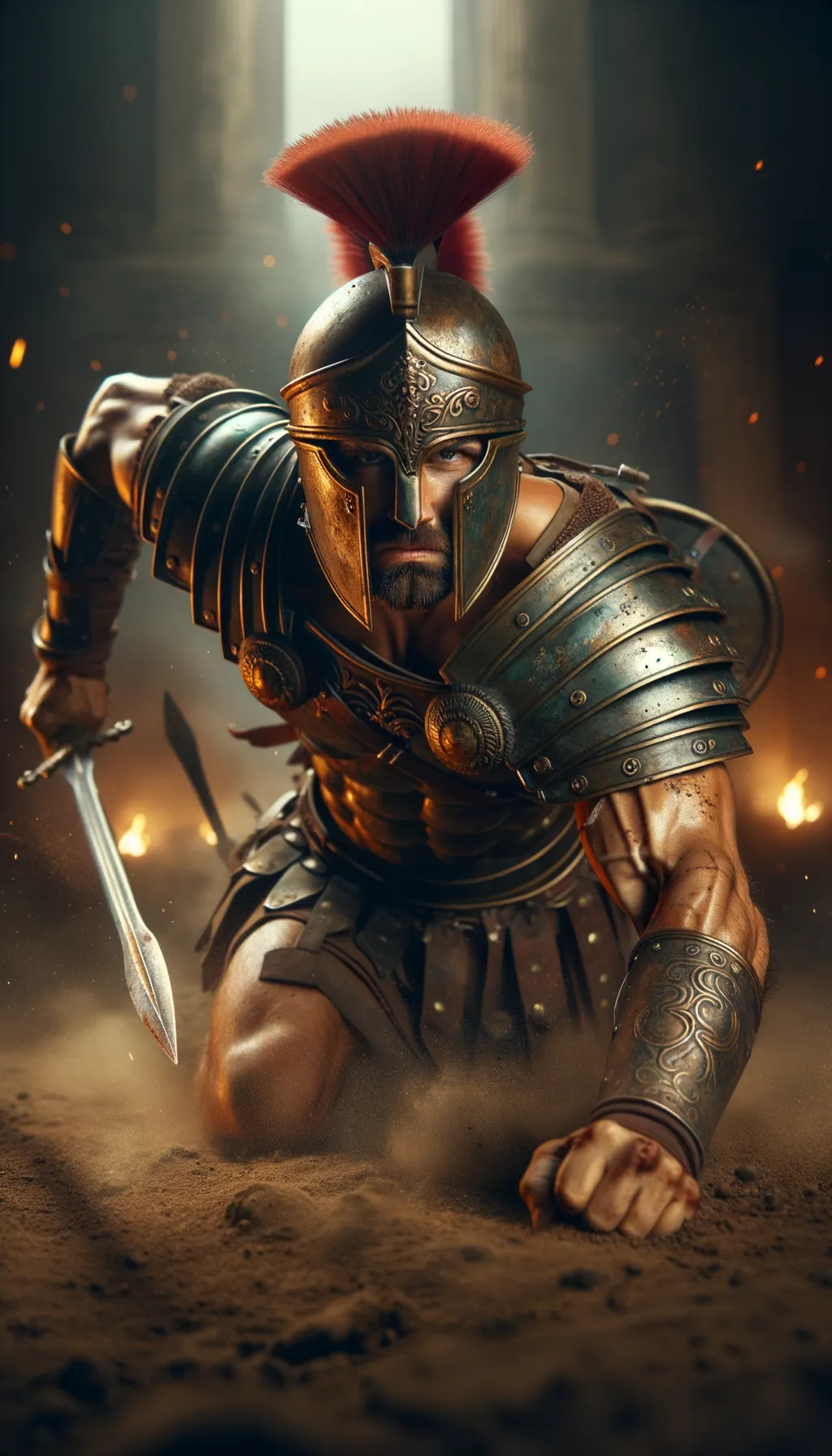
In the vast array of mythological beings that inhabit the legends of ancient Greece, the Gorgons hold a particularly terrifying place. These female beings, whose name comes from the ancient Greek word “gorgós,” meaning “fierce” or “terrible,” are famous mainly for their ability to turn men to stone with just a look. Below, we will explore the history, origin, genealogy, and cultural impact of these fascinating and terrifying creatures.
Who Are the Gorgons of Greek Mythology?
The Gorgons are three monstrous sisters: Medusa, Stheno, and Euryale. Their fame in ancient Greek stories lies in their terrifying appearance and their supernatural power to turn those who look directly at them into stone. According to mythology, they lived at the western edge of the known world, near the ocean, in a place full of shadows and endless horrors. All three are daughters of the sea gods Phorcys and Ceto.
No other mythological being better represents the idea of beauty corrupted by evil than the Gorgons. Originally, the three sisters were beautiful, but they were transformed into monsters as divine punishment. Medusa, in particular, is remembered for her hair made of snakes.
Origin and Genealogy of the Gorgons
The oldest account of the Gorgons is found in Hesiod’s “Theogony”, where they are described as daughters of two ancient sea gods, Phorcys and Ceto. According to this text, the Gorgons lived at the edge of the world, in the place where night was born. They are believed to predate the Olympian gods and to be part of a generation of primordial gods and monsters.
In the earliest times of Greek mythology, the Gorgons were sea beings with the head of a woman and the body of a bird. Over time, however, their image was transformed into the one we know today: women with a monstrous face and hair of snakes.
Medusa: The Most Famous Gorgon
Medusa is, without a doubt, the best known of the three Gorgons. According to the myth, she was a maiden of great beauty who was seduced or raped by Poseidon in the temple of Athena. As punishment, the goddess transformed her into a Gorgon, and thus her beautiful hair became venomous snakes.
Medusa is also the only one of the three Gorgons who was mortal. She was killed by the hero Perseus, who used a mirror to avoid looking at her directly and thus escape her terrible power of petrification.
Stheno and Euryale: The Immortal Sisters
The other two Gorgons, Stheno and Euryale, unlike Medusa, were immortal. Like their sister, they were punished with a monstrous appearance. Stheno was famous for her strength and ferocity, and Euryale for her piercing scream.
Little is said about Stheno and Euryale in the myths; their role usually remains in the background compared to the more famous and dramatic figure of Medusa. However, both Stheno and Euryale play a role in the story of Medusa’s death, since they pursue Perseus after the killing of their sister.
The Terrifying Appearance of the Gorgons
The Gorgons are the embodiment of monstrousness. Their face, a broken beauty, was furrowed with wrinkles and their skin was green. But the most terrifying feature was their hair, made of venomous snakes that writhed and hissed. In addition, their hands were made of bronze, their wings of gold, and their teeth like those of a boar.
They had a face so terrible that men were petrified upon looking at it; that was their best-known characteristic. But it was also said that they had bronze claws and that their breath was deadly.
The Power to Petrify: The Unsettling Gift of the Gorgons
The Gorgons’ power to turn anyone who looked at them into stone is one of the best-known aspects of their myth. This power is linked to the idea that a gaze can be a means of transmitting negative energy or a curse. This is a concept found in many cultures, and in ancient Greece it was known as the “evil eye.”
The Gorgons’ power to petrify is an extremely potent manifestation of this “evil eye.” It is a literal punishment: the victim is left immobilized by terror, condemned to an eternity of fear.
The Battle Between Perseus and Medusa
The story of Perseus and Medusa is one of the most famous in Greek mythology. Perseus’s mother, Danaë, was locked in a tower by her father Acrisius, who had received a prophecy saying that his grandson would kill him. But Zeus transformed himself into a shower of gold and made her pregnant.
Perseus, now an adult, was sent by King Polydectes to kill Medusa as part of a trap to marry his mother. With the help of the gods, he managed to behead her and used her head as a weapon until he gave it to Athena, who placed it on her shield.
The Beheading of Medusa and Her Eternal Affliction
After Medusa’s death, the Gorgon found no rest. Her head, with the snakes still alive, was used by Perseus to petrify his enemies. That was his powerful weapon in battle.
Finally, Athena received Medusa’s head and placed it on her aegis, a type of shield. In this way, even in death, Medusa remained an object of terror. Her face became a symbol of protection and power for the goddess of wisdom and war.
The Importance of the Gorgons in Ancient Art
Images of the Gorgons are omnipresent in ancient art, especially in Greek pottery and temples. They were often protective talismans. The famous head of Medusa, or Gorgoneion, was a protective amulet, believed to be able to ward off evil.
Depictions of the battle between Perseus and Medusa are also very common. In these scenes, Medusa appears with a human body, but with snakes for hair and her characteristic petrifying gaze.
The Gorgons in Classical Literature
Indeed, the Gorgons are protagonists in various works of classical literature, from the tragedies of Aeschylus and Euripides to Virgil’s “Aeneid.” In general, they are symbols of horror, monstrousness, and death.
The story of Medusa, in particular, is a metaphor for the objectification of women, an example of divine punishment, or a parable about the destructive power of beauty.
Their Role in Modern Popular Culture
The myth of the Gorgons has had a great influence on modern popular culture. They appear in numerous works of art, literature, film, and television. The character of Medusa, in particular, has a large number of adaptations, from horror films to fantasy television series.
The image of Medusa is a powerful symbol in pop culture. It is often used to represent powerful, fearsome, or evil women. In feminism, on the other hand, Medusa is sometimes a symbol of resistance and female empowerment.

Subscribe
If you want to receive in your mailbox stories, curiosities and legends of the most fascinating creatures of classical mythology just fill in this form.
Continue reading
If you liked this article, you like mythology. And in this case, we have much more to offer you. Discover new adventures, heroes, nymphs, gods, battles, teachings… Just click on the button.
Deimos, the God of Terror
If we venture into the fascinating universe of Greek mythology, we find Deimos, one of the least explored deities but with undeniable relevance. Deimos, whose name means "dread," is an enigmatic god linked to the darkest and most frightening aspects of human...
Tiresias, the Blind Prophet
One of the most intriguing and multifaceted characters in Greek mythology is Tiresias, the blind prophet of Thebes. This seer, who spent seven years as a woman before becoming a man again, plays a fundamental role in several literary works, including tragedies by...
The Sacrifice of Iphigenia
Greek mythology is full of heroes, gods, and complex characters, each with their own stories and lessons. One of these figures, perhaps somewhat less well known, is Iphigenia, the unfortunate daughter of Agamemnon and Clytemnestra. Although her story is tragic, her...
Erysichthon, Insatiable Hunger
The ancient stories of Greek mythology have fascinated humanity for thousands of years. Their narratives, full of gods, heroes, mythical creatures, and moral lessons, have influenced many cultures and remain relevant to this day. In this article, we will focus on one...
The Myth of Philomela and Procne
Today we discuss the myth of Philomela and Procne. It is a tragic and moving story from ancient Greek mythology, notable both for the rawness of its details and for its powerful symbolism. It is the story of two sisters, bound by unbreakable ties of loyalty and love,...
Leda and the Swan
Greek mythology is full of astonishing stories that have left an indelible mark on culture and art over the centuries. One of the most intriguing and controversial tales is that of "Leda and the Swan." The story of the seduction of the mortal Leda by the god Zeus...
Who Was the Goddess Atalanta?
Atalanta, an iconic figure in Greek mythology, is famous for her tireless speed and sharp wit. In a world dominated by men, she emerged as a heroine, defying conventional norms and forging her own path. In every tale about her life, her resilience and her ability to...
What Is the Story of Pygmalion and Galatea?
The names Pygmalion and Galatea resonate in the collective imagination. They are two figures who have inspired poets, writers, and artists throughout the centuries. The love story between the sculptor and his creation is one of the most moving and fascinating in Greek...
Nereus, the Old God of the Sea
Greek mythology is a vast mosaic of gods, heroes, and legendary entities, each with its own narrative and singular character. One of these gods is Nereus, an ancient sea deity who, although less well known than Poseidon, plays an important role in the Greek pantheon....

mitologiaclasica.com is a website dedicated to explore and spread the fascinating richness of mythology, offering a vast compendium of stories, characters and legends.
Explore
Greek Mythology
Roman Mythology
Norse Mythology
Egyptian Mythology
Hindu Mythology
Chinese Mythology
Japanese Mythology
Celtic Mythology
Privacy Policy
Privacy Policy
Copyright mitologiaclasica.com