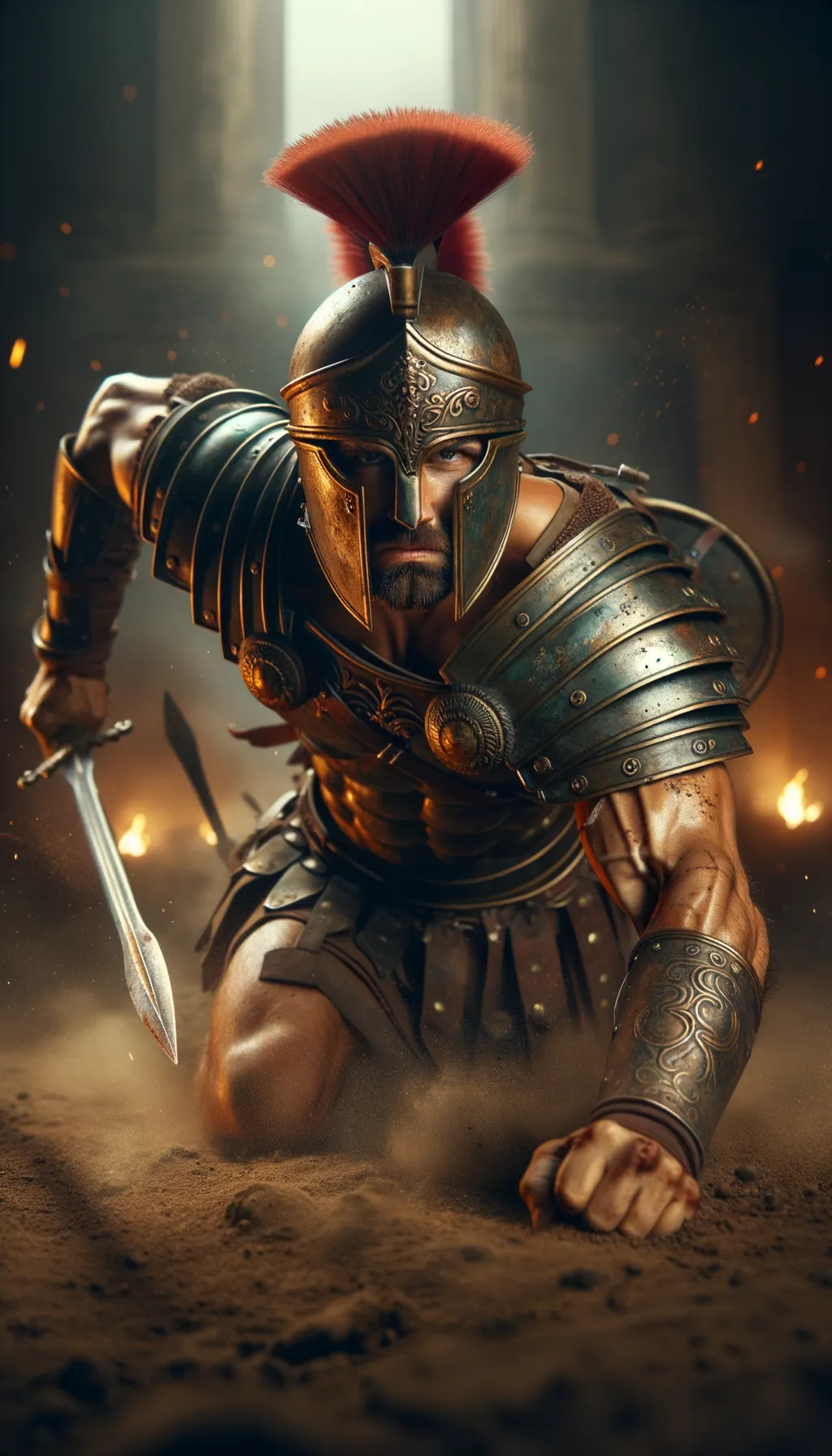
Phaedra’s Forbidden Love
Phaedra is a significant figure in Greek mythology, best known for her forbidden love for her stepson, Hippolytus. Her story, told in numerous tragedies and literary works, is a harrowing tale of excessive passion and the dangers of lying. She is a complex character, whose inner struggle and desperate actions have fascinated readers and audiences for centuries.
Daughter of Minos and Pasiphae
Phaedra is said to have been the daughter of King Minos and Queen Pasiphae of Crete. According to mythology, she was the sister of the Minotaur, a monster half man, half bull, who lived in the Labyrinth of Crete. She grew up in the palace of Knossos, where she witnessed her father’s cruelty and her mother’s lust for a white bull, which resulted in the birth of the Minotaur.
The Labyrinth of Crete and the Minotaur
The Labyrinth of Crete, built by Daedalus, and the fearsome Minotaur, half man and half bull, are essential elements that play a crucial role in the tragic story of Phaedra, which is full of intrigue, passion, and tragedy. Each year, according to cruel tradition, seven brave young men and seven beautiful maidens were selected in the prosperous city of Athens to be sent as tribute to the mysterious island of Crete.
There, they faced a tragic fate: to be sacrificed to the fearsome Minotaur. When Theseus, the bold descendant of the powerful monarch of the majestic city of Athens, arrived on the enigmatic island as part of this annual sacrifice, the beautiful and unfortunate Phaedra fell deeply in love with him and, with skill and courage, offered him her support to fight and defeat the fearsome Minotaur, thereby helping him escape the complex and perilous jaws of the labyrinth.
Her Marriage to Theseus, King of Athens
After the killing of the Minotaur, Theseus took Phaedra with him to Athens and married her. Theseus already had a son, Hippolytus, from his relationship with the Amazon Antiope. Hippolytus was a handsome young man, devoted to the goddess Artemis, and it is here that the most controversial and tragic chapter of Phaedra’s life begins.
Forbidden Desire: Phaedra and Her Passion for Hippolytus
Despite being married to Theseus, Phaedra fell hopelessly in love with her stepson, Hippolytus. This forbidden love consumed her, and despite her attempts to resist it, her desire only grew. In an act of desperation, she finally confessed her feelings to Hippolytus, hoping he would return her love.
Phaedra’s Tragedy: Hippolytus’s Rejection
Hippolytus, devoted to Artemis and abstinent from carnal love, rejected Phaedra’s advances. This scorn devastated the woman who had sacrificed everything for her love of Hippolytus. In her despair, Phaedra decided to take a course of action that would seal her fate and that of everyone around her.
Phaedra’s Revenge: False Accusation and the Death of Hippolytus
Hurt by Hippolytus’s rejection, Phaedra falsely accused her stepson of attempting to rape her. Theseus, believing his wife’s words, asked the god Poseidon to kill Hippolytus. The sea god granted Theseus’s wish and caused an accident that would kill Hippolytus.
Phaedra’s Guilt and Suicide: A Tragic Ending
After Hippolytus’s death, Phaedra, consumed by guilt and grief, took her own life. In her suicide note, she revealed the truth about her false accusation against Hippolytus. Thus, her life ended in tragedy, leaving a legacy of excessive passion and deceit.
Greek Tragedies and Modern Adaptations
Phaedra’s story has been adapted in numerous tragedies and plays, from ancient Greece to the present day. Euripides and Seneca are two of the best-known authors who have recreated Phaedra’s tragedy. In modern times, playwrights have reinterpreted this same story, exploring the complexities of her character and her tragic fate.
Her Figure in World Literature
Not only in the theatrical realm, the depiction of Phaedra has managed to establish itself as an emblematic character in the vast literary tradition worldwide. From the ancient times of Greek tragedies to contemporary literary works, her fascinating story lives on across a wide variety of literary genres throughout the centuries.
Her tale has been a source of inspiration for numerous writers throughout history, who have masterfully captured the intensity of her emotions, from the most burning passion to the deepest despair and the most heartbreaking tragedy, in their literary creations.
Psychological Analysis of Phaedra’s Character
Phaedra is a complex and fascinating character who has been the subject of numerous interpretations throughout literary history. Her psychology is characterized by a deep inner struggle and a series of contradictions that make her a tragic character par excellence.
Dual Nature and Inner Conflict
Phaedra possesses a dual nature that immerses her in a constant inner conflict. On one hand, she is a direct descendant of the sun, which gives her a divine nature. On the other, she is a simple mortal subject to human passions. This duality manifests in her constant struggle against her incestuous passion, which consumes her and leads her to act contradictorily.
Unbridled Passion and Forbidden Love
The main driving force of Phaedra’s behavior is her passionate love for Hippolytus, her stepson. This forbidden and incestuous love is triggered by a single glance, which demonstrates the intensity and irrationality of her feelings. The force of this passion is such that it ends up destroying her will and drives her to act desperately.
Shame and Guilt
She is fully aware of the impropriety of her feelings, which generates in her a profound shame and a sense of guilt. This awareness of her moral transgression leads her to consider suicide as a way to escape her shameful passion.
Ambivalence and Contradiction
Phaedra’s personality is marked by constant ambivalence. On one hand, she wavers between her desire and her moral duty. On the other, she oscillates between submission to social norms and her desire to rebel against them. This inner contradiction is reflected in her actions, which range from the confession of her love to the false accusation against Hippolytus.
Search for Freedom and Self-Determination
In some modern interpretations, such as that of Miguel de Unamuno, Phaedra is a woman seeking to free herself from social and marital oppression. Her love for Hippolytus becomes a symbol of her desire for freedom and self-determination. This Phaedra is strong, determined, and self-assured, willing to fight for her ideals even if it means her own downfall.
The Influence of Environment and Heritage
Phaedra’s psychology is also shaped by the influence of her environment and her heritage. In some versions, such as that of Racine, Phaedra feels predestined to evil because of her maternal ancestry. This belief in an inescapable fate contributes to her despair and her inability to resist her impulses.
In conclusion, she emerges as a psychologically complex character, torn between desire and duty, passion and reason, freedom and social conventions. Her inner struggle and her contradictions make her an enduring symbol of the human condition and its deepest conflicts.
A Symbol of Excessive Passion and the Consequences of Deceit
Finally, Phaedra is a powerful symbol of passion and the devastating consequences of deceit. Her story is a reminder of the dangers of lying and the costs of unrequited passion. Despite her tragic end, she continues to fascinate readers and audiences, and her legacy endures in literature and theater.
Phaedra’s story is one of the most tragic and captivating in Greek mythology. Through the centuries, her tale has inspired poets, playwrights, and psychologists. Like all great tragedies, her story invites us to reflect on the limits of passion and the dangers of lying.

Subscribe
If you want to receive in your mailbox stories, curiosities and legends of the most fascinating creatures of classical mythology just fill in this form.
Continue reading
If you liked this article, you like mythology. And in this case, we have much more to offer you. Discover new adventures, heroes, nymphs, gods, battles, teachings… Just click on the button.
Deimos, the God of Terror
If we venture into the fascinating universe of Greek mythology, we find Deimos, one of the least explored deities but with undeniable relevance. Deimos, whose name means "dread," is an enigmatic god linked to the darkest and most frightening aspects of human...
Tiresias, the Blind Prophet
One of the most intriguing and multifaceted characters in Greek mythology is Tiresias, the blind prophet of Thebes. This seer, who spent seven years as a woman before becoming a man again, plays a fundamental role in several literary works, including tragedies by...
The Sacrifice of Iphigenia
Greek mythology is full of heroes, gods, and complex characters, each with their own stories and lessons. One of these figures, perhaps somewhat less well known, is Iphigenia, the unfortunate daughter of Agamemnon and Clytemnestra. Although her story is tragic, her...
Erysichthon, Insatiable Hunger
The ancient stories of Greek mythology have fascinated humanity for thousands of years. Their narratives, full of gods, heroes, mythical creatures, and moral lessons, have influenced many cultures and remain relevant to this day. In this article, we will focus on one...
The Myth of Philomela and Procne
Today we discuss the myth of Philomela and Procne. It is a tragic and moving story from ancient Greek mythology, notable both for the rawness of its details and for its powerful symbolism. It is the story of two sisters, bound by unbreakable ties of loyalty and love,...
Leda and the Swan
Greek mythology is full of astonishing stories that have left an indelible mark on culture and art over the centuries. One of the most intriguing and controversial tales is that of "Leda and the Swan." The story of the seduction of the mortal Leda by the god Zeus...
Who Was the Goddess Atalanta?
Atalanta, an iconic figure in Greek mythology, is famous for her tireless speed and sharp wit. In a world dominated by men, she emerged as a heroine, defying conventional norms and forging her own path. In every tale about her life, her resilience and her ability to...
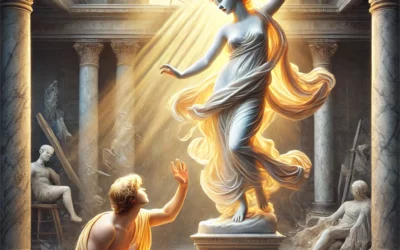
What Is the Story of Pygmalion and Galatea?
The names Pygmalion and Galatea resonate in the collective imagination. They are two figures who have inspired poets, writers, and artists throughout the centuries. The love story between the sculptor and his creation is one of the most moving and fascinating in Greek...
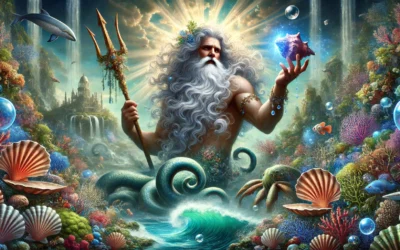
Nereus, the Old God of the Sea
Greek mythology is a vast mosaic of gods, heroes, and legendary entities, each with its own narrative and singular character. One of these gods is Nereus, an ancient sea deity who, although less well known than Poseidon, plays an important role in the Greek pantheon....

mitologiaclasica.com is a website dedicated to explore and spread the fascinating richness of mythology, offering a vast compendium of stories, characters and legends.
Explore
Greek Mythology
Roman Mythology
Norse Mythology
Egyptian Mythology
Hindu Mythology
Chinese Mythology
Japanese Mythology
Celtic Mythology
Privacy Policy
Privacy Policy
Copyright mitologiaclasica.com