In antiquity, the Romans explained the mysteries of life and death through their gods and goddesses. In this sense, Mors, the personification of death in Roman mythology, held an important place in their pantheon. Death, which is always present and feared, but also respected and venerated, took shape in Mors, a god whose legends and depictions tell us how the Romans faced the imminence of mortality.
The Personification of Death in Roman Mythology: Mors
Mors is the god of death in Roman mythology. However, it is important to emphasize that he is not the god of the underworld, but the personification of death itself, of the act of dying. This distinction is essential to understanding his role in Roman mythology and his influence on the mindset of the people of that time.
He has no fixed image; he is not depicted as an old man with a scythe, unlike death in the mythology and folklore of other cultures. Instead, he is an invisible, inescapable, and omnipresent presence.
Despite lacking a concrete physical form, Mors has a significant presence in Roman mythology. His role as messenger of death and as the force that ends human life gives him an air of fear and respect.
The Origins of Mors: Myth or Reality
The origin of Mors is a subject of debate among experts. Some argue that he was not originally a Roman god, but was adopted from Greek mythology, where death was personified by the god Thanatos. If true, this theory would explain the lack of a defined physical representation of Mors.
Others argue that he is a purely Roman creation, a response to the need to personify death and give it a place in the pantheon. Regardless of his origin, Mors became a central figure in Roman mythology, an entity that gave meaning to the incomprehensible reality of death.
Historical Context: How Did the Figure of Mors Emerge?
The emergence of Mors in Roman mythology appears to be closely linked to the evolution of Roman civilization and its conception of life and death. In the early stages of the Roman Republic, death was seen as a natural process and was not understood as a divine punishment.
However, as Rome became an empire and began to face the realities of war and conquest, death became a constant presence. In this context, the figure of Mors began to take shape.
The figure of Mors may also have arisen as a way of making sense of death and the process of dying. The Romans, like many other cultures, needed an explanation for death, a phenomenon that escapes our understanding and control.
The Terrifying Power of Death
The god Mors, as the personification of death, has some significant attributes. He is credited with the power to end human life, which gives him an air of dread.
He is also relentless; when the time comes to die, there is no escape. Death comes for everyone, regardless of rank, wealth, or power. This inevitability is one of the most feared aspects of Mors.
In addition to his power and relentlessness, he is credited with an impartial character. He makes no distinction between rich and poor, powerful and powerless; we all face death on equal terms.
Literary References
The figure of Mors frequently appears in Roman literature. For example, in Virgil’s “Aeneid,” Mors is referenced on multiple occasions as the power that ends human existence.
In Roman poetry, he is depicted as a feared but inevitable figure. Many Roman poets used his image as a way of reflecting on mortality and the brevity of human life.
His omnipresence in Roman literature reflects the importance of death in the mindset of the ancient Romans. Death was a constant reality, and Mors, as its personification, was a constant presence in literature and in people’s lives.
Death in Roman Art
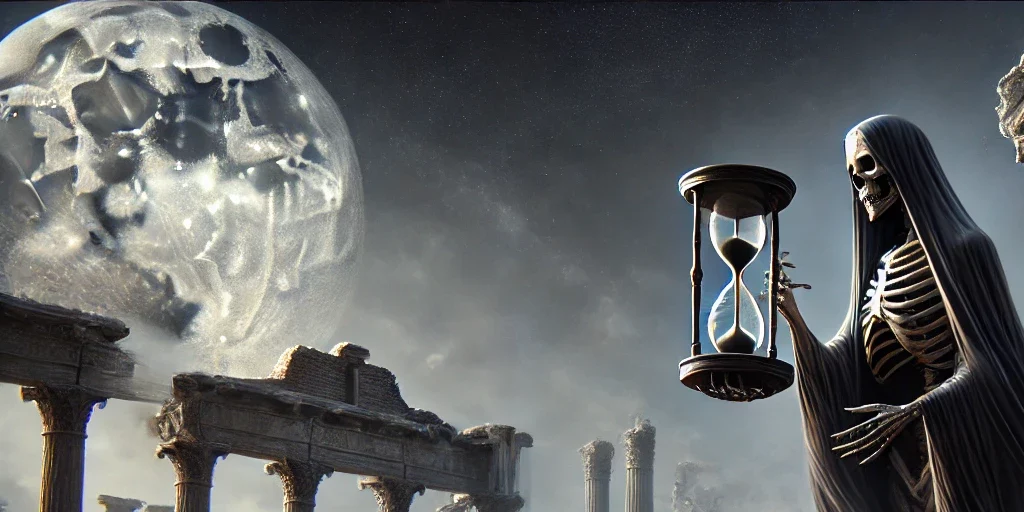
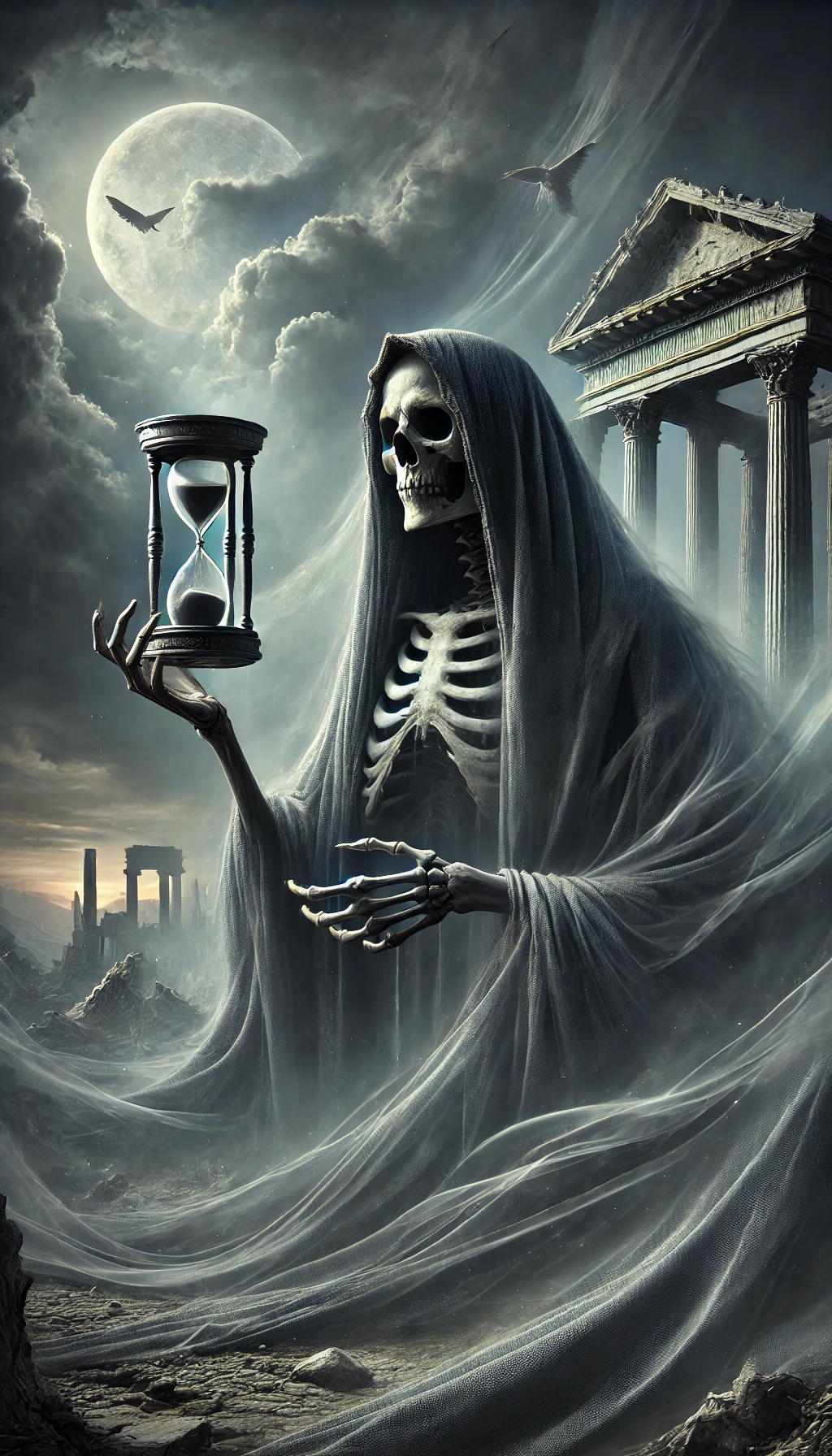
Although Mors has no defined physical form, he is depicted in Roman art through symbols and metaphors. In some depictions, he appears as a shadowy figure carrying an hourglass, a symbol of the brevity of human life.
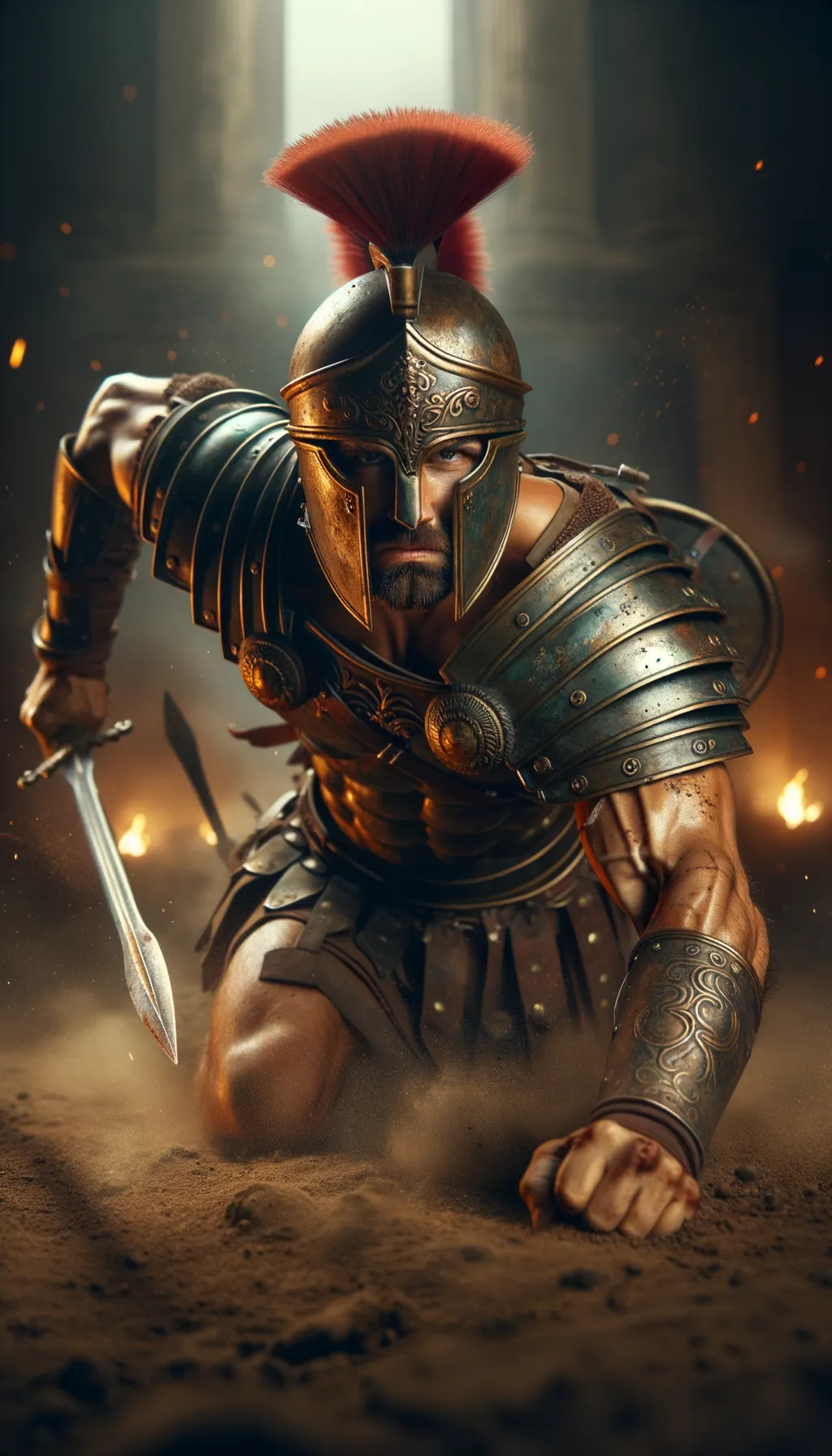
In other depictions, he appears as an armed warrior, a metaphor for death as an inevitable battle.
These works of art further demonstrate the relevance of death in Roman civilization.
The Cult of Mors: Did Worship Rituals Exist?
While many Roman gods had temples dedicated to them and rituals of worship, there does not appear to be evidence of an official cult of Mors. This may be due to his nature; as the personification of death, he is not a god who can be appeased or propitiated.
That said, there is some evidence of funerary practices that could be related to Mors. For example, the coins placed on the eyes or in the mouths of the dead may have been a way of paying him tribute.
In addition, the practice of building elaborate tombs and holding funerary banquets can be interpreted as a way of honoring Mors and ensuring a safe journey to the afterlife.
The Realm of the Dead
It is important to remember that Mors is not the god of the underworld in Roman mythology, although his role as the personification of death closely links him to the realm of the dead.
The Roman underworld, also known as Hades, is the place where the souls of the dead go after death. Although Mors does not rule this realm, his role as messenger of death makes him crucial to the journey of souls into the afterlife.
In contrast to the depiction of Pluto, the god of the underworld, linked to prosperity and abundance, Mors is related to the purpose and end of life. This distinction reinforces his role as the personification of death, with nothing to offer but the end of life.
The Myths Associated with Mors: Stories and Legends
There are several myths and legends associated with Mors in Roman mythology. One of the best known is that of Proserpina, the daughter of Ceres, who was abducted by Pluto and taken to the underworld. In this story, Mors plays a crucial role, as it is he who leads Proserpina to death, symbolized by her removal to the underworld.
Another important myth is that of Orpheus and Eurydice. In this story, Orpheus tries to rescue his beloved Eurydice from death, but fails because he does not follow the rules set by Mors.
Comparing Mors with Other Death Deities
As the personification of death in Roman mythology, Mors has many parallels with death deities from other cultures. For example, in Greek mythology, Thanatos plays a role similar to that of Mors.
However, there are some key differences. Unlike Thanatos, Mors has no defined physical form. Furthermore, while Thanatos is often portrayed as a malevolent god who delights in death, Mors is more neutral, a messenger who simply carries out his task without joy or sorrow.
This neutrality is a common trait among death deities in many cultures. Death is often seen as a natural part of life, neither good nor bad, simply inevitable.
The Relevance of Mors in the Roman Imagination
As the personification of death, Mors played an important role in the Roman imagination. Death was a constant reality in ancient Rome, whether through war, illness, or old age. As such, Mors was a constant presence, an omnipresent figure that reminded the Romans of the inevitability of death.
Despite his fearsome nature, he also had a positive aspect. By reminding the Romans of the brevity of life, he also taught them to value every moment and to live fully, knowing that death could come at any time.
In this sense, he was not just a fearsome god, but also a figure who taught valuable lessons about life and death.
The Legacy of Mors in Today’s Culture
His legacy can be seen in our culture today in various ways. The image of death as a relentless, omnipresent figure, for example, is an idea that still persists in many cultures.
Likewise, the idea of death as a natural part of life, neither good nor bad, is an idea that has influenced our contemporary understanding of death.
In short, Mors, although perhaps not as well known as other Roman gods, has left a lasting mark on our culture. Through his personification of death, he teaches us to face our own mortality and to celebrate life while it lasts.
Subscribe
If you want to receive stories, curiosities, and legends of the most fascinating creatures of classical mythology in your inbox, just fill out this form.
Continue reading
If you liked this article, you like mythology. And in this case, we have much more to offer you. Discover new adventures, heroes, nymphs, gods, battles, teachings… Just click on the button.
Metamorphoses of Ovid: General Summary and Featured Myths
The Metamorphoses of Ovid is an epic-mythological poem written by the Roman poet Publius Ovidius Naso, considered a masterpiece of Latin literature. Completed around 8 CE, this extensive composition in dactylic hexameter spans fifteen books and more than 250...
Who Is Janus and Why Does He Have Two Faces?
Roman antiquity is full of myths and legends. One of the most fascinating and enigmatic figures of the period is Janus, the two-faced god. This god, who is both familiar and puzzling, has been the subject of countless debates and analyses over the centuries. This...

Somnus, el dios del sueño
La mitología romana, con su alucinante colección de dioses, diosas, monstruos y héroes, ha sido fuente de inspiración para la literatura y el arte durante siglos. Entre estas divinidades, uno que tiene un papel bastante intrigante es Somnus, el dios del sueño. Su...

Lares and Penates: The Guardian Gods of the Home in Rome
In ancient Rome, faith was not confined to large temples or public ceremonies; it also flourished in the most intimate areas of the home. The Lares and Penates, known as the "gods of the household," were fundamental to the everyday spirituality of Roman families....

Iris, the Messenger of the Gods
Roman mythology, rich and fascinating, is full of powerful and mysterious characters who have fascinated humanity for centuries. A particularly intriguing figure is Iris, the messenger of the gods and queen of the rainbow. This article will explore in depth who this...

Faunus, the god of the forest
In the vast pantheon of Roman mythology, one figure stands out for his close connection to nature and his role as protector of the forests and wildlife. His name is Faunus, a deity characterised by his semi-human appearance and his important role in the daily life of...
Who fell in love with Cupid?
In every love story that unfolds, in every love-struck moment that disarms us, and in every poem of passion that moves us, we find the shadow of the Roman god of love: Cupid. His figure, though ancient, is still alive in our culture and in our conceptions of love....
Trivia, the goddess of the three roads
When we delve into the vast universe of Roman mythology, we discover a myriad of gods and goddesses, myths and legends that make up a fascinating web of beliefs and traditions. Within this framework, the trivia occupy a singular place. Although the term may bring to...

Ops, the mother goddess
In the pages of history, we find fascinating characters who have left their mark on human civilisation. One of those figures is Ops, the mother goddess in Roman mythology. Although she is not as well known as other deities, she has many facets that make her unique and...

mitologiaclasica.com is a website dedicated to exploring and popularizing the fascinating richness of mythology, offering a vast compendium of stories, characters, and legends.
Explore
Greek Mythology
Roman Mythology
Norse Mythology
Egyptian Mythology
Hindu Mythology
Chinese Mythology
Japanese Mythology
Celtic Mythology
Privacy Policy
Privacy Policy
Copyright mitologiaclasica.com