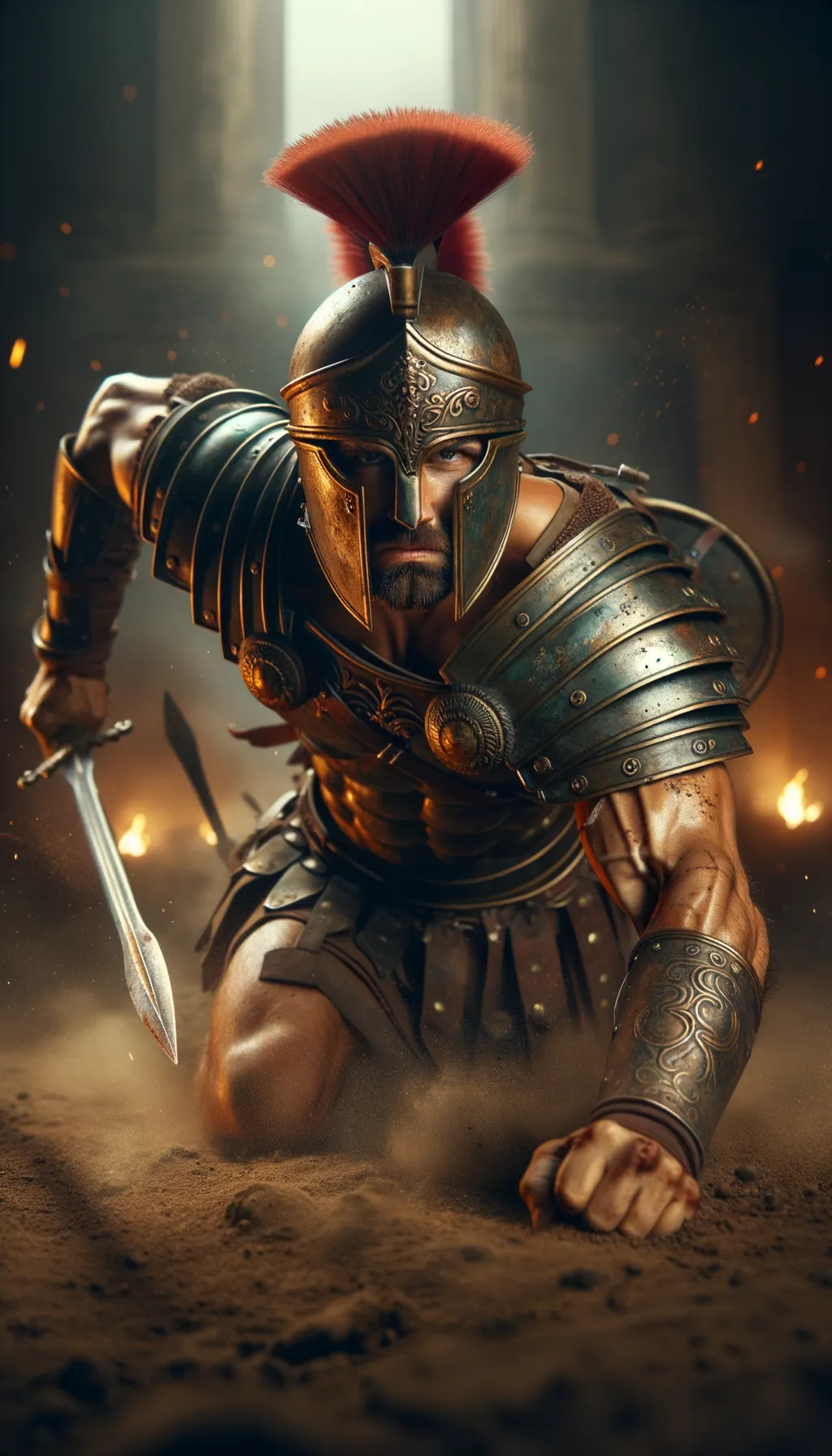
Who is Faunus?
Faunus is a prominent figure in Roman mythology, mainly known as the god of the forest, the fields and wildlife. His name derives from the Latin word “faveo”, meaning “to favour”, reflecting his role as protector and benefactor of nature and animals. Faunus is often depicted as half man, half goat, with horns on his head and goat’s legs, an image that evokes his close relationship with wildlife.
In addition to his connection to the forests, he is also credited with the ability to predict the future through dreams and natural sounds, an aspect that makes him an important oracle in Roman culture. However, despite these abilities, he is primarily a peaceful god, preferring to stay out of the conflicts and power struggles that often characterise the Roman pantheon.
Origins and genealogy of Faunus in Roman mythology
The origins of Faunus go back to the earliest days of Roman mythology. According to some sources, he was the son of Picus, an ancient god of nature, and Canens, a nymph. However, other versions place Faunus as an ancient king of Latium who was deified after his death.
Despite these discrepancies, his genealogy places him firmly within the tradition of Roman mythology. He is married to the goddess Bona Dea, also known as Fauna, with whom he shares many characteristics and attributes. Together, Faunus and Fauna are the protectors of animals and nature, and are credited with the ability to communicate with the creatures of the forest.
His role in ancient mythology
Faunus plays an essential role in ancient mythology. As god of the forest and wildlife, he protects animals and plants from danger and offers his guidance and protection to those who venture into his domain. He is also known for his wisdom, using his ability to predict the future to guide and advise humans.
In addition to his role as protector of nature, he is also the god of fertility. His power is believed to extend to fields and crops, blessing the land with abundance and ensuring a successful harvest. Like other fertility gods, he is associated with rituals and festivities that celebrate renewal and growth.
The depiction of Faunus in Roman art
In Roman art, Faunus is a robust male figure with horns on his head and goat’s legs. This appearance reflects his close connection to nature and its animals, and he can often be found in scenes depicting forests or fields. In addition, Faunus is often depicted with a pedum, a shepherd’s crook symbolising his role as protector of animals.
However, despite his wild appearance, Faunus is also depicted in a rather humanised way in Roman art. He can be seen smiling, playing music or dancing, reflecting his cheerful and peaceful personality. These depictions contrast with the image of the more severe and formal gods of the Roman pantheon, highlighting his uniqueness.
His role as god of the forest
As god of the forest, Faunus has a very close relationship with nature. He protects animals and plants, and is believed to be able to communicate with them, allowing him to act as a mediator between nature and humans. According to some sources, he can even shapeshift and turn into an animal, reflecting his intrinsic bond with the natural world.
Ancient Roman legends also speak of his ability to protect and preserve the forests. It is said that he was able to make trees and plants germinate with a simple touch, and his presence was essential for the growth and prosperity of nature.
The relationship between Faunus and the Nymphs in mythology
In Roman mythology, Faunus has a close relationship with the Nymphs, the minor goddesses of nature who inhabit the forests and springs. He is often depicted surrounded by these creatures, playing music for them or dancing with them in the forests.
This relationship between Faunus and the Nymphs reflects his role as protector of nature and his close connection to the natural world. The Nymphs, like Faunus, are guardians of the forests and waters, and their association with him underscores his role as god of the forest in Roman mythology.
The cult of Faunus: rituals and festivities
The cult of Faunus was widespread in ancient Rome, and he was honoured through various rituals and festivities. One of the most notable is the Lupercalia, an annual festival held in February to purify the city of Rome and promote health and fertility.
During the Lupercalia, the Luperci, priests of Faunus, sacrificed goats and dogs, and then ran through the city striking people with strips of skin from the sacrificed animals. This ritual was believed to purify the city and ward off evil spirits.
Faunus, Pan and Silvanus: a comparison of deities
Faunus is often compared to other similar deities, such as Pan in Greek mythology and Silvanus in Roman mythology. All of them are gods of nature and the forests, and share many characteristics and attributes.
However, there are some notable differences between these deities. While Pan is often portrayed as a mischievous and playful figure, Faunus is generally calmer and more peaceful. Silvanus, on the other hand, is an older and more rustic god, while Faunus is more associated with civilisation and culture.
Latin literature: notable works
The figure of Faunus appears in several Latin literary works, where he is portrayed as a wise and benevolent figure. One of the most notable is Virgil’s “Aeneid”, where he helps Aeneas on his journey by providing advice and guidance.
He is also a recurring character in Virgil’s “Eclogues”, a series of pastoral poems celebrating rural life and nature. In these works, he is presented as a symbol of peace and abundance, and his presence is a guarantee of prosperity and wellbeing.
His impact on Roman culture
Faunus was believed to protect fields and herds, and tributes were paid to him to ensure the fertility of the soil and the health of the animals. Rituals in his honour were usually performed in the countryside, where this god was believed to reside.
In addition, the figure of Faunus was integrated into Roman iconography, appearing on coins, sculptures and mosaics. This god of the forests became a symbol of fertility and abundance, and his image was often an omen of good fortune.
Recent interpretations
The figure of Faunus has persisted in the collective imagination and continues to appear in contemporary literature and art. In the film “Pan’s Labyrinth” by director Guillermo del Toro, for example, a faun guides the protagonist through a mysterious underground world, representing the role of mediator between reality and the supernatural.
In addition, in modern poetry and music, he often symbolises freedom, joy and connection with nature, values that are closely associated with his figure in Roman mythology. Thus, although his appearances may take different forms, the essence of Faunus remains constant throughout the centuries.
Even in the realm of video games, Faunus has made memorable appearances. In the popular “God of War” game series, for example, he appears as a supporting character, maintaining his characteristic connection to nature and representing wisdom and strength.
The meaning of Faunus in Roman mythology
In conclusion, although Faunus is not one of the best-known gods in Roman mythology, his figure has had a lasting impact both on Roman culture and on modern interpretations of mythology. As protector of nature and symbol of fertility and freedom, Faunus represents a set of values and beliefs that were vital to the Romans and that continue to resonate today.
The figure of Faunus, with his cheerful character and his connection to nature, is a perfect example of how these ancient stories and characters can continue to have an impact on our culture and imagination. As we continue to explore and reinterpret these mythologies, Faunus reminds us of the value and importance of nature, and the respect and gratitude we owe it.

Subscribe
If you want to receive in your mailbox stories, curiosities and legends of the most fascinating creatures of classical mythology just fill in this form.
Continue reading
If you liked this article, you like mythology. And in this case, we have much more to offer you. Discover new adventures, heroes, nymphs, gods, battles, teachings… Just click on the button.
Metamorphoses of Ovid: General Summary and Featured Myths
The Metamorphoses of Ovid is an epic-mythological poem written by the Roman poet Publius Ovidius Naso, considered a masterpiece of Latin literature. Completed around 8 CE, this extensive composition in dactylic hexameter spans fifteen books and more than 250...
Who Is Janus and Why Does He Have Two Faces?
Roman antiquity is full of myths and legends. One of the most fascinating and enigmatic figures of the period is Janus, the two-faced god. This god, who is both familiar and puzzling, has been the subject of countless debates and analyses over the centuries. This...
Mors, the Personification of Death
In antiquity, the Romans explained the mysteries of life and death through their gods and goddesses. In this sense, Mors, the personification of death in Roman mythology, held an important place in their pantheon. Death, which is always present and feared, but also...

Somnus, el dios del sueño
La mitología romana, con su alucinante colección de dioses, diosas, monstruos y héroes, ha sido fuente de inspiración para la literatura y el arte durante siglos. Entre estas divinidades, uno que tiene un papel bastante intrigante es Somnus, el dios del sueño. Su...

Lares and Penates: The Guardian Gods of the Home in Rome
In ancient Rome, faith was not confined to large temples or public ceremonies; it also flourished in the most intimate areas of the home. The Lares and Penates, known as the "gods of the household," were fundamental to the everyday spirituality of Roman families....
Iris, the Messenger of the Gods
Roman mythology, rich and fascinating, is full of powerful and mysterious characters who have fascinated humanity for centuries. A particularly intriguing figure is Iris, the messenger of the gods and queen of the rainbow. This article will explore in depth who this...
Who fell in love with Cupid?
In every love story that unfolds, in every love-struck moment that disarms us, and in every poem of passion that moves us, we find the shadow of the Roman god of love: Cupid. His figure, though ancient, is still alive in our culture and in our conceptions of love....
Trivia, the goddess of the three roads
When we delve into the vast universe of Roman mythology, we discover a myriad of gods and goddesses, myths and legends that make up a fascinating web of beliefs and traditions. Within this framework, the trivia occupy a singular place. Although the term may bring to...

Ops, the mother goddess
In the pages of history, we find fascinating characters who have left their mark on human civilisation. One of those figures is Ops, the mother goddess in Roman mythology. Although she is not as well known as other deities, she has many facets that make her unique and...

mitologiaclasica.com is a website dedicated to explore and spread the fascinating richness of mythology, offering a vast compendium of stories, characters and legends.
Explore
Greek Mythology
Roman Mythology
Norse Mythology
Egyptian Mythology
Hindu Mythology
Chinese Mythology
Japanese Mythology
Celtic Mythology
Privacy Policy
Privacy Policy
Copyright mitologiaclasica.com