Karma and reincarnation are two fundamental concepts of the Hindu worldview, intimately intertwined in its mythological, philosophical, and spiritual beliefs. These ideas explain the fate of the soul across multiple lives and promote a moral understanding of the universe. Below, we will explore in depth what karma and reincarnation mean in Hinduism, their origin in sacred texts, their connection within the cycle of samsara (birth, death, and rebirth), and their philosophical and practical implications in the daily lives of millions of people.
What Is Karma in Hinduism?
Karma (from the Sanskrit karman, “action”) in Hinduism is understood as a cosmic law of cause and effect that governs the moral universe. In other words, every intentional action, good or bad, has inevitable consequences that the individual will have to experience, whether in this life or in future lives. Karma functions as a natural principle of justice: every good action produces a positive fruit, and every bad action will bring a negative result, sooner or later.
How Karma Works: Types and Process
In Hindu philosophy, karma is not merely a fixed “fate,” but a dynamic process created by our own actions, which makes us responsible for our experiences. This concept transcends the idea of divine reward or punishment; rather, it is described as a natural balance of the universe that “returns to each individual what they have sown.”
There are different types of karma according to how it ripens: part of accumulated karma accompanies the soul into its next birth, determining the conditions in which it will be reborn, while the actions we perform day to day generate new karma that is added to our “karmic account.” Thus, the situation we currently experience would be the result of both our past deeds and our present decisions.
Reincarnation: An Endless Cycle
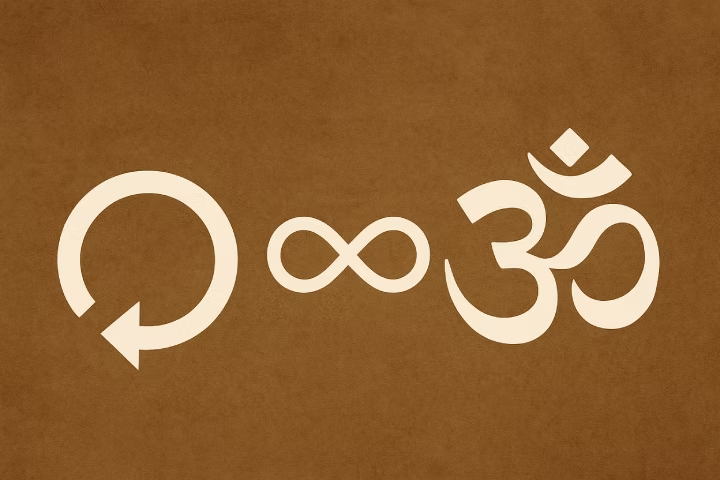
Reincarnation —known in Sanskrit as saṃsāra, “circle of existence”— is the belief that the soul (or atman) is reborn after death in another body to continue its learning. In Hindu mythology, reincarnation is depicted as a continuous cycle of births, deaths, and rebirths that involves not only human lives but also possible births in animal realms, and even divine or infernal forms, depending on accumulated merit or demerit.
The Soul and the Subtle Body in Reincarnation
According to these beliefs, the soul is immortal and indivisible, and merely leaves worn-out physical bodies to take on new ones, much as a person changes clothes. It is not exactly the pure atman that reincarnates, but rather the so-called subtle body, which carries imprinted upon it all the tendencies and karmic residues of past actions, thereby determining the circumstances of the next birth.
Why Does the Cycle of Lives Repeat? The Role of Ignorance and Desire
The cycle of samsara is considered to have a beginning and to be seemingly endless, marked by the ignorance and desire that bind the soul to worldly becoming. As long as an individual has outstanding consequences from their good or bad actions, they must be reborn to experience them. Thus, nothing goes uncompensated across lifetimes, and sometimes the fruits of actions take more than one lifetime to manifest.
Moksha: Liberation from the Cycle of Reincarnation
The ultimate goal of Hindu spirituality is to break the cycle of samsara and attain final liberation (moksha). Moksha means that the soul has overcome ignorance and “burned away” all its accumulated karma, so that it is no longer obliged to be reborn. This is achieved through self-realization and union with ultimate reality, putting an end to the cycle of birth and death.
Relationship Between Karma and Reincarnation
Karma and reincarnation are two sides of the same coin in Hinduism. Karma acts as the force that drives the cycle of reincarnation, determining the conditions of each new birth based on the soul’s past actions. Therefore, each reincarnation is conditioned by the deeds performed in previous lives.
In Hindu tradition, this process is often pictured as the “wheel of karma” or wheel of life, in which the soul turns from one experience to another according to its accumulated merits and demerits.
Comparison Table: Differences Between Karma and Reincarnation
| Aspect | Karma (action and consequence) | Reincarnation (rebirth) |
|---|---|---|
| Definition | Cosmic law of cause and effect that links actions to future outcomes. | Cyclical process of birth, death, and new birth of the soul. |
| Nature | Moral and universal principle; every act generates a subtle energy or impression. | Cycle of successive lives (samsara) the soul passes through. |
| Function | Determines destiny: accumulated karma decides the circumstances of the next birth. | Is the effect of karma: reincarnation allows the soul to reap the consequences of its past actions. |
| Duration of the Cycle | Continues for as long as the soul keeps generating unresolved consequences. | Continues until the soul attains liberation (moksha). |
| Spiritual Goal | Purify the soul through experience and exhaust karma. | Evolution and liberation: the goal is to escape the cycle and unite with absolute reality. |
Karma and Reincarnation in Hindu Sacred Texts
The ideas of karma and reincarnation have their roots in the ancient Hindu sacred texts. The Upanishads already proclaimed the transmigration of the soul and the moral law of cause and effect, while the Bhagavad Gita, part of the Mahabharata, developed these ideas philosophically and ethically.
The Bhagavad Gita and Krishna’s Teaching
In the Bhagavad Gita, the god Krishna instructs the warrior Arjuna on the imperishable nature of the soul and its cycle of rebirths. Krishna teaches that the soul is neither born nor dies, it only passes through changes of body, and introduces the idea of karma yoga —the path of selfless action— as a means of freeing oneself from karmic bonds.
The Upanishads and the Nature of the Soul
For their part, the Upanishads delve deeply into the notion of atman (the inner self) and Brahman (ultimate reality), laying the groundwork for understanding why the soul transmigrates. They emphasize that ignorance of the Self’s true nature leads to the cycle of rebirths, and only knowledge can break that cycle.
Mythological Figures Related to Karma and Reincarnation
Within Hindu mythology, numerous stories illustrate the consequences of karma and the reality of reincarnation. Notable figures include King Bharata, who was reincarnated as a deer, and Yama, the god of death, who evaluates the merits and sins of souls to decide their next rebirth.
Avatars and How They Differ from Reincarnation
The concept of the avatar also appears in Hindu mythology. An avatar is the voluntary “descent” of a deity to Earth in human or animal form, as occurs with Vishnu and his various incarnations. Unlike karmic reincarnation, avatars descend of their own free will and not because they are subject to the law of karma.
The Influence of Karma and Reincarnation on Daily Life
Beliefs in karma and reincarnation have a profound impact on the daily life and ethics of Hindu society. They foster values such as honesty, charity, non-violence, compassion, and self-control, since these virtues generate good karma and better destinies.
Practical Interpretations: How Beliefs Affect Actions
In practice, many Hindus interpret the events of their lives in light of karma. When misfortune strikes, it is often thought that one is “burning off” negative karma, which helps people face it with patience and seek moral improvement.
Karma, Reincarnation, and the Caste System
Historically, the idea of karma was linked to the conception of India’s caste system. It was believed that being born into a family of a certain caste was the result of karma from previous lives. Although this view justified social hierarchies, it also instilled the notion of personal responsibility and the possibility of aspiring to better spiritual conditions in future lives.
Personal Responsibility and Compassion: Hindu Ethics
Believing in karma and reincarnation tends to translate into self-responsibility and empathy. Causing harm to others is understood as harming oneself, thereby promoting an ethic of respect toward all beings and the cultivation of compassion.
The Pursuit of Spiritual Liberation
Those who delve deeply into these beliefs seek not only to accumulate good karma, but to transcend it through selfless action, meditation, yoga, or devotion. The ideal is to fulfill one’s dharma without attachment to results, thereby breaking the cycle of cause and effect.
The Continuing Relevance of Karma and Reincarnation
Karma and reincarnation permeate the mindset and customs of Hindu culture, giving individuals a moral compass and constant hope. They provide comfort in the face of the mystery of death and motivate people to live righteously, advancing the soul’s journey toward liberation. In mythology, philosophy, and daily life, these concepts continue to inspire millions to lead a more conscious and ethical life, standing as pillars of one of humanity’s oldest spiritual traditions.
Subscribe
If you want to receive stories, curiosities, and legends of the most fascinating creatures of classical mythology in your inbox, just fill out this form.
Continue reading
If you liked this article, you like mythology. And in this case, we have much more to offer you. Discover new adventures, heroes, nymphs, gods, battles, teachings… Just click on the button.

Mount Kailash: the holiest mountain in Asia
Mount Kailash rises in the remote west of Tibet as a peak wrapped in mysticism and veneration. At 6,638 meters above sea level, this mountain remains untouched since time immemorial, never climbed by mountaineers due to its sacred character. In fact, it is...

The Epic of the Mahabharata: A Mythological Gem of India
What Is the Mahabharata? When we speak of humanity's great epics, the Mahabharata holds a special place. Not only because of its colossal size —it is longer than The Iliad and The Odyssey combined— but because of the richness of its content, which interweaves history,...

What Are the 18 Puranas?
Today we discuss the Puranas, a vast collection of ancient texts from India that are a cornerstone of Hindu mythology. This sacred archive of stories and legends has guided the religious practices, cultural customs, and philosophical understanding of millions of...

Ananta Shesha, the Cosmic Serpent
Ananta Shesha: the titanic cosmic serpent of Hindu mythology

Varuna, the God of the Oceans and Justice
In the vast and rich pantheon of Hindu mythology, Varuna stands out as one of the most complex and fascinating figures. Due to his role as god of water and guardian of moral law, he plays a central function in Hindu cosmology and shows an intriguing evolution...
Surya, the god of the sun
Hindu mythology, rich and colorful, is an intricate tapestry of deities, stories, and symbolism woven together to form a fabric of faith and philosophy. Among these, the solar god Surya holds a place of distinction. This article will explore his role, his presence in...
Agni, the god of fire
In ancient Eastern traditions, few gods hold an importance comparable to that of Agni, a central figure in Hindu mythology. As the god of fire, he has played a crucial role in the religion, culture, and daily life of Hindus for thousands of years. In this exploration,...
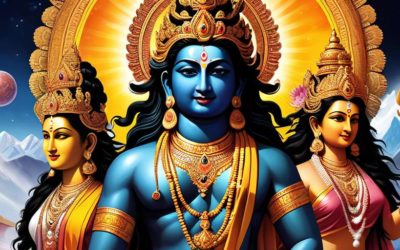
Trimurti: The sacred trinity of Hindu mythology
Trimurti is the supreme trinity of Hindu mythology, consisting of Brahma, Vishnu and Shiva. These gods represent the creation, preservation and destruction of the universe. Shiva, known as the destroyer and reborn god, occupies a fundamental role in Hinduism. On the...

mitologiaclasica.com is a website dedicated to exploring and popularizing the fascinating richness of mythology, offering a vast compendium of stories, characters, and legends.
Explore
Greek Mythology
Roman Mythology
Norse Mythology
Egyptian Mythology
Hindu Mythology
Chinese Mythology
Japanese Mythology
Celtic Mythology
Privacy Policy
Privacy Policy
Copyright mitologiaclasica.com