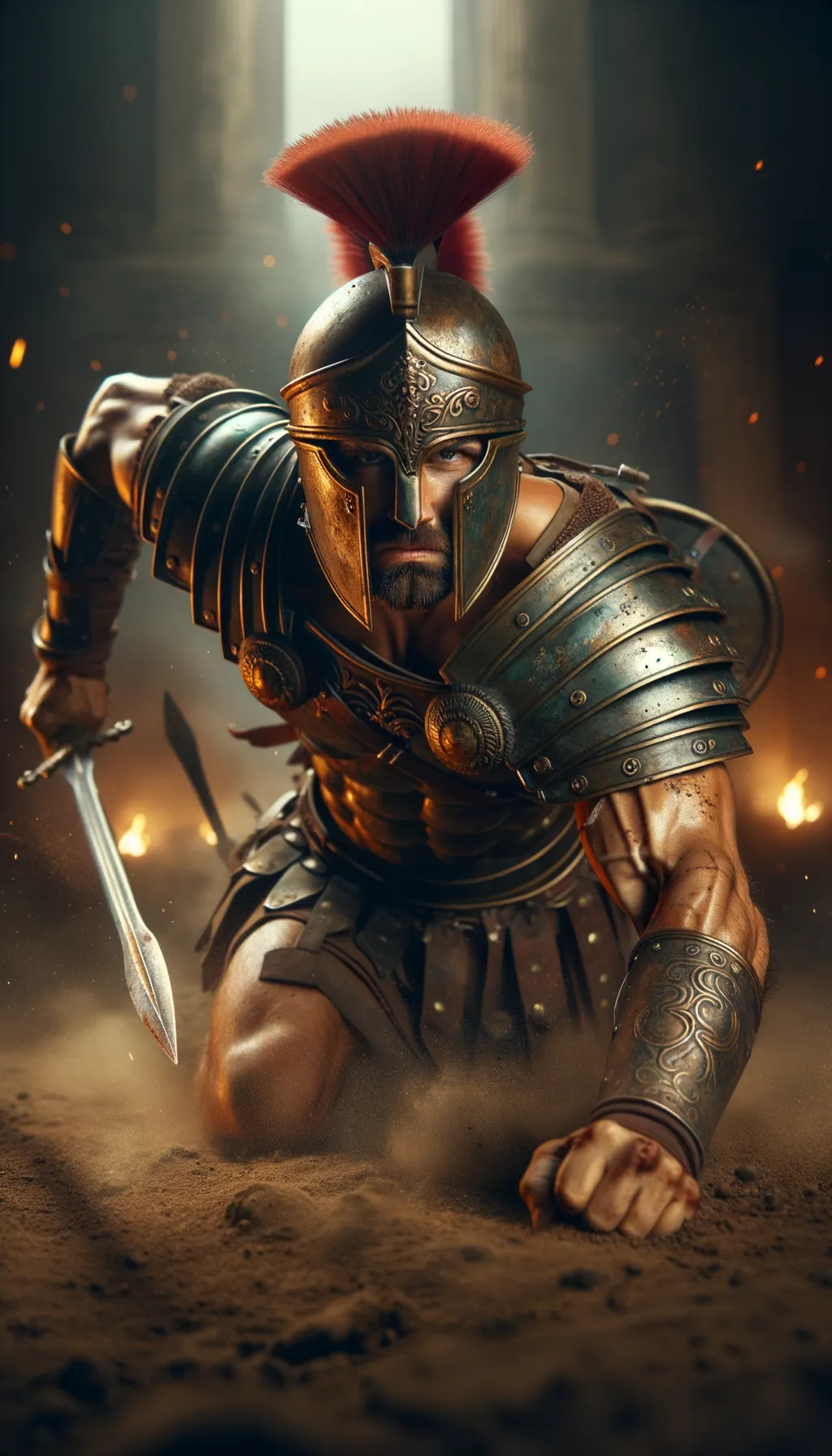
In the tales of Greek mythology, we find countless characters who have left their mark on history and culture. Among them, a figure who stands out is Cadmus, the Phoenician hero who became the legendary founder of the city of Thebes. In this article, we will explore his life and exploits, his connections with other mythological figures, and how his story has influenced Greek literature and culture.
Key Facts About Cadmus
| Parameter | Mythological Detail |
| Name in Greek | Κάδμος (Kádmos) |
| Origin | Tyre (Phoenicia) / Canaan |
| Parents | Agenor (King of Tyre) and Telephassa |
| Siblings | Europa, Phoenix, Cilix, Thasus and Phineus |
| Wife | Harmonia (goddess of concord) |
| Main Achievements | Founder of Thebes (Cadmea), slayer of Ares’s dragon, introduced the alphabet to Greece |
| Main Descendants | Semele, Ino, Agave, Autonoe, Polydorus and Illyrius |
| Final Transformation | Transformed into a serpent by the gods |
Cadmus, the Phoenician Hero of Greek Mythology
Cadmus is a famous figure in Greek mythology, chiefly known as the mythical founder of the city of Thebes. Beyond this achievement, his story is full of extraordinary adventures and challenges, from the search for his sister who was abducted by Zeus to his confrontation with mythical beasts. He is also known for his relationship with Harmonia, with whom he formed one of the most famous couples in Greek mythology. In addition, he is credited with introducing the Phoenician alphabet to Greece, which would become the basis of the Greek alphabet.
Myth or Historical Reality?
Although Cadmus is a mythological figure, some theories hold that he may have been a real historical figure. These theories are based on the belief that many Greek myths have a historical or geographical foundation. However, there is no conclusive evidence confirming his historical existence. Despite this, his story remains an integral part of Greek tradition and culture, and his influence can be seen in many aspects of ancient Greek society.
The Origin of Cadmus: The Phoenician Connection
According to mythology, Cadmus was the son of King Agenor of Phoenicia and his wife Telephassa. When Zeus abducted his sister Europa, Agenor assigned him an expedition to find her. Although he failed to find Europa, his journey took him across the Mediterranean and eventually to Greece. This story reflects the expansion of Phoenician influence in the Mediterranean during antiquity, and can be seen as a myth explaining the cultural connections between Phoenicia and Greece.
The Journey of Cadmus: In Search of Europa
Cadmus’s journey in search of his sister Europa is one of the most representative episodes of his story. According to the myth, Zeus had fallen in love with Europa and had taken her to Crete. Agenor, desperate to find his daughter, sent his sons to search for her. Cadmus, together with his brothers Phoenix and Cilix, undertook the search, but none of them managed to find Europa. However, in the course of his search, he experienced numerous adventures.
The Journey and the Prophecy of the Oracle of Delphi
After searching for his sister throughout the Mediterranean without success, Cadmus decided not to return to Phoenicia for fear of his father’s wrath. He went to the Oracle of Delphi to consult about his fate. The Pythia gave him a precise instruction:
“Forget the search for your sister. Buy a cow that has never worn a yoke and follow it. Where the animal collapses from exhaustion, there you shall found a prosperous city.”
Cadmus found the cow in Phocis and followed it through Boeotia until the animal collapsed from fatigue. That place became the acropolis of the future city of Thebes.
The Challenges of Cadmus: Facing Mythical Beasts
On his travels, Cadmus had to face and overcome various challenges. One of the most famous is his confrontation with the dragon of Ares, a fearsome beast that guarded a sacred spring. Cadmus managed to kill the dragon and, following the instructions of the goddess Athena, sowed the monster’s teeth in the ground. From these teeth sprang fully armed warriors, known as the Spartoi, who helped Cadmus found the city of Thebes.
Harmonia and Cadmus: A Mythological Romance
In addition to his heroic exploits, Cadmus’s story is also famous for his romance with Harmonia, the daughter of Ares and Aphrodite. According to the myth, all the gods of Olympus attended their wedding, where Harmonia received a magical necklace that would later bring misfortune to her descendants. Despite the many challenges they faced, they remained together until the end, and according to some versions of the myth, they were transformed into serpents by the gods and lived together in Elysium.
As punishment for having killed the sacred dragon, Cadmus had to serve Ares as a slave for eight years. Once the sentence was fulfilled, the gods granted him Harmonia, daughter of Ares and Aphrodite, as his wife. It was the first wedding on Earth attended by all the gods of Olympus.
| Wedding Gift | Given by | Later Fate |
| The Magical Necklace | Hephaestus | Forged with a curse; brought misfortune to all its owners. |
| The Peplos (Robe) | The Graces / Athena | Divine garment linked to the tragic Theban dynasty. |
Who Was the Founder of Thebes?
After founding the city of Thebes, Cadmus became its king and ruled for many years. According to some versions of the myth, Thebes was named in honor of Cadmus’s wife, Thebe. During his reign, Cadmus and Harmonia had several daughters and a son, all of whom met tragic fates. Despite the tragedies that struck his family, Cadmus is remembered as a great hero and king, and his name remains synonymous with the city of Thebes.
The Greek Alphabet: A Legacy of Cadmus?
One of Cadmus’s most significant contributions to Greek civilization is, according to mythology, the introduction of the alphabet. It is said that Cadmus brought the Phoenician alphabet with him when he arrived in Greece, and that this became the basis of the Greek alphabet. Although it is difficult to determine the veracity of this claim, there is no doubt that the introduction of the alphabet was an important milestone in the history of Greek civilization.
The Divine Descendants of Cadmus: Dionysus and Semele
Among Cadmus’s descendants are several notable figures of Greek mythology, including his daughter Semele, the mother of the god Dionysus. According to legend, Zeus fell in love with Semele and together they conceived Dionysus, the god of wine and festivity. This divine connection contributes to the prestige of Cadmus’s dynasty and adds another layer to his mythological story.
The Curse of the House of Thebes
Despite the splendor of Thebes, the wrath of Ares pursued Cadmus’s family. Tragedy struck nearly all of his children:
-
Semele: Mother of Dionysus, she was struck dead upon beholding the royal glory of Zeus.
-
Ino: Driven mad by the goddess Hera, she threw herself into the sea with her son.
-
Agave: In a Bacchic frenzy, she tore apart her own son, King Pentheus.
-
Autonoe: Mother of Actaeon, who was devoured by his own hounds after seeing the goddess Artemis naked.
-
Polydorus: Inherited the throne of Thebes, continuing the lineage that centuries later would give rise to the myth of Oedipus.
Impact on Greek Culture
Cadmus’s story has left a lasting mark on Greek literature and culture. His name appears in numerous ancient literary works, from Homer’s epic poems to the tragedies of Euripides. His search for Europa, his confrontation with Ares’s dragon, and his marriage to Harmonia are recurring themes in Greek literature and art. These stories have helped cement Cadmus’s reputation as one of the great heroes of Greek mythology.
From Hero to Monster: Cadmus’s Tragic Fate
Despite his achievements, Cadmus’s life ended in tragedy. Some versions of the myth tell how the gods turned Cadmus and Harmonia into serpents as punishment for the death of Ares’s dragon. In other versions, it is said that Cadmus felt so devastated by the tragedies that struck his family that he exiled himself and was eventually transformed into a serpent. Either way, his fate serves as a reminder of the tragic consequences often faced by heroes in Greek mythology.
His Legacy in Greek Mythology
In short, the story of Cadmus is one of the most fascinating in Greek mythology. His life was full of adventures, challenges, and tragedies, and his legacy endures in Greek culture to this day. Although he is perhaps best known as the founder of Thebes and the one who introduced the Greek alphabet, his story is much richer and more complex. Through his exploits and sufferings, he embodies many of the fundamental themes and values of Greek mythology and culture.
The story of Cadmus, full of heroism, love, defiance, and tragedy, continues to resonate in our hearts and minds. Although his story is ancient, the themes it addresses are universal and eternal. Ultimately, his tale is a reminder of the complex and often contradictory nature of human existence, a narrative that captures the heights of achievement and the depths of despair.
The Final Fate: Metamorphosis into Serpents
Old and overwhelmed by the misfortunes of their children, Cadmus and Harmonia left Thebes and emigrated to Illyria. Recalling the dragon of Ares, Cadmus exclaimed that if the life of a serpent was so sacred to the gods, he would rather become one himself.
The gods heard his plea and transformed him into a serpent. Harmonia asked to share his same fate and was transformed alongside him. Despite their appearance, they retained their affection for each other and, after their deaths, their souls were carried to the Elysian Fields.
Frequently Asked Questions About Cadmus (FAQ)
Who was Cadmus in Greek mythology? Cadmus was a Phoenician prince of Tyre, the legendary founder of the city of Thebes, and the hero who introduced the Phoenician alphabet to Greece.
Why did Cadmus kill the dragon? He killed Ares’s dragon because it had devoured the men Cadmus sent to fetch water from the spring of Dirce to perform a sacrifice to Athena.
Who were the Spartoi? They were the warriors born from the earth when Cadmus sowed the dragon’s teeth. The five survivors helped found Thebes and its noble families.
What is the connection between Cadmus and the alphabet? Ancient historians such as Herodotus credit him with bringing the Phoenician letters to Greece, which the Greeks adapted by adding vowels.
What did Cadmus and Harmonia become at the end of their lives? Overwhelmed by family tragedies, the gods transformed them into serpents and eventually carried their souls to the Elysian Fields.

Subscribe
If you want to receive in your mailbox stories, curiosities and legends of the most fascinating creatures of classical mythology just fill in this form.
Continue reading
If you liked this article, you like mythology. And in this case, we have much more to offer you. Discover new adventures, heroes, nymphs, gods, battles, teachings… Just click on the button.
Deimos, the God of Terror
If we venture into the fascinating universe of Greek mythology, we find Deimos, one of the least explored deities but with undeniable relevance. Deimos, whose name means "dread," is an enigmatic god linked to the darkest and most frightening aspects of human...
Tiresias, the Blind Prophet
One of the most intriguing and multifaceted characters in Greek mythology is Tiresias, the blind prophet of Thebes. This seer, who spent seven years as a woman before becoming a man again, plays a fundamental role in several literary works, including tragedies by...

The Sacrifice of Iphigenia
Greek mythology is full of heroes, gods, and complex characters, each with their own stories and lessons. One of these figures, perhaps somewhat less well known, is Iphigenia, the unfortunate daughter of Agamemnon and Clytemnestra. Although her story is tragic, her...
Erysichthon, Insatiable Hunger
The ancient stories of Greek mythology have fascinated humanity for thousands of years. Their narratives, full of gods, heroes, mythical creatures, and moral lessons, have influenced many cultures and remain relevant to this day. In this article, we will focus on one...
The Myth of Philomela and Procne
Today we discuss the myth of Philomela and Procne. It is a tragic and moving story from ancient Greek mythology, notable both for the rawness of its details and for its powerful symbolism. It is the story of two sisters, bound by unbreakable ties of loyalty and love,...

Leda and the Swan
Greek mythology is full of astonishing stories that have left an indelible mark on culture and art over the centuries. One of the most intriguing and controversial tales is that of "Leda and the Swan." The story of the seduction of the mortal Leda by the god Zeus...
Who Was the Goddess Atalanta?
Atalanta, an iconic figure in Greek mythology, is famous for her tireless speed and sharp wit. In a world dominated by men, she emerged as a heroine, defying conventional norms and forging her own path. In every tale about her life, her resilience and her ability to...
What Is the Story of Pygmalion and Galatea?
The names Pygmalion and Galatea resonate in the collective imagination. They are two figures who have inspired poets, writers, and artists throughout the centuries. The love story between the sculptor and his creation is one of the most moving and fascinating in Greek...

Nereus, the Old God of the Sea
Greek mythology is a vast mosaic of gods, heroes, and legendary entities, each with its own narrative and singular character. One of these gods is Nereus, an ancient sea deity who, although less well known than Poseidon, plays an important role in the Greek pantheon....

mitologiaclasica.com is a website dedicated to explore and spread the fascinating richness of mythology, offering a vast compendium of stories, characters and legends.
Explore
Greek Mythology
Roman Mythology
Norse Mythology
Egyptian Mythology
Hindu Mythology
Chinese Mythology
Japanese Mythology
Celtic Mythology
Privacy Policy
Privacy Policy
Copyright mitologiaclasica.com