The Myth of Cassandra in Greek Mythology
The myth of Cassandra is a fascinating and heartbreaking story, set in the context of Greek mythology. Like many of the legends of ancient Greece, its plot centres on the interaction between gods and mortals, and on the consequences of defying the divine order.
The myth of Cassandra is best known for the gift of prophecy bestowed upon her by the god Apollo, and for the curse that fell on her when she rejected his love. Cassandra is a tragic figure, condemned to foresee the future, but also to the disbelief of those around her. Despite her clear visions of fate, her warnings are ignored, and she is often dismissed as mad.
Her story is a powerful reminder of the powerlessness of truth amid ignorance and scepticism, a lesson that resonates to this day.
Who Was Cassandra?
Cassandra was the daughter of Hecuba and Priam, the kings of Troy, and therefore a princess. From a very young age Cassandra stood out for her beauty and, as was customary for women of the Trojan royal family, she was trained to become a priestess. However, her life changed dramatically when Apollo, god of the sun, of medicine and of prophecy, fell in love with her.
She was a woman of great beauty and intelligence, yet also deeply sorrowful. She was known for her prophecies but, despite her ability to foresee the future, she could not change the course of events. This painful dilemma marked her entire life, making her a tragic figure within Greek mythology.
The Gift of Prophecy: A Gift and a Curse
Princess Cassandra received the gift of prophecy directly from Apollo, who granted it in an attempt to win her love. The young princess accepted the gift but rejected the god. Enraged, Apollo cursed her so that no one would believe her predictions. Thus her gift became a curse, since Cassandra could see the future but could do nothing to change it or even warn others about it.
The gift of prophecy allowed her to see future events with crystal clarity. However, this gift became a torment when her warnings were ignored and rejected. Some of the most significant events she foretold were the Trojan War, the death of her father, King Priam, and her own final fate.
The Relationship Between Cassandra and Apollo: A Complicated Love
The love story between Cassandra and Apollo is a tragic one. Apollo, captivated by Cassandra’s beauty, offers her the gift of prophecy in exchange for her love. However, once she has received the gift, Cassandra rejects Apollo, unleashing the god’s wrath. This is a clear example of the complexity of relations between humans and gods in Greek mythology, where mortals are often caught up in the schemes and whims of the gods.
The relationship between Cassandra and Apollo also reflects the difficulty of interaction between the divine and the mortal. Even with the gift of prophecy, a tool that normally only the gods possess, Cassandra cannot escape her mortal fate. Despite her gift, she is powerless before the will of the gods and the disbelief of humans.
How Did the God Apollo Punish Cassandra?
When Cassandra rejects Apollo after receiving his gift, the god flies into a rage and curses her so that no one believes her predictions. In ancient Greece this was a terrible punishment, since prophecy was a powerful tool of knowledge and power. Those who could see the future were respected and feared.
Apollo’s punishment is especially cruel, as it condemns Cassandra to a life of powerlessness and frustration. Despite her ability to see the future, Cassandra is unable to change its course or warn others of danger. Her warnings about the Trojan War and other disasters are ignored, and she herself is considered mad or a liar.
Who Predicted the Trojan War?
Despite her curse, Cassandra played a central role in the Trojan War. She predicted the city’s destruction and warned her family and her fellow citizens about the wooden horse that the Greeks left behind as a gift. However, her warnings were ignored and Troy fell.
Why Was Cassandra Killed?
After the fall of Troy, Cassandra was taken as a slave by Agamemnon, king of the Greeks. Despite her visions of her own fate and of Agamemnon’s death, she could not prevent them from coming true. She was sent to Mycenae, where she was killed by Clytemnestra, Agamemnon’s wife.
Cassandra’s fate is a tragic end for such a unique and complex character. Despite her gift and her courage, she could not change her own destiny or that of those she loved. Her death marks the end of the Trojan dynasty and is a reminder of the inevitability of fate in Greek mythology.
A Source of Inspiration
Princess Cassandra has been a source of inspiration in literature and art for centuries. Her story recurs in many forms, from Homer’s Iliad to modern plays and literary works. Her image is also popular in painting and sculpture, where she is often depicted amid her prophetic visions.
Cassandra’s figure has also resonated in popular culture. She appeared in the television series ‘Doctor Who’, in Aeschylus’ trilogy ‘The Oresteia’, in Berlioz’s opera ‘Les Troyens’, and in numerous books and films. Her story continues to fascinate artists and writers, and her figure is a symbol of the loneliness of the prophet.
The Modern Interpretation of the Myth of Cassandra
In modern interpretation, Cassandra is the voice of truth in a world that refuses to listen. In politics, science, the environment and beyond, there are many modern ‘Cassandras’ who warn of future dangers without anyone taking them into account.
Despite Cassandra’s tragic story, she is also seen as a symbol of resistance. Although no one listens to her, she keeps speaking. This interpretation echoes the struggle of those who continue to fight for the truth in a world full of disinformation and denial.
In the post-truth era, where facts are often ignored or distorted, Cassandra’s story takes on new relevance. It is a reminder that truth is uncomfortable and not always welcome, but that this does not make it any less important or real.
What Does Cassandra Symbolise?
Cassandra’s figure symbolises someone denied the ability to influence their world despite their knowledge and insight. She also represents the capacity to see beyond the obvious, the perception of what is hidden in plain sight. On a personal level, she may symbolise the inner struggle between wisdom and disbelief.
She is also a symbol of the relationship between power and knowledge. Despite her gift of prophecy, her curse leaves her powerless. This may be interpreted as a critique of the power structures that control the flow of information and the perception of reality.
She is a reminder of the consequences of not listening to dissenting voices. As the tragic figure who foresaw the fall of Troy, she symbolises the price to be paid for ignoring warnings and uncomfortable truths.
The Cassandra Syndrome: A Psychological Phenomenon
The myth of Cassandra has given rise to a term in psychology: the Cassandra syndrome. It refers to the distress felt by those who foresee a problem or disaster but whom nobody listens to. Often these people are experts in their field who make predictions based on evidence and knowledge, yet do not receive the credit they deserve.
The Cassandra syndrome can be especially distressing in situations where the wellbeing of others is at stake. Doctors, scientists and other professionals experience this phenomenon when their warnings about a disease, climate change or any other threat are disregarded.
Its Relevance Today
Cassandra’s story is a powerful reminder of the importance of listening to dissenting voices and paying attention to warnings, even when they are uncomfortable or disturbing. In a world where disinformation is common and truth is often ignored, the myth of Cassandra is full of relevant lessons.
The myth of Cassandra can also serve as a source of comfort and recognition for those who have no voice. It can be a reminder that although truth may be overlooked, it remains the truth. And that, despite resistance, the struggle for truth and justice is valuable and necessary.
Finally, this myth reminds us that vision and knowledge are gifts, but they can also be curses. This story invites us to reflect on the responsibility that comes with knowledge and the power of vision, and on the challenges of being a voice of warning in a world that does not want to listen.

Subscribe
If you would like to receive stories, curiosities and legends about the most fascinating creatures of classical mythology in your inbox, just fill in this form.
Keep reading
If you enjoyed this article, you love mythology. And in that case, we have a lot more to offer you. Discover new adventures, heroes, nymphs, gods, battles, teachings… Just click the button.
Greek Myths and Constellations: Why the Night Sky Tells Stories
Every clear night, the sky stages a show that has been running for thousands of years: that of Greek myths and constellations. When we look up and recognize the silhouette of Orion or the curved line of Scorpius, we are in fact reading fragments of stories that the...
TV Series About Greek Gods and Heroes
Greek mythology has been an endless source of inspiration for film and television. Over the decades, numerous series -both animated and live-action- have recreated the exploits of Olympian gods and legendary heroes, adapting them for different audiences. In this...
Love Stories Between Gods and Mortals in Greek Mythology
Greek mythology has left us many love stories between immortal gods and mortal humans, romances that fascinated the ancients and still captivate us today. These divine-mortal relationships are charged with passion, conflict, and symbolic lessons. They sometimes...
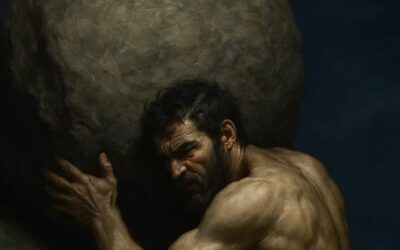
Divine punishments in Greek mythology for defying the gods
Greek mythology is populated with cautionary tales about punishments for defying the gods in Greek mythology. These myths illustrate how hubris—human arrogance or audacity before the divine—was severely punished by the Olympian gods. Through stories of exemplary...

The Mythical Hippocrene Spring
Greek mythology is full of stories in which the divine and the natural intertwine in ways that continue to amaze entire generations. Some of these stories tell of sacred mountains, celestial creatures, or springs that not only quench thirst but awaken dormant talents....
Short Greek Myths for Children
Short Greek myths for children are an excellent way to introduce little ones to this wonderful world full of gods, heroes, and fantastic creatures. These stories not only entertain, but also convey values and lessons and spark curiosity about ancient culture. In this...
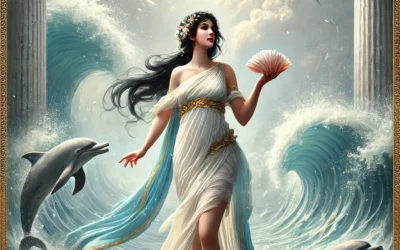
Ino, the Goddess of the Sea
Immersed in the rich tapestry of Greek mythology, we find Ino, a mysterious figure who represents both human tragedy and the divinity of the sea. This complex and intriguing figure plays a fundamental role in numerous ancient legends and myths, and remains relevant in...

The Myth of Chrysippus
Greek mythology is a rich tapestry of heroes, gods, and monsters that have fascinated humanity for thousands of years. However, some characters who, though less well known, play a crucial role in these ancient stories are often overlooked. One such character is...

Erebus, the God of Shadow
Erebus, a mysterious and enigmatic figure in Greek mythology, has fascinated historians, archaeologists, and mythology enthusiasts for centuries. His role in the Greek cosmos, his relationship with other gods and goddesses, and his lasting influence on contemporary...

mitologiaclasica.com is a website dedicated to exploring and sharing the fascinating richness of mythology, offering a vast compendium of stories, characters and legends.
Explore
Greek Mythology
Roman Mythology
Norse Mythology
Egyptian Mythology
Hindu Mythology
Chinese Mythology
Japanese Mythology
Celtic Mythology
Privacy Policy
Privacy Policy
Copyright mitologiaclasica.com