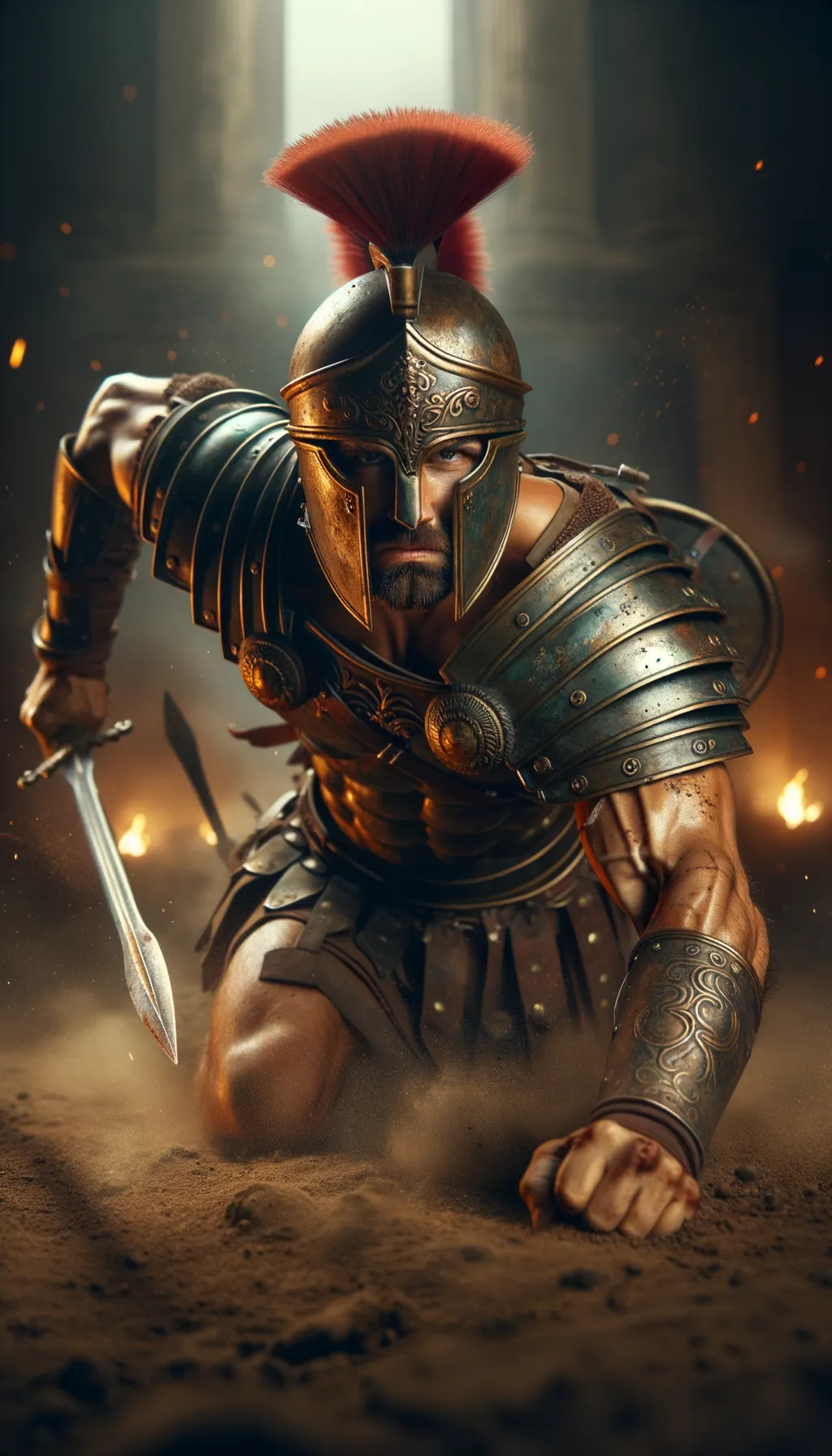
Vulcan: the god of fire in Roman mythology
Associated with fire, and more specifically with volcanic fire and metalworking, he was considered the god of the forge. Although he is sometimes confused with his Greek counterpart, Hephaestus, Vulcan has his own character and a set of myths and rituals specific to him that make him unique within Roman mythology.
What power does Vulcan have?
As the god of fire and the forge, Vulcan held immense power. He was believed to control volcanoes and earthquakes. He was also credited with the ability to create any type of weapon or tool from metal. His ingenuity and skill as a blacksmith were unmatched. In addition, Vulcan was believed to have the power to influence people’s character and temperament, since fire is often associated with passion and anger.
The origin of Vulcan: legends and myths
The story of Vulcan appears repeatedly in different legends and myths. In each of them, some fundamental and fascinating aspect of this mythical character is revealed.
Birth and rejection
Vulcan, god of fire and metalworking, was born under inauspicious circumstances. Son of Jupiter and Juno, the king and queen of the Roman gods, his arrival in the world was marked by rejection. Juno, known for her vanity and beauty, was horrified to see that her son had been born deformed and ugly. In an act of maternal cruelty, she decided to get rid of him by throwing him down from the heights of Olympus.
Upbringing and learning
Vulcan’s fall did not mark his end, but rather the beginning of an extraordinary story of survival and skill:
- Divine rescue: Thetis, a Nereid, and Eurynome, an Oceanid, rescued the young Vulcan.
- Early learning: At the young age of nine, Vulcan had already developed remarkable skill in working with metals.
- Underwater forge: For nine years, Vulcan perfected his skills in a forge hidden beneath the ocean.
Revenge and reconciliation
Juno’s initial rejection had consequences:
- The enchanted throne: Vulcan, now an adult, created a magic throne that trapped Juno when she sat on it.
- Divine negotiation: Jupiter intervened to free Juno, offering Vulcan the hand of Venus in marriage in exchange.
Who was Vulcan in the Iliad?
In the Iliad, the epic poem written by Homer, the figure of Vulcan is central. Here he is presented as the blacksmith of the gods, responsible for forging the most powerful and beautiful weapons. He is also credited with creating the armour of Achilles, one of the most important heroes in Greek mythology. Despite the difficulty of his work, Vulcan is a kind and generous god, willing to help both gods and humans.
Vulcan’s role in the creation of weapons and tools
Vulcan was renowned for his ability to forge weapons and tools with an unmatched level of skill. It was believed that all the weapons of the gods were created by him, from Jupiter’s thunderbolts to Cupid’s arrows. He was also said to have created everyday objects for the gods, such as Jupiter’s throne or the chariot of Apollo. His role as blacksmith of the gods was crucial to the running of Olympus.
Festivities in honour of Vulcan: the Vulcanalia
The Vulcanalia, a festival in honour of Vulcan, was celebrated on 23 August. During this celebration, the Romans performed sacrifices and rituals to appease the wrath of the god of fire and avoid possible volcanic eruptions or fires. This festival marked the end of summer and the beginning of the harvest season, and was carried out with great solemnity and respect.
Temples and sanctuaries dedicated to Vulcan
In ancient Rome, Vulcan was so venerated that several temples and sanctuaries were built in his honour. The Volcanal, the main and oldest temple dedicated to Vulcan in Rome, was located in the Roman Forum, at the foot of the Capitoline Hill. This sanctuary was an open-air area that housed an altar and kept a perpetual fire burning, symbolising the nature of the god of fire. The Volcanal held great historical and mythological importance, since according to tradition, Romulus himself had placed a bronze four-horse chariot there as a war trophy after defeating the Fidenates. In addition, a statue of Romulus himself was erected with an inscription detailing his achievements, crowned by the goddess Victory.
Other dedicated temples included one at the Circus Flaminius in Rome and an important cult in the port city of Ostia. Vulcan’s temples shared common features, such as the maintenance of sacred fires representing the destructive aspect of fire. It was common practice to offer the weapons and remains of the enemy taken in battle, which were burned as a form of annihilation. These sanctuaries tended to be located outside or on the outer edge of city walls, both for practical safety reasons and for the symbolism of directing destructive fire towards hostile external forces.
What does “Vulcan” mean?
The name “Vulcan” comes from the Latin “Vulcanus”, which means “fire”. This is due to his association with fire, volcanoes and blacksmithing. However, the name also carries connotations of creation and destruction, since he was capable of creating beautiful weapons and tools, but also of causing earthquakes and volcanic eruptions.
The symbol of Vulcan: fire and the hammer
Fire and the hammer are the most recognisable symbols of Vulcan. Fire represents his dominion over volcanoes and blacksmithing, and the hammer is the instrument he uses to forge weapons and tools. These symbols are often depicted in artistic representations, and have remained his emblems to this day.
Venus and Vulcan, a divine marriage
Venus, the goddess of love, beauty and fertility, was married to Vulcan, the god of fire and metalworking. This marriage was arranged by Jupiter, possibly as a form of compensation for his ugliness and lameness.
The marriage between the two was marked by unhappiness and infidelity. Venus, the beautiful goddess of love, carried on a notorious love affair with Mars, the attractive god of war. When Vulcan discovered his wife’s betrayal, he devised an ingenious plan for revenge. Using his skills as a divine blacksmith, he created an almost invisible magical net and placed it over the marital bed.
When Venus and Mars met for their romantic tryst, they became trapped in the net, unable to escape. Vulcan then summoned the other gods of Olympus to witness the lovers’ humiliation, exposing them naked and entangled before the eyes of all, which provoked laughter and mockery among the deities.
Impact on Roman culture and the arts
The figure of Vulcan had a great impact on Roman culture and the arts. His image was often depicted in murals, sculptures and jewellery, and his story was told in poems and songs. In addition, his association with fire and the forge influenced the emergence of various professions and trades, such as those of blacksmith or metalworker.
Differences between Vulcan and Hephaestus
Although Vulcan is a figure from Roman mythology, his equivalent in Greek mythology is Hephaestus. However, there are some important differences between these two figures. Although both are gods of fire and metalworking, and both are described as lame, Hephaestus is often portrayed as a kind and peaceful god, while Vulcan is more volatile and destructive.
His influence today
Although the veneration of Vulcan has disappeared, his influence remains present today. The term “volcano” comes from his name, and his image remains a popular symbol of fire and the forge. In addition, his story as a marginalised god who uses his skill and creativity to earn a place among the gods is a tale that remains relevant and moving today.

Subscribe
If you want to receive in your mailbox stories, curiosities and legends of the most fascinating creatures of classical mythology just fill in this form.
Continue reading
If you liked this article, you like mythology. And in this case, we have much more to offer you. Discover new adventures, heroes, nymphs, gods, battles, teachings… Just click on the button.
Metamorphoses of Ovid: General Summary and Featured Myths
The Metamorphoses of Ovid is an epic-mythological poem written by the Roman poet Publius Ovidius Naso, considered a masterpiece of Latin literature. Completed around 8 CE, this extensive composition in dactylic hexameter spans fifteen books and more than 250...
Who Is Janus and Why Does He Have Two Faces?
Roman antiquity is full of myths and legends. One of the most fascinating and enigmatic figures of the period is Janus, the two-faced god. This god, who is both familiar and puzzling, has been the subject of countless debates and analyses over the centuries. This...
Mors, the Personification of Death
In antiquity, the Romans explained the mysteries of life and death through their gods and goddesses. In this sense, Mors, the personification of death in Roman mythology, held an important place in their pantheon. Death, which is always present and feared, but also...

Somnus, el dios del sueño
La mitología romana, con su alucinante colección de dioses, diosas, monstruos y héroes, ha sido fuente de inspiración para la literatura y el arte durante siglos. Entre estas divinidades, uno que tiene un papel bastante intrigante es Somnus, el dios del sueño. Su...

Lares and Penates: The Guardian Gods of the Home in Rome
In ancient Rome, faith was not confined to large temples or public ceremonies; it also flourished in the most intimate areas of the home. The Lares and Penates, known as the "gods of the household," were fundamental to the everyday spirituality of Roman families....
Iris, the Messenger of the Gods
Roman mythology, rich and fascinating, is full of powerful and mysterious characters who have fascinated humanity for centuries. A particularly intriguing figure is Iris, the messenger of the gods and queen of the rainbow. This article will explore in depth who this...

Faunus, the god of the forest
In the vast pantheon of Roman mythology, one figure stands out for his close connection to nature and his role as protector of the forests and wildlife. His name is Faunus, a deity characterised by his semi-human appearance and his important role in the daily life of...
Who fell in love with Cupid?
In every love story that unfolds, in every love-struck moment that disarms us, and in every poem of passion that moves us, we find the shadow of the Roman god of love: Cupid. His figure, though ancient, is still alive in our culture and in our conceptions of love....
Trivia, the goddess of the three roads
When we delve into the vast universe of Roman mythology, we discover a myriad of gods and goddesses, myths and legends that make up a fascinating web of beliefs and traditions. Within this framework, the trivia occupy a singular place. Although the term may bring to...

mitologiaclasica.com is a website dedicated to explore and spread the fascinating richness of mythology, offering a vast compendium of stories, characters and legends.
Explore
Greek Mythology
Roman Mythology
Norse Mythology
Egyptian Mythology
Hindu Mythology
Chinese Mythology
Japanese Mythology
Celtic Mythology
Privacy Policy
Privacy Policy
Copyright mitologiaclasica.com