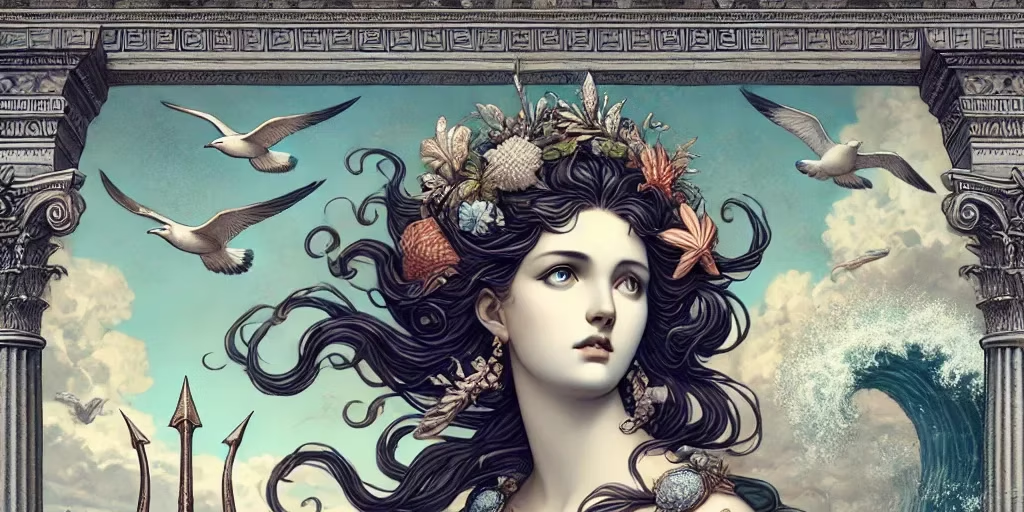
Immersed in the rich tapestry of Greek mythology, we find Ino, a mysterious figure who represents both human tragedy and the divinity of the sea. This complex and intriguing figure plays a fundamental role in numerous ancient legends and myths, and remains relevant in contemporary popular culture. In the following article, we will explore the fascinating story of Ino, her connections to other Greek deities, and her impact on ancient literature and art.
The Mysterious Figure of Greek Mythology: Ino
Daughter of Cadmus, founder of Thebes, and the goddess Harmonia, Ino is best known for her role in the myths of Dionysus, the god of wine, madness, and ecstasy. However, Ino’s story is also marked by tragedy and transformation. Although initially a mortal, her fate changed dramatically after a series of tragic events, which ultimately led her to become a goddess of the sea, known as Leucothea.
Her Role in Ancient Greek Legends
In ancient Greek legends, Ino is a maternal figure, caring for the young Dionysus after the death of his mother. She and her husband, Athamas, raised Dionysus as if he were their own son. However, this act of kindness was not well received by Hera, the jealous wife of Zeus. In retaliation, Hera drove Athamas mad, which led to the death of one of Ino’s sons and ultimately to her own transformation into the goddess of the sea.
The Myths of Ino: From Queen to Goddess of the Sea
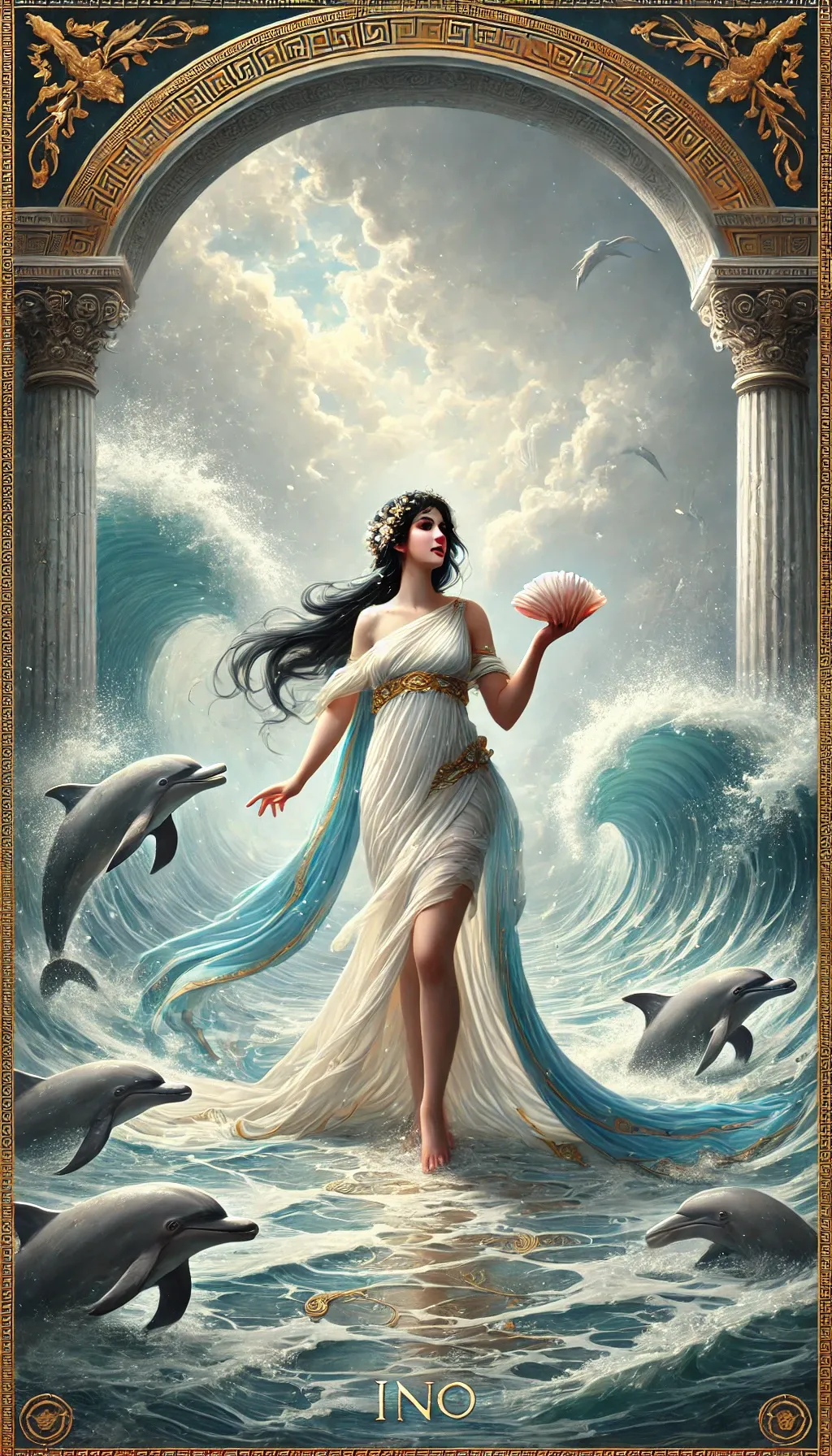
The myth of Ino is a saga of tragedy and transformation. After her son’s death at the hands of her deranged husband, in a state of desperation, she leapt into the sea with her other son, Melicertes. However, instead of finding certain death, both were saved by the gods and transformed into sea deities. Ino became Leucothea, the “white goddess” of the sea, while Melicertes was transformed into the god Palaemon.
The Relationship Between Ino, Dionysus, and Divine Madness
These three elements are intrinsically linked in Greek mythology. Ino was Dionysus’s second mother, and it was through her loving care that Dionysus was able to survive Hera’s wrath. However, her connection to Dionysus also led her to experience divine madness, a curse Hera imposed on those she considered enemies. This curse ultimately led to tragedy and to her transformation into the goddess of the sea.
The Tragedies: Loss, Despair, and Transformation
The mortal Ino lived a life marked by loss, despair, and transformation. Her role as Dionysus’s adoptive mother put her in the path of Hera’s wrath, which led to the death of her son and the madness of her husband. However, despite her suffering, she found redemption through her transformation into Leucothea. As goddess of the sea, she became a protector of sailors in danger; she used her power to save those in peril at sea.
Leucothea and Ino: A Look at Her Dual Identity
Both Ino and Leucothea are, in essence, the same figure, but they represent two very different aspects of her life. As Ino, she is a mortal queen whose life is marked by tragedy and suffering. But as Leucothea, she is transformed into a powerful goddess of the sea, a figure of salvation and hope for those in danger at sea. This duality is a testament to the complexity and depth of Ino’s character in Greek mythology.
Ino’s Role in Homer’s Odyssey
The figure of Ino plays a crucial role in Homer’s Odyssey, helping Odysseus during his perilous journey home. As Leucothea, she gives Odysseus a magical veil that allows him to survive a violent storm created by Poseidon. This act of kindness and compassion reinforces Ino’s image as a protective and saving figure, and underscores her importance in Greek mythology.
Her Influence on Ancient Literature and Art
The story of Ino has had a great influence on ancient literature and art. Her transformation into Leucothea has been depicted in numerous works of art, where she is shown as a majestic figure emerging from the sea. Her story has also been recounted in various literary works, including the tragedies of Euripides and the epics of Homer. These depictions underscore Ino’s fascinating duality and her powerful resonance in ancient culture.
Ino’s Greek Mythology in Contemporary Popular Culture
Today, Ino remains a relevant figure in popular culture. Her story has been interpreted and reinterpreted in various forms of art and literature. Her relationship with Dionysus, for example, has been explored in contemporary works examining themes of femininity, motherhood, and divine madness. As Leucothea, she has also been a source of inspiration for writers and artists exploring themes of transformation and rebirth.
Myths and Legends: Alternative Stories of Ino
In addition to the traditional stories, there are several alternative myths and legends about Ino. Some accounts suggest that she herself was responsible for the death of her children, while others suggest that Hera caused their death. Regardless of the variations in the stories, all of them reflect the complexity of her role in Greek mythology.
Between Tragedy and Redemption: Ino’s Epic Journey
Ino’s journey is an epic example of tragedy and redemption. Despite her suffering and despair, she finds redemption through her transformation into Leucothea. This story of overcoming hardship and rebirth highlights the ability to withstand adversity and ultimately find peace and purpose despite unfortunate circumstances.
Modern Interpretations of an Ancient Goddess
Modern interpretations of Ino often focus on her strength and resilience. She is seen as a figure of feminine power, a woman who overcame suffering and tragedy to become a powerful goddess of the sea. These interpretations emphasize empowerment and resilience, and highlight her relevance in contemporary society. The story of Ino, with its blend of tragedy, transformation, and redemption, is a testament to the rich and complex fabric of Greek mythology. Although her life was marked by loss and suffering, Ino found the strength to overcome these challenges and transform into a powerful goddess of the sea.
Subscribe
If you want to receive stories, curiosities, and legends of the most fascinating creatures of classical mythology in your inbox, just fill out this form.
Continue reading
If you liked this article, you like mythology. And in this case, we have much more to offer you. Discover new adventures, heroes, nymphs, gods, battles, teachings… Just click on the button.
TV Series About Greek Gods and Heroes
Greek mythology has been an endless source of inspiration for film and television. Over the decades, numerous series -both animated and live-action- have recreated the exploits of Olympian gods and legendary heroes, adapting them for different audiences. In this...
Love Stories Between Gods and Mortals in Greek Mythology
Greek mythology has left us many love stories between immortal gods and mortal humans, romances that fascinated the ancients and still captivate us today. These divine-mortal relationships are charged with passion, conflict, and symbolic lessons. They sometimes...
Divine punishments in Greek mythology for defying the gods
Greek mythology is populated with cautionary tales about punishments for defying the gods in Greek mythology. These myths illustrate how hubris—human arrogance or audacity before the divine—was severely punished by the Olympian gods. Through stories of exemplary...

The Mythical Hippocrene Spring
Greek mythology is full of stories in which the divine and the natural intertwine in ways that continue to amaze entire generations. Some of these stories tell of sacred mountains, celestial creatures, or springs that not only quench thirst but awaken dormant talents....
Short Greek Myths for Children
Short Greek myths for children are an excellent way to introduce little ones to this wonderful world full of gods, heroes, and fantastic creatures. These stories not only entertain, but also convey values and lessons and spark curiosity about ancient culture. In this...
The Myth of Chrysippus
Greek mythology is a rich tapestry of heroes, gods, and monsters that have fascinated humanity for thousands of years. However, some characters who, though less well known, play a crucial role in these ancient stories are often overlooked. One such character is...

Erebus, the God of Shadow
Erebus, a mysterious and enigmatic figure in Greek mythology, has fascinated historians, archaeologists, and mythology enthusiasts for centuries. His role in the Greek cosmos, his relationship with other gods and goddesses, and his lasting influence on contemporary...
Phobos, the God of Fear
In the vast annals of Greek mythology, where gods and goddesses, heroes, and monsters intertwine in a dance of legends and myths, we find Phobos, a peculiar and often overlooked figure. Less well known than Zeus or Hercules, Phobos nevertheless offers a fascinating...
Deimos, the God of Terror
If we venture into the fascinating universe of Greek mythology, we find Deimos, one of the least explored deities but with undeniable relevance. Deimos, whose name means "dread," is an enigmatic god linked to the darkest and most frightening aspects of human...

mitologiaclasica.com is a website dedicated to exploring and popularizing the fascinating richness of mythology, offering a vast compendium of stories, characters, and legends.
Explore
Greek Mythology
Roman Mythology
Norse Mythology
Egyptian Mythology
Hindu Mythology
Chinese Mythology
Japanese Mythology
Celtic Mythology
Privacy Policy
Privacy Policy
Copyright mitologiaclasica.com