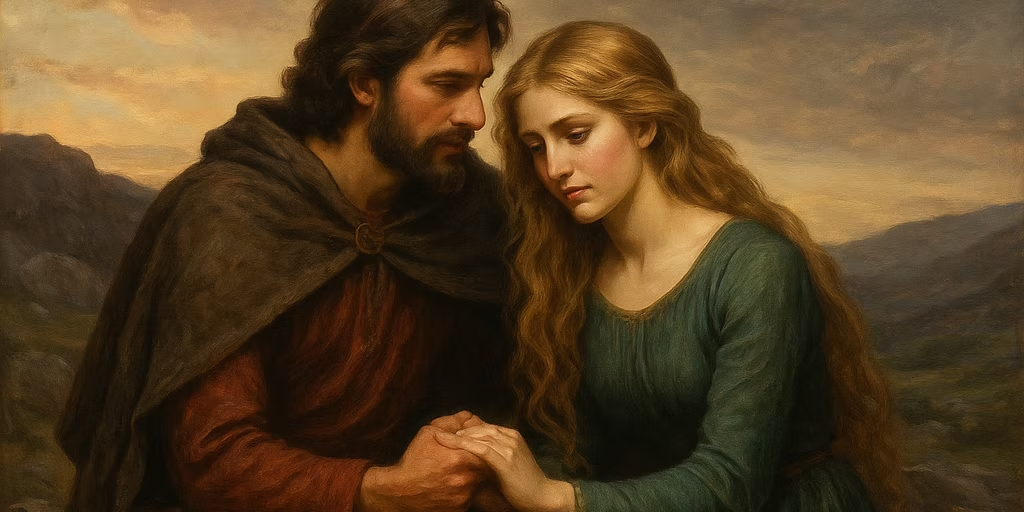
Within the vast corpus of Celtic mythology, few tales resonate with the same emotional force as the myth of Deirdre and Naoise. This story of love, betrayal, and fate is one of the most moving in the Ulster Cycle, a collection of Irish legends centered on heroes, kings, and their intertwined destinies. The myth of Deirdre stands out not only for its narrative intensity but also for its profound symbolic weight, which still resonates in contemporary Irish culture.
Who Were Deirdre and Naoise?
Deirdre: The Woman of Destiny
Deirdre, also known as Deirdre of the Sorrows, is one of the most tragic and fascinating figures in Celtic mythology, particularly within the Ulster Cycle, one of the four great Irish mythological cycles. Before her birth, a druid prophesied that her extraordinary beauty would cause bloody disputes among men and lead to exile, suffering, and ruin. Despite this ominous prediction, King Conchobar mac Nessa, captivated by the idea of possessing such beauty, decided to raise Deirdre in secret and isolation, under the care of a nurse named Leabharcham, intending to make her his wife once she came of age.
However, the king’s plan crumbled when Deirdre, by then a teenager, dreamed of a young man with dark hair, red cheeks, and skin as white as snow: the ideal vision of Naoise. Soon, fate would act as an unstoppable force.
Naoise: The Tragic Hero
Naoise, son of Uisneach and one of the three brothers known as the Sons of Uisneach (along with Ardan and Ainle), was a handsome warrior in Conchobar’s retinue, known for his courage, loyalty, and sense of honor. When Deirdre saw him for the first time, she fell deeply in love with him and, in an act of rebellion against her imposed fate, confessed her feelings and asked him to flee with her.
Despite the danger of betraying the king, Naoise, also in love, agreed. Together, accompanied by his brothers, they fled to Scotland, where they lived for a time in relative peace. However, Conchobar’s wrath was not long in coming. Through deceit, he lured them back to Ireland, promising forgiveness and safety.
The promise was a trap. Upon their return, Naoise and his brothers were treacherously killed on the king’s orders, despite the protests of his allies. Deirdre, forced to live with the man she despised, refused to accept her fate and, according to the best-known version of the legend, ended up taking her own life by throwing herself from a rock.
The Development of the Myth
The Prophecy That Sealed Her Fate
Before her birth, the druid Cathbad prophesied that Deirdre would bring pain and ruin. Despite this warning, Conchobar defied fate and took her to his court, where he kept her under strict watch. However, fate prevailed: Deirdre and Naoise fell hopelessly in love and fled together to Scotland, accompanied by Naoise’s brothers.
Exile in Scotland
For years, the couple lived in relative peace in exile. Despite the hardships, their love remained strong. But peace would not last forever. Conchobar, driven by betrayal and a desire for revenge, hatched a plan to bring them back to Ireland.
The Fatal Return
Conchobar sent the cunning Fergus mac Róich as an envoy to guarantee their safe return. Trusting their old ally, Deirdre and Naoise agreed to return. However, upon arriving at court, they were betrayed. Naoise and his brothers were killed, and Deirdre was forced to become the king’s wife.
The Tragic Ending
Unable to bear the loss of Naoise and captivity with Conchobar, Deirdre died shortly after. In some versions, she throws herself from a chariot; in others, she dies of grief. Her death marks the climax of the tragedy and confirms the inevitability of the prophesied fate.
Symbolism of the Myth
The Power of Prophecy
One of the clearest lessons of the myth is the impossibility of escaping fate. Despite human efforts to change the course of events, Cathbad’s prophecy is fulfilled with precision.
Love Versus Power
The relationship between Deirdre and Naoise represents the purity of true love in contrast to Conchobar’s possessive and destructive love. The struggle between individual desire and established power is a recurring theme in Celtic mythology.
The Female Figure as Catalyst
Deirdre is not a passive victim. She is a strong woman who chooses love over comfort and safety. Her figure has been interpreted as a symbol of feminine resistance and autonomy.
Comparisons with Other Legends
A Tragic Echo in the Story of Tristan and Iseult
The story of Deirdre and Naoise shares many similarities with the legend of Tristan and Iseult: forbidden love, betrayal, exile, and death as the only release. Both reflect a vision of love as an unstoppable but doomed force.
Influence on Modern Literature
This myth has been reinterpreted on multiple occasions, from plays by J.M. Synge to contemporary poems. Its symbolic and emotional power continues to inspire writers and artists.
What Is the Myth of Deirdre and Naoise?
The myth of Deirdre and Naoise is one of the most powerful and tragic tales in Celtic mythology. Through its characters, it explores universal themes such as love, fate, betrayal, and death. Beyond its narrative value, this story acts as a cultural mirror reflecting the tensions between personal desire and collective duty, between passion and power, between freedom and inevitable fate.
Subscribe
If you want to receive stories, curiosities, and legends of the most fascinating creatures of classical mythology in your inbox, just fill out this form.
Continue reading
If you liked this article, you like mythology. And in this case, we have much more to offer you. Discover new adventures, heroes, nymphs, gods, battles, teachings… Just click on the button.

What Are the Main Myths of Celtic Mythology?
Celtic mythology is a rich source of stories and legends that take us to an ancient world full of heroes, deities, magical creatures and supernatural events. It arises from the beliefs of the Celtic peoples who inhabited Europe during the Iron Age. It is complex and...

Manannán mac Lir, the son of the sea
Today we're going to learn about one of the most prominent figures in Celtic mythology. We're talking about Manannán mac Lir, the son of the sea. A god linked to sailors, storms, tides... and in general, to any concept close to the maritime world. He is, without a...

Epona, the Celtic goddess of horses
Epona, the Celtic Goddess associated with horses, fertility and nature, left her mark on culture and society. Depicted in various forms, such as riding a horse or feeding foals, Epona is also associated with death according to Celtic mythology. Her influence has...

Dagda, the mighty god of the Irish Celtic mythology
Dagda is a powerful god in Irish Celtic mythology. He is part of the Tuatha Dé Danann, the gods of Ireland. He possesses an imposing figure and is renowned for his wisdom and strength. Dagda participated in battles and had love affairs with other gods. All this, we...

mitologiaclasica.com is a website dedicated to exploring and popularizing the fascinating richness of mythology, offering a vast compendium of stories, characters, and legends.
Explore
Greek Mythology
Roman Mythology
Norse Mythology
Egyptian Mythology
Hindu Mythology
Chinese Mythology
Japanese Mythology
Celtic Mythology
Privacy Policy
Privacy Policy
Copyright mitologiaclasica.com