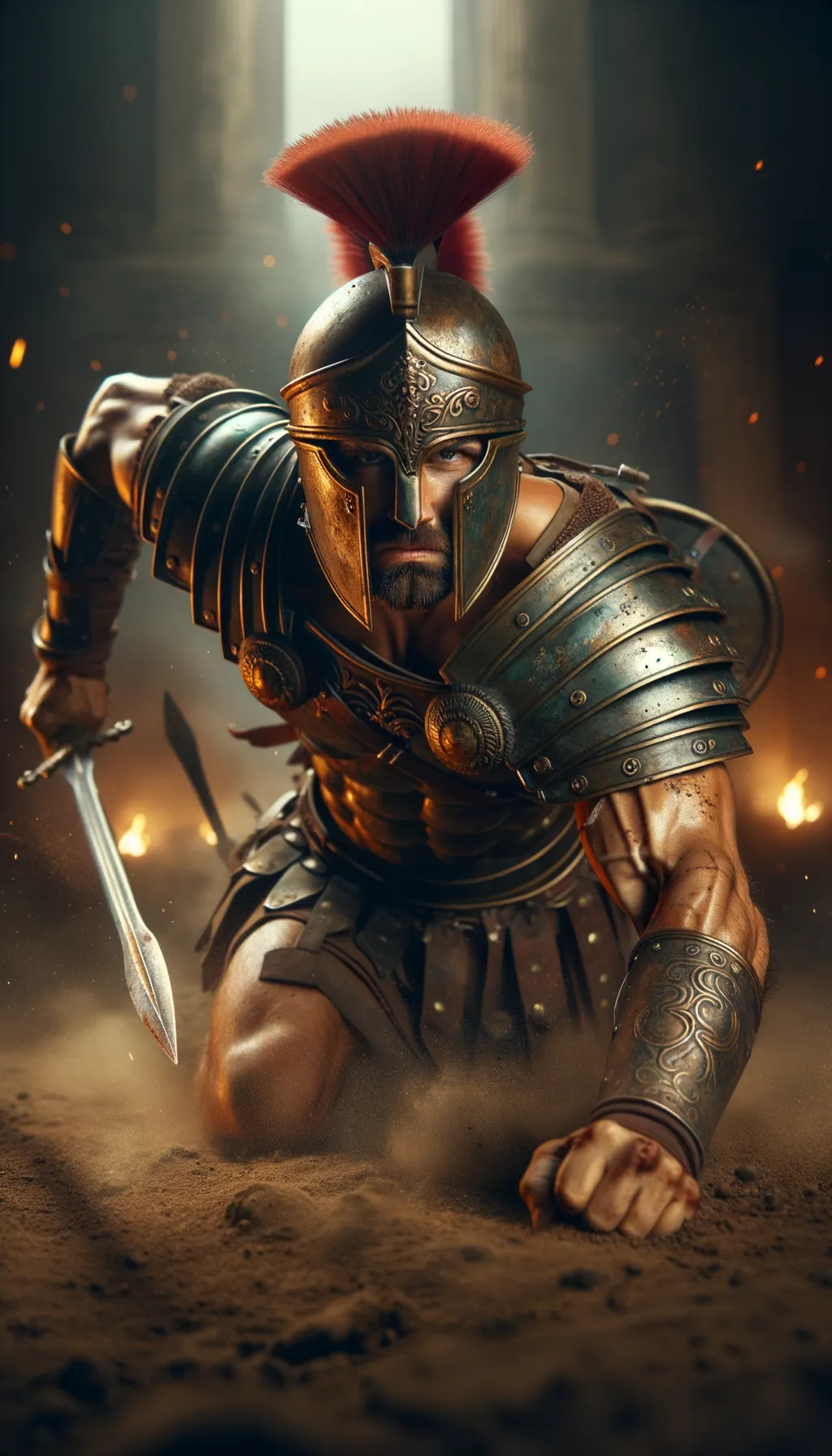
The greatest figure in Greek mythology: the god Zeus
Some figures need no introduction. We’re talking about the supreme god in Greek mythology. He is the ruler of the sky and the god of thunder. He controls the weather and the law and order of the universe. Zeus is an ever-present figure in Greek mythology.
In addition to his role as ruler of Olympus, he was also a god of marriage and family. Despite his famous infidelities, he was married to his sister Hera, the goddess of marriage and family. And, as we’ll see later, he had many children, both mortal and immortal.
His role in mythology is essential for understanding ancient Greek religion and culture. He is the personification of authority and divine power, and his actions and interactions with other gods and mortals offer a fascinating window into mythological beliefs and values.
Who is the king of the Greek gods?
Zeus is known as the king of the gods in Greek mythology. As such, he is the supreme god of the Greek pantheon, surpassing all other gods and goddesses in power and rank. He held final control over the world and the universe.
Despite his superior rank, he was often caught up in intrigues and conflicts with other gods. However, his authority was rarely questioned, and he ruled with absolute power.
Zeus’s role as king of the gods also influenced his relationship with human beings. He was considered the protector of kings and leaders, and was believed to have the ability to grant or take away power from mortals.
Origin and history
The god Zeus is the son of the titans Cronus and Rhea. Cronus, fearing a prophecy that predicted he would be overthrown by one of his children, swallowed all his children at birth. But Rhea, when she gave birth to Zeus, tricked him by giving him a stone wrapped in swaddling clothes to devour instead, while Zeus was hidden away and raised in secret.
When Zeus grew up, he forced Cronus to vomit up his brothers and sisters, and then led a war against the Titans, in what is known as the Titanomachy. After overthrowing the Titans, Zeus and his brothers drew lots for the universe. Zeus was given the sky, becoming the god of the sky and lightning.
Zeus’s reign marked the beginning of the age of the Olympian gods, a period of relative peace and stability compared to the previous age.
What does Zeus symbolize in ancient Greek culture?
The god of the sky and thunder in ancient Greece: that was Zeus. He represented supreme power, justice, morality, order, and fate. He was seen as the governor of the universe, who imposed order and justice. This strong sense of leadership and responsibility led him to be regarded as the king of the gods. He was also known as the god of weather; his emotions influenced meteorological elements, and he was capable of creating storms, lightning, and rain.
What powers does Zeus have?
As the supreme god of the Greek pantheon, Zeus possessed a vast array of powers that placed him above all other gods and mortals. His authority and abilities spanned various aspects of the cosmos and existence.
Cosmic powers
Control of the Sky and Atmospheric Phenomena
He ruled over the sky and controlled atmospheric phenomena. He was able to manipulate clouds, generate storms, hurl lightning and thunder, and control rain. This dominion over the celestial elements symbolized his supremacy over the natural order.
Omnipotence and Omniscience
As king of the gods, he possessed nearly unlimited power. He could alter reality at will and had knowledge of past, present, and future events, although he did not always exercise this ability.
Divine powers
Immortality and Regeneration
Like the other Olympian gods, he was immortal. He did not age and could not die from natural causes or ordinary wounds. He also possessed a supernatural capacity for regeneration.
Shapeshifting
One of Zeus’s most notable abilities was his power of transformation. He could take on any form, whether human, animal, or even natural elements, allowing him to interact with mortals or deceive other gods.
Superhuman Strength and Endurance
His physical strength vastly surpassed that of any mortal or demigod. He was able to lift mountains and withstand attacks that would destroy less powerful beings.
Powers of rule
Supreme Authority
As ruler of Olympus, he held authority over the other gods. He could grant or revoke divine powers, and his word was law among the immortals.
Control Over Fate
He influenced the fate of gods and mortals. Although the Moirai (Fates) wove destiny, he could intervene in their decisions.
Divine Justice
He was the guarantor of cosmic justice. He had the power to punish gods and mortals for their transgressions, often in dramatic and eternal ways.
Divine weapons and attributes
The Thunderbolt
His signature weapon, the thunderbolt, was a symbol of his unmatched power. With it, he could destroy entire cities or strike down his enemies.
The Aegis
This magical shield, sometimes lent to Athena, provided invincible protection and could terrify his enemies. With these vast powers, Zeus maintained the balance of the cosmos and ruled over gods and mortals, embodying supreme authority in Greek mythology.
Myths and legends associated with Zeus
There are many myths and legends surrounding Zeus, most of which revolve around his numerous love affairs and his heroic and divine children.
Rise to Power
Zeus’s founding myth tells how he overthrew his father Cronus, freeing his siblings who had been swallowed. This story establishes Zeus’s dominion over the Olympian pantheon and his role as king of the gods.
Love Affairs
Zeus’s love affairs are numerous and varied, forming a central part of his mythology:
- Abduction of Europa: Zeus transforms into a majestic white bull to seduce the Phoenician princess Europa. He carries her to Crete across the sea, where he reveals his true identity.
- Seduction of Leda: Zeus takes the form of a swan to approach Leda, wife of the king of Sparta. From this union are born Helen of Troy and the twins Castor and Pollux.
- Danae and the golden rain: To reach Danae, locked in a bronze tower, Zeus turns into a shower of gold, thereby fathering the hero Perseus.
Creation of heroes
He was also the father of numerous heroes, whose exploits form an integral part of Greek mythology:
- Heracles (Hercules): The most famous of the Greek heroes, son of Zeus and the mortal Alcmene.
- Perseus: Born of Zeus and Danae, famous for beheading Medusa.
- The Dioscuri: Castor and Pollux, sons of Zeus and Leda, known for their brotherly loyalty.
Divine punishments
He is also known for handing out severe punishments:
- Prometheus: Punished for stealing fire for humans, Zeus chains him to a rock where an eagle devours his liver for eternity.
- Sisyphus: Condemned to push a boulder uphill for all eternity for deceiving the gods.
Interventions in mortal affairs
He frequently intervenes in the affairs of mortals:
- Trojan War: He plays a crucial role in the course of the war, influencing the fate of both Greeks and Trojans.
- Odysseus’s Odyssey: He influences Odysseus’s journey home to Ithaca.
These myths and legends not only illustrate his vast power, but also reflect aspects of ancient Greek society and culture, exploring themes of morality, fate, and the relationship between gods and mortals.
Influence on classical literary works
As a central figure of Greek mythology, Zeus has had a deep and lasting influence on classical literary works. His presence and actions have shaped epic narratives, tragedies, and other literary genres of antiquity.
Zeus in the Homeric works
The Iliad
In the Iliad, he plays a crucial role as the supreme arbiter of fate:
- He presides over the assemblies of the gods on Olympus, where decisions are made that affect the course of the Trojan War.
- He intervenes directly in battle, tipping the balance in favor of the Trojans or the Achaeans according to his will.
- In Book VIII, he forbids the other gods from intervening in the conflict, demonstrating his absolute authority.
The Odyssey
Although less prominent than in the Iliad, he remains an important figure:
- He approves Odysseus’s return to Ithaca, thereby influencing the entire plot of the poem.
- He acts as guardian of justice, punishing those who violate the laws of hospitality.
Zeus in Greek tragedy
The works of Aeschylus
Aeschylus presents Zeus as a moral and cosmic force:
- In “Prometheus Bound,” he is portrayed as a tyrannical ruler who punishes Prometheus for stealing fire for humans.
- In the “Oresteia” trilogy, he is invoked as the guarantor of justice and cosmic order.
The works of Sophocles
Sophocles often shows Zeus as the guardian of moral order:
- In “Oedipus Rex,” the characters invoke Zeus in search of guidance and justice.
- “Electra” presents him as the ultimate avenger of family crimes.
Zeus in other classical works
Hesiod’s Theogony
This work details Zeus’s rise to power:
- It narrates how Zeus defeats the Titans and establishes Olympian order.
- It describes his unions with various goddesses and mortals, establishing his divine genealogy.
Homeric Hymns
Several hymns are dedicated to Zeus, praising his power and wisdom:
- The “Hymn to Zeus” celebrates him as the greatest and most powerful of the gods.
- Other hymns mention his exploits and relationships with other gods and mortals.
In these works, he is not merely a character, but a symbol of divine power, cosmic justice, and universal order. His influence on classical literature reflects his central importance in the worldview and religion of ancient Greece.
How many children did Zeus have, and with whom?
Despite his marriage to Hera, Zeus is famous in mythology for his numerous love affairs with other goddesses, mortals, and nymphs. Among his many children are: Hercules, Perseus, Hephaestus, Athena, Apollo, and Artemis, among others.
Zeus’s children with goddesses
- Hera (wife and sister):
- Ares
- Hebe
- Hephaestus
- Metis:
- Athena
- Leto:
- Apollo
- Artemis
- Maia:
- Hermes
- Dione:
- Aphrodite
- Demeter:
- Persephone
- Themis:
- The Moirai (goddesses of fate).
- The Horae (goddesses of the seasons).
- Eurynome:
- The Graces.
Zeus’s children with mortals
- Alcmene:
- Heracles
- Danae:
- Perseus
- Semele:
- Europa:
- Minos, Rhadamanthus, and Sarpedon
- Leda:
- Helen, Castor, Pollux, and Clytemnestra
- Antiope:
- Zethus and Amphion
- Io:
- Epaphus
Zeus had a vast number of descendants, with numerous children spanning both divinities and heroes, each with their own role in the rich tapestry of Greek mythology.
Zeus’s Roman equivalent: Jupiter, the god of the sky
In Roman mythology, Zeus is known as Jupiter. Jupiter was the king of the gods and the god of the sky and thunder. The Romans adopted much of Greek mythology, and so the stories of Zeus are mirrored in those of Jupiter, albeit with some variations.
Depictions of Zeus in art and sculpture
Depictions of Zeus in art and sculpture were fundamental to the visual culture of ancient Greece and have influenced Western art for centuries. These depictions not only captured the image of the supreme god, but also reflected the aesthetic and religious ideals of Greek society.
Monumental sculpture
The Statue of Zeus at Olympia
The most famous and magnificent depiction of Zeus was the chryselephantine statue created by Phidias:
- Considered one of the Seven Wonders of the Ancient World.
- It stood approximately 12 meters tall.
- Built of gold and ivory over a wooden framework.
- It depicted him seated on a throne, holding a Nike (Victory) in his right hand and a scepter in his left.
- Although the statue was lost, its image was preserved on coins and in ancient descriptions.
Temple depictions
Pediments and Friezes
He was frequently depicted in the architectural elements of temples:
- On the eastern pediment of the Parthenon, he presided over the scene of Athena’s birth.
- The Temple of Zeus at Olympia had mythological scenes on its pediments, including depictions of the god.
Smaller sculptures
Cult Statues
Many Greek city-states had their own cult statues of Zeus:
- They generally showed him bearded, muscular, and with a stern expression.
- He often held a thunderbolt, his most characteristic attribute.
Bronzes and Terracottas
Numerous depictions in bronze and terracotta have been found:
- These smaller pieces were often used on household altars.
- They show variations in the iconography of Zeus, adapted to local contexts.
Pictorial depictions
Pottery
Greek vases offer a rich source of images of Zeus:
- He is often depicted in mythological scenes, such as the abduction of Europa or his various transformations to seduce mortals.
- In red-figure pottery, he usually appears as a mature, bearded man, sometimes seated on a throne.
Frescoes and Mosaics
Although few have survived from the Greek period, later Roman frescoes and mosaics show the influence of Greek depictions of Zeus:
- The famous mosaic of Zeus and Ganymede at Olympia is one example of how the god was depicted in this medium.
His depictions evolved over time, but always retained certain key elements that identified him as king of the gods: his beard, his imposing physique, and his attributes such as the thunderbolt and the eagle. These images were not only objects of worship, but also served as powerful symbols of cosmic order and divine authority in the ancient Greek world.
Temples and sanctuaries dedicated to him in ancient Greece
The temples and sanctuaries dedicated to Zeus in ancient Greece were numerous and of great importance, reflecting the god’s supreme status in the Greek pantheon. These sacred sites served not only as centers of worship, but also as focal points of civic and cultural life in the Greek city-states.
Temple of Zeus at Olympia
This temple is considered one of the most important:
- Built between 470 and 456 BC, it was an outstanding example of Doric architecture.
- It housed the famous chryselephantine statue of Zeus, one of the Seven Wonders of the Ancient World, created by Phidias.
- It measured approximately 64 meters long by 28 meters wide.
- Its pediments were decorated with mythological scenes, including the chariot race between Pelops and Oenomaus.
Temple of Olympian Zeus in Athens (the Olympieion)
This colossal temple was one of the largest in the ancient world:
- Construction began in the 6th century BC but was not completed until the reign of the Roman emperor Hadrian in 131 AD.
- It originally had 104 Corinthian columns, 17 meters tall.
- Only 15 of these imposing columns still stand today.
Sanctuary of Zeus at Dodona
Considered the oldest oracle in Greece:
- Located in Epirus, it was famous for its prophecies, interpreted through the rustling of the sacred oak’s leaves.
- It included a dedicated temple and a theater for religious festivals.
Altar at Pergamon
Although technically outside mainland Greece, this Hellenistic altar is noteworthy:
- Built in the 2nd century BC in what is now Turkey.
- Famous for its monumental frieze depicting the Gigantomachy, the battle between the Olympian gods and the giants.
Other significant temples and sanctuaries
- Temple of Zeus at Nemea: Associated with the Nemean Games, part of the Panhellenic Games.
- Sanctuary on Mount Lykaion: An ancient place of worship in Arcadia, where, according to legend, Zeus was born.
- Temple at Agrigento, Sicily: One of the largest Greek temples ever built, although it was never completed.
These temples and sanctuaries were not only religious centers, but also played important roles in the politics, economy, and cultural identity of the Greek city-states. The variety and grandeur of these sites underscore his preeminent position in the religion and society of ancient Greece.
Zeus’s legacy in modern mythology
His stories have been reinterpreted in numerous books, films, and video games. Zeus is frequently mentioned in modern literature and remains a popular figure in comics and superhero movies. His role as the god of thunder and king of the gods has influenced the portrayal of gods in popular culture.
In conclusion, he is one of the most iconic figures in mythology, whose legacy has permeated modern culture. His influence extends beyond myths and legends, present in our literary, artistic, and cinematic works. As a symbol of leadership, justice, and power, he remains a relevant figure in the contemporary understanding of the divine.

Subscribe
If you want to receive in your mailbox stories, curiosities and legends of the most fascinating creatures of classical mythology just fill in this form.
Continue reading
If you liked this article, you like mythology. And in this case, we have much more to offer you. Discover new adventures, heroes, nymphs, gods, battles, teachings… Just click on the button.

Monstruos femeninos en la mitología griega
La mitología griega está repleta de criaturas extraordinarias que han cautivado la imaginación de generaciones. Dentro de estas criaturas, los monstruos femeninos tienen un rol específico, simbolizando fuerzas originarias y encarnando miedos antiguos. Estas entidades,...

Dione, la madre de Afrodita
En las vastas y complejas historias que conforman la mitología griega, la figura de Dione se destaca como una de las más intrigantes y misteriosas. Aunque su papel y origen son objeto de debate entre los estudiosos, su importancia es innegable. En este artículo,...
Pan: mitad hombre, mitad cabra
En el rincón más remoto de la mitología griega, donde los dioses y las criaturas mitológicas se mezclan en un baile eterno de leyendas y relatos, encontramos a Pan. Este personaje, conocido como el dios de los pastores y los rebaños, ha dejado una huella profunda en...

¿Qué libros de mitología griega leo?
La mitología griega ha sido una fuente inagotable de inspiración a lo largo de la historia, desde las antiguas tragedias griegas hasta la literatura contemporánea. Sus dioses, héroes y seres mitológicos han inspirado a artistas, escritores y cineastas, y continúan...

Tyche, the Greek Goddess of Luck
In the vast world of Greek mythology, Tyche, the goddess of luck and fortune, holds a special place. Because of her ability to grant wealth and prosperity, she became a deeply venerated deity in ancient Greece. In this essay, we will investigate her intriguing...

The Pleiades: Who Were the Seven Sisters?
In the vastness of the firmament, few constellations capture the imagination like the Pleiades, also known as the Seven Sisters. This group of stars, visible to the naked eye, has fascinated humanity for millennia, weaving its story into modern mythology and...
Nemesis, the Goddess of Vengeance
In Greek mythology, there are numerous gods and goddesses, each with their own legends, powers, and unique personalities. Among the best known are Zeus, Athena, and Hades, however, there is a goddess whose influence and power are equally compelling: Nemesis, the...

Jason and the Argonauts
Greek mythology is full of daring heroes, divine beings, and terrifying monsters, and stories of courage, love, and tragedy. One of the most famous and exciting of these stories is that of "Jason and the Argonauts." In this article, we will explore in depth Jason's...

Semele, the Mortal Princess Who Won Zeus’s Heart
Greek mythology, famous for its intrigues, conflicts, and relationships between gods and humans, provides us with fascinating narratives that have left an indelible mark on culture and literature around the world. One of these stories is that of Semele, the mortal who...

mitologiaclasica.com is a website dedicated to explore and spread the fascinating richness of mythology, offering a vast compendium of stories, characters and legends.
Explore
Greek Mythology
Roman Mythology
Norse Mythology
Egyptian Mythology
Hindu Mythology
Chinese Mythology
Japanese Mythology
Celtic Mythology
Privacy Policy
Privacy Policy
Copyright mitologiaclasica.com