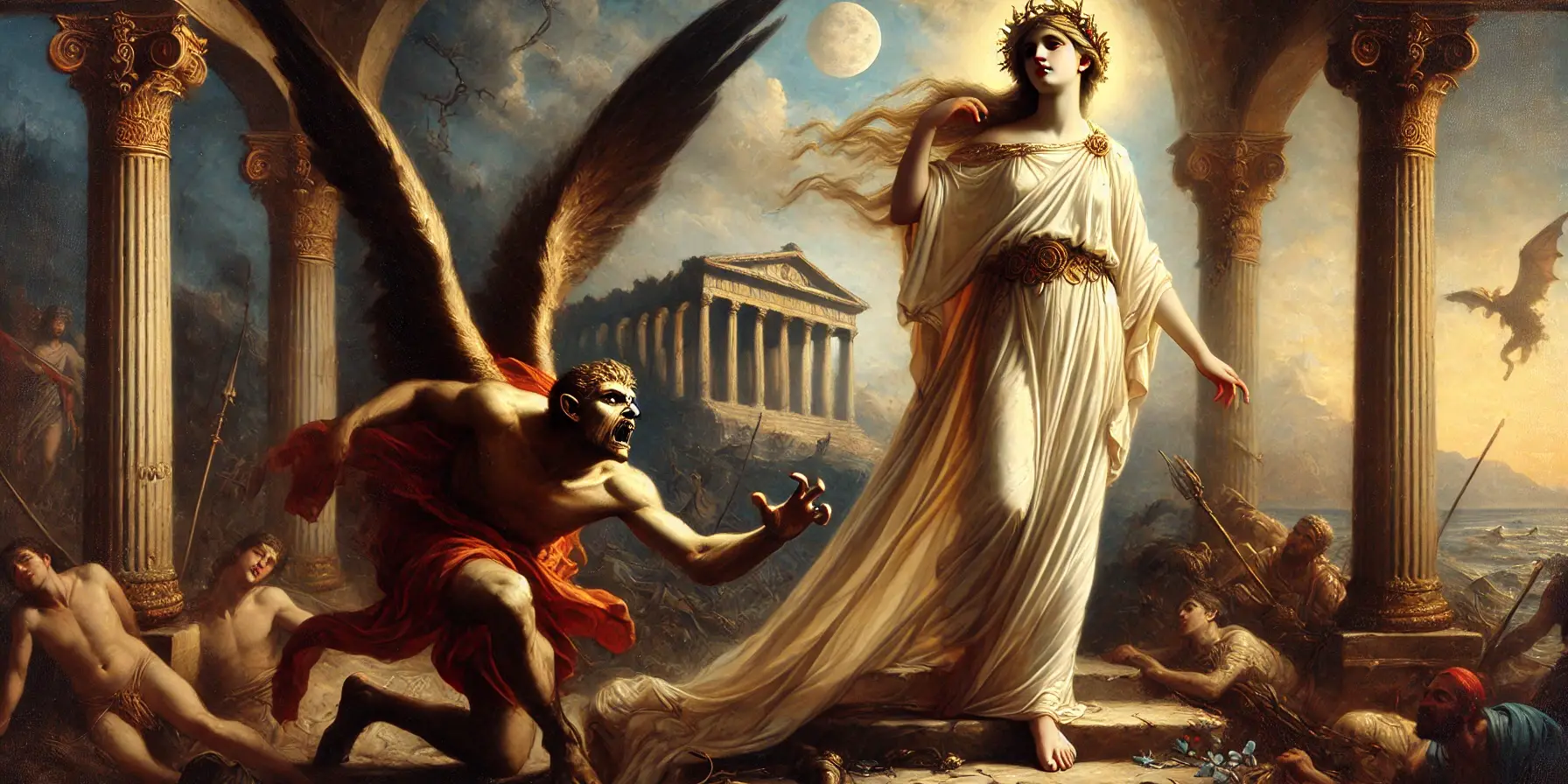
Today we discuss the myth of Philomela and Procne. It is a tragic and moving story from ancient Greek mythology, notable both for the rawness of its details and for its powerful symbolism. It is the story of two sisters, bound by unbreakable ties of loyalty and love, who face unimaginable violence and are transformed into birds as a result of their actions. Throughout the story, we discover a narrative of violence, revenge, and transformation.
The Story of Philomela and Procne
The myth of Philomela and Procne begins as a simple love story, but soon becomes a dark and twisted plot of deceit and revenge. The story, as found in the works of the ancient Greek poets, is one of the most violent and bloody in all of mythology. Despite its brutality, the story of Philomela and Procne is also a story of sisterly love and sacrifice, which ultimately results in a series of mythical transformations.
Who Were the Daughters of the King of Athens?
Philomela and Procne were daughters of the king of Athens, Pandion. Despite their royal status, both sisters suffered terrible misfortunes at the hands of King Tereus of Thrace, who was married to Procne. Tereus was a violent and cruel man, and his cruelty would manifest in the most horrible ways against the sisters. Despite their tribulations, Philomela and Procne showed unwavering loyalty and love for one another, a love that would lead them to resist and, ultimately, take revenge on Tereus.
The Abduction of Philomela by Tereus
Tereus, captivated by Philomela’s beauty, abducted her and took her to his kingdom in Thrace. There, he locked her in a hut in the middle of the forest and raped her. To ensure she could never reveal his crime, Tereus cut out her tongue. But Philomela, despite her terrible situation, found a way to communicate with her sister Procne and revealed to her what Tereus had done to her.
Philomela’s Transformation into a Nightingale
The myth tells that, after communicating her tragedy to Procne, Philomela was transformed into a nightingale by the gods. This act of transformation is both symbolic and literal in the story. Symbolically, it represents the loss of Philomela’s human voice and her new ability to sing her sorrows. Literally, the transformation into a nightingale allows Philomela to escape her captivity and Tereus’s violence.
Procne’s Revenge: An Act of a Protective Sister
The moment Procne learns of the atrocity committed by Tereus, she swears to take revenge on him. In a chilling act of vengeance, Procne kills her own son, Itys, whom she had with Tereus, and serves his flesh to Tereus at a banquet. This act of revenge by Procne is an unexpected and dark turn in the plot, underscoring the depth of her anger and grief over what Tereus did to her beloved sister.
Itys: The Tragic Victim in the Story of Philomela and Procne
Itys, the son of Procne and Tereus, becomes an innocent victim in the war between his father and mother. His death is a tragic element in the story, underscoring the cruelty and brutality of Procne’s revenge. Despite his innocence, Itys becomes a pawn in Procne’s game of vengeance, a victim of the enmity between his mother and father.
Procne’s Metamorphosis into a Swallow
After her act of revenge, Procne is also transformed into a bird, specifically a swallow. This transformation is a form of escape, allowing Procne to flee from Tereus’s fury after he discovers her act of vengeance. Like Philomela, Procne’s transformation into a bird also carries symbolic meaning, representing her freedom from oppression and her ability to fly beyond her troubles.
Tereus: From King to Hoopoe in Greek Mythology
After discovering the horrible truth about his son’s death, Tereus attempts to kill Procne and Philomela. However, before he can do so, the gods intervene and transform Tereus into a hoopoe. This transformation is a fitting punishment for Tereus, since the hoopoe is a bird often associated with violence and aggression in Greek mythology.
The Symbolism of Animals in the Legend of Philomela and Procne
The use of birds as symbols in the story of Philomela and Procne is an important part of the myth. The nightingale, the swallow, and the hoopoe represent different aspects of the characters and their experiences. The nightingale symbolizes Philomela’s loss and suffering, the swallow represents Procne’s freedom and revenge, and the hoopoe reflects Tereus’s violence and cruelty.
Their Role in Ancient Greek Literature
The myth of Philomela and Procne has been a source of inspiration for many writers and poets of antiquity. The sisters’ tragedy is recounted in various works of ancient Greek literature, including those of Ovid, which provide one of the most detailed and graphic versions of the story.
The Influence of the Story of Philomela and Procne on Modern Culture
The myth of Philomela and Procne has had a lasting impact on modern culture. It has influenced a number of literary, artistic, and musical works, and has provided a powerful symbol of sisterly love, resilience in the face of adversity, and revenge. The sisters’ story continues to resonate in contemporary culture, and its legacy endures through the various interpretations and adaptations of their myth.
A Tale of Female Power
The story of Philomela and Procne is a powerful narrative of resistance and revenge. Despite the brutality and cruelty they faced, the sisters resisted and ultimately took revenge on their oppressor. Their story is a testament to sisterly love and female power, and continues to be a powerful symbol of resistance and vengeance.
It is a story of sisterly love, courage, and revenge. Despite its brutality, it is also a tale of resilience and transformation. The sisters, through their love and mutual loyalty, manage to resist and ultimately take revenge on Tereus’s cruelty and violence. Through their legend, Philomela and Procne teach us the power of love, the strength of resistance, and the importance of vengeance.
Subscribe
If you want to receive stories, curiosities, and legends of the most fascinating creatures of classical mythology in your inbox, just fill out this form.
Continue reading
If you liked this article, you like mythology. And in this case, we have much more to offer you. Discover new adventures, heroes, nymphs, gods, battles, teachings… Just click on the button.
Deimos, the God of Terror
If we venture into the fascinating universe of Greek mythology, we find Deimos, one of the least explored deities but with undeniable relevance. Deimos, whose name means "dread," is an enigmatic god linked to the darkest and most frightening aspects of human...
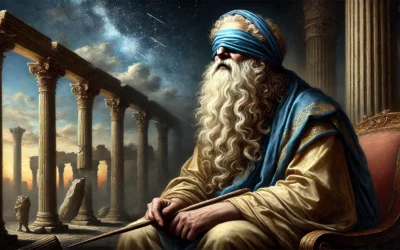
Tiresias, the Blind Prophet
One of the most intriguing and multifaceted characters in Greek mythology is Tiresias, the blind prophet of Thebes. This seer, who spent seven years as a woman before becoming a man again, plays a fundamental role in several literary works, including tragedies by...

The Sacrifice of Iphigenia
Greek mythology is full of heroes, gods, and complex characters, each with their own stories and lessons. One of these figures, perhaps somewhat less well known, is Iphigenia, the unfortunate daughter of Agamemnon and Clytemnestra. Although her story is tragic, her...
Erysichthon, Insatiable Hunger
The ancient stories of Greek mythology have fascinated humanity for thousands of years. Their narratives, full of gods, heroes, mythical creatures, and moral lessons, have influenced many cultures and remain relevant to this day. In this article, we will focus on one...

Leda and the Swan
Greek mythology is full of astonishing stories that have left an indelible mark on culture and art over the centuries. One of the most intriguing and controversial tales is that of "Leda and the Swan." The story of the seduction of the mortal Leda by the god Zeus...
Who Was the Goddess Atalanta?
Atalanta, an iconic figure in Greek mythology, is famous for her tireless speed and sharp wit. In a world dominated by men, she emerged as a heroine, defying conventional norms and forging her own path. In every tale about her life, her resilience and her ability to...
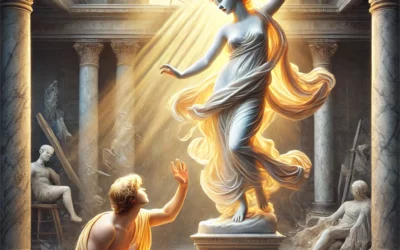
What Is the Story of Pygmalion and Galatea?
The names Pygmalion and Galatea resonate in the collective imagination. They are two figures who have inspired poets, writers, and artists throughout the centuries. The love story between the sculptor and his creation is one of the most moving and fascinating in Greek...

Nereus, the Old God of the Sea
Greek mythology is a vast mosaic of gods, heroes, and legendary entities, each with its own narrative and singular character. One of these gods is Nereus, an ancient sea deity who, although less well known than Poseidon, plays an important role in the Greek pantheon....

The Graeae, One Eye and One Tooth
Greek mythology, full of gods, heroes, creatures, and legends, is a vast world that continues to spark fascination today. In this broad pantheon, the Graeae are three figures often overshadowed by better-known characters. Yet these sisters, endowed with a single eye...

mitologiaclasica.com is a website dedicated to exploring and popularizing the fascinating richness of mythology, offering a vast compendium of stories, characters, and legends.
Explore
Greek Mythology
Roman Mythology
Norse Mythology
Egyptian Mythology
Hindu Mythology
Chinese Mythology
Japanese Mythology
Celtic Mythology
Privacy Policy
Privacy Policy
Copyright mitologiaclasica.com