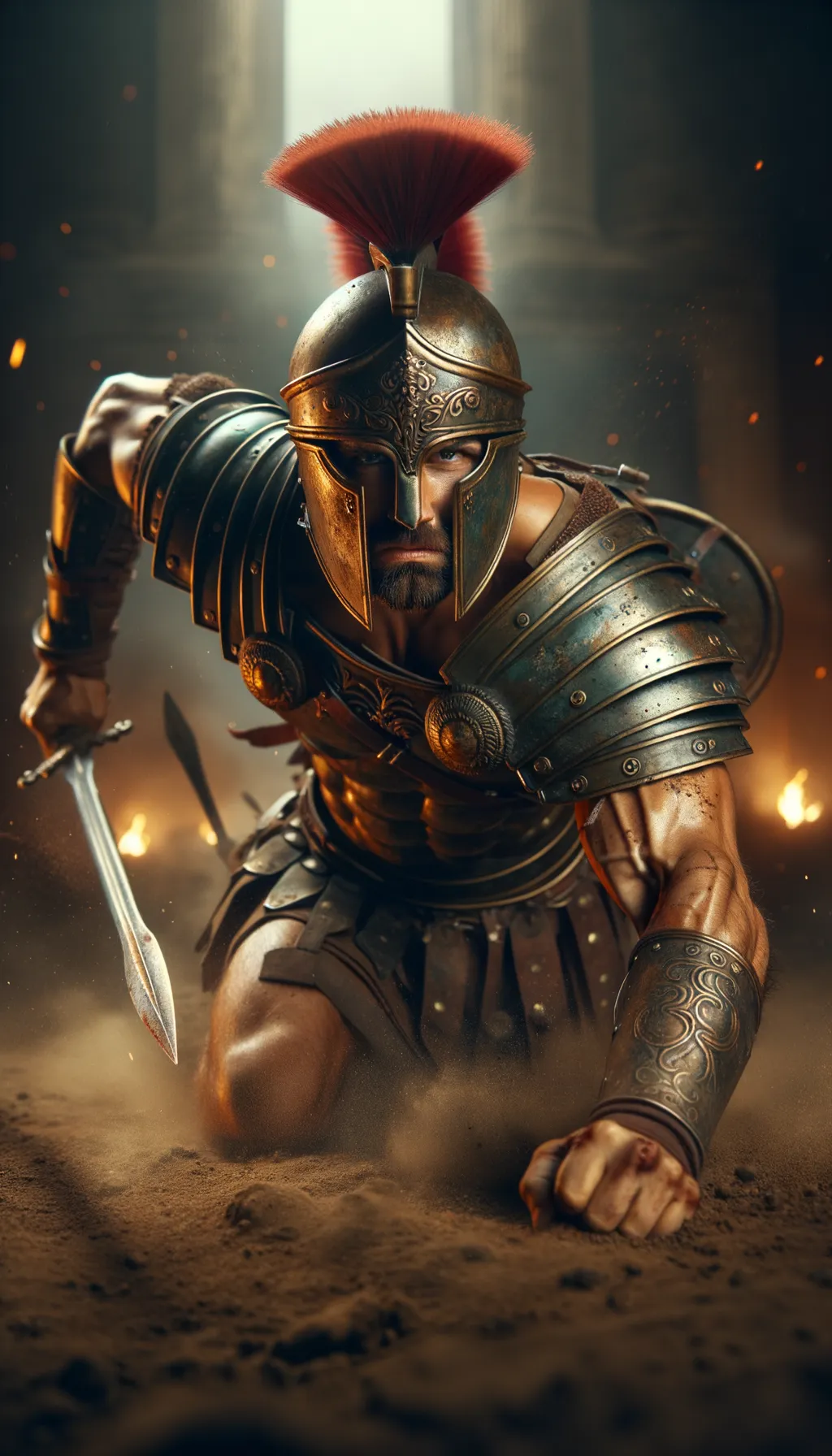
Thanatos, Non-Violent Death in Greek Mythology
Thanatos, in Greek mythology, is the god and personification of non-violent death. Unlike other deities, he is not death itself, but represents its inevitability. He is associated with peace and rest after life. While other mythological beings, such as Hades, rule the underworld and the dead, Thanatos represents the act of dying.
He is depicted as a winged youth, carrying an inverted torch and a crown of poppies, flowers that symbolise sleep, oblivion and death. Although his presence may be feared, he is not considered malevolent. Indeed, he is seen as a necessary and natural figure in the cycle of life and death.
Finally, it is important to stress that Thanatos represents a peaceful, non-violent and natural death. This distinction is crucial for understanding his role within Greek mythology and how he differs from other gods and goddesses associated with death and the underworld.
Whose Son Is Thanatos?
In the genealogy of the gods, Thanatos is the son of the goddess of night, Nyx, and of the god of darkness, Erebus. Born in primordial chaos, Thanatos and his twin brother Hypnos, the god of sleep, were a duality of life and death that complemented each other.
It is interesting to note that these two, along with their countless siblings, were “begotten alone” by Nyx. Representing night and darkness, Nyx is one of the earliest deities and a powerful figure in Greek mythology. Her ability to give birth to Thanatos and his siblings without the help of a consort reinforces the autonomous and often mysterious nature of death.
His divine kinship also includes other dark and feared beings, such as the Keres, spirits of violent death and deadly diseases, and Moros, the god of doom.
Thanatos and Eros: Counterparts in Life and Death
Thanatos and Eros, the god of love, are counterparts in life and death. While one infuses life with passion and desire, the other brings the peace of the end. Despite their opposition, both are intrinsically linked, representing the duality of human existence.
Some representations show them as brothers, emphasising the close connection between love and death. In other versions, Eros is one of the most ancient gods, born from primordial chaos just like Thanatos.
Stories and Myths: Thanatos’s Encounters in Ancient Literature
He is not the main actor. Thanatos is not a frequent character in Greek mythological stories, but when he appears, it is often in relation to mortals who defy death.
One of the best-known tales is the story of Admetus and Alcestis. When the moment of Admetus’s death arrives, his wife Alcestis offers to die in his place. Thanatos, who was destined to carry Admetus’s soul to Hades, is forced to take Alcestis’s instead. This story illustrates the inevitability of death, even when a sacrifice is made.
In another tale, the god of sleep, Morpheus, tricks Thanatos into releasing his lover, Aegle, from death. Even in these stories, he is not a villain, but a figure who fulfils his divine duty of leading mortals to the beyond.
Heracles and Thanatos: The Legend of the Hero and Death
One of the most famous stories involving Thanatos is his encounter with the hero Heracles. According to the myth, Heracles fought and defeated Thanatos in order to rescue Alcestis from the underworld and return her to her husband Admetus.
This is one of the few occasions on which Thanatos is defeated, and it was possible only thanks to the strength and courage of Heracles, one of the most famous heroes of Greek mythology. This myth highlights the inevitable confrontation between life (represented by Heracles) and death (represented by Thanatos).
The story also reinforces the inevitability of death. Although Alcestis is rescued, death remains a certainty for all mortals. Even Heracles, despite his heroic deeds, must eventually face his own mortality.
Sisyphus and Thanatos: How the Mortal Cheated Death
Another famous story involving Thanatos is that of Sisyphus, the cunning king who deceived death. When Thanatos came for him, Sisyphus tricked him into chaining himself, so that no one could die.
This act of defiance towards the gods and death itself led Sisyphus to his eternal punishment. His sentence is to push a boulder uphill only to watch it roll back down to the foot of the hill each time. This story reinforces the inevitability of death and the consequences of trying to avoid it.
It also shows the cunning of mortals and their desire to prolong life at all costs. However, Sisyphus’s punishment underlines that, although death can be temporarily deceived, it finally comes for everyone.
The Role of Thanatos in Psychology: Freud’s Theory
The concept of Thanatos has a significant place in the psychoanalytic theory of Sigmund Freud. Freud proposed the concept of the “death drive”, or Thanatos, as one of the two fundamental forces in the human psyche, the other being Eros, the life drive.
According to Freud, Thanatos is a destructive force, a drive towards death that manifests as aggression and self-directed violence. By contrast, Eros is a life force, a drive towards creation, productivity and the preservation of life.
Although this interpretation differs from his personification in Greek mythology as a peaceful and non-violent death, it reflects the intrinsic duality of life and death and how these opposing forces drive human behaviour.
His Relationship with Hypnos, the God of Sleep
Thanatos and Hypnos, the god of sleep, are children of the night (Nyx), and according to mythology, they are twin brothers. They share a close relationship, reflected in the fact that both play similar roles, bringing rest and relief to humanity, whether through sleep or death. They are often represented together, reinforcing their bond and the idea that death is simply an eternal sleep.
Hypnos and Thanatos also shared a dwelling in the underworld, a place of shadows and dreams where they lived alongside their other siblings, the gods of nightmare and deceit. Their close relationship is a testament not only to their shared origin, but also to their interrelated role in human life: the lulling peace of sleep and the final lethargy of death.
However, while Hypnos is generally regarded as a benign god, who brings relief through sleep, Thanatos is viewed with greater fear. Although his domain is non-violent death, his role as bearer of death makes him a figure feared by mortals.
Representations Through History
In ancient Greece he was shown as a winged youth with an extinguished torch, symbolising the extinction of life. Sometimes he was shown carrying a butterfly, a symbol of the fragility and transience of life.
In Roman art, Thanatos was assimilated with Mors, the Roman god of death, and was often shown as a skeleton or as a man with a scythe, an image reminiscent of the more familiar figure of Death in Western tradition. However, despite these fearsome depictions, he was also sometimes portrayed as a gentle and merciful being, who frees mortals from their sufferings.
In modern and contemporary art he has taken various forms, from the traditional skeletal figure to more abstract representations of death and mortality. Nevertheless, despite the different interpretations, the central theme of Thanatos as bearer of death remains constant.
What Is the Difference Between Thanatos and Hades?
While Thanatos is the god of non-violent death, Hades is the god of the underworld, the place to which souls go after death. Although both are linked to death and to life after death, they have different roles and responsibilities.
Hades rules the realm of the dead and judges the souls of the departed. He is a feared and respected god, but he is also considered just in his judgements. Thanatos, on the other hand, is the one who brings death, leading souls to the underworld with his touch.
In short, while Hades is the ruler of the underworld and judge of souls after death, Thanatos is the messenger who leads the souls of mortals to the underworld.
Modern Interpretations: Death in the 21st Century
Although ancient mythology may seem distant and irrelevant to modern life, the figure of Thanatos remains relevant today. Although representations may vary, the idea of him as bearer of death and transition to life after death remains constant.
In philosophy and literature, Thanatos usually symbolises the finitude and transience of life, reminding us of the inevitability of death and the importance of living fully while we are alive.
Thanatos’s Legacy and Current Influence
The influence of Thanatos extends beyond mythology and art, penetrating psychology, philosophy and popular culture. As such, although we may no longer believe in gods and goddesses like the ancient Greeks, his figure remains relevant, reminding us of the unavoidable reality of death.
Over the centuries, Thanatos has evolved from a feared deity into a symbol of human mortality and the ephemeral beauty of life. Although he may be a dark figure, his legacy teaches us to appreciate life and to live fully, reminding us that every moment is precious. In this sense, he is not only the god of death, but also the god of a full and meaningful life.

Subscribe
If you would like to receive stories, curiosities and legends about the most fascinating creatures of classical mythology in your inbox, just fill in this form.
Keep reading
If you enjoyed this article, you love mythology. And in that case, we have a lot more to offer you. Discover new adventures, heroes, nymphs, gods, battles, teachings… Just click the button.

Semele, the Mortal Princess Who Won Zeus’s Heart
Greek mythology, famous for its intrigues, conflicts, and relationships between gods and humans, provides us with fascinating narratives that have left an indelible mark on culture and literature around the world. One of these stories is that of Semele, the mortal who...

Nike, the Goddess of Victory
In the diverse Greek mythology, there is a goddess who stands out for her unmistakable presence and unrivaled symbolism: Nike, the divine personification of victory. Depicted with wings, this goddess has been a constant icon of triumph and success throughout the...

The most immoral gods in Greek mythology
Greek mythology is full of fascinating stories that reflect the complexities of human nature through its gods. These gods often exhibit behaviour that today we would consider immoral. In this article, we will explore some of the most immoral gods and also take a look...

Hypnos, the god of sleep
Greek mythology, rich and vibrant, is full of gods and goddesses, heroes and villains, stories and legends. Each mythological figure has a role to play and lessons to pass on. Today, we will focus on Hypnos, the god of sleep. Although he is not as well known as Zeus...
Zeus, king of all the gods
Today we're going for the jackpot. In this article we'll talk about Zeus, a central figure in Greek mythology, the king of all the gods and goddesses of Mount Olympus. His story and symbolism have influenced ancient Greek culture and art, and his legacy lives on in...
What does the myth of the god Aeolus try to explain?
In the vast mosaic of Greek mythology, one figure stands out for its unique role: Aeolus, the god of the winds. This divine character, less well known than deities such as Zeus or Apollo, is nevertheless essential to the ancient conception of the world and the cosmos....

Cassandra’s Myth: The Ignored Prophecy
The Greek mythology is full of heroes, gods and supernatural beings whose stories continue to serve as a source of inspiration and reflection even in modern times. Among these notable tales is the myth of Cassandra, a strong and tragic female character who embodies...

Nyx, the Goddess of the Night
Nyx, the goddess of the night in Greek mythology, is a powerful and enigmatic figure. She is the daughter of Chaos and the mother of deities such as Hypnos and Thanatos. Although her presence is not as prominent as that of Zeus or Poseidon, her influence extends to...
Amalthea, Zeus’s Nurse
In the vast universe of Greek mythology, a character who often goes unnoticed, but whose role is crucial in the story of the Olympian gods, is Amalthea. Although she is often overshadowed by more prominent figures, she plays a fundamental role in the story of Zeus...

mitologiaclasica.com is a website dedicated to exploring and sharing the fascinating richness of mythology, offering a vast compendium of stories, characters and legends.
Explore
Greek Mythology
Roman Mythology
Norse Mythology
Egyptian Mythology
Hindu Mythology
Chinese Mythology
Japanese Mythology
Celtic Mythology
Privacy Policy
Privacy Policy
Copyright mitologiaclasica.com