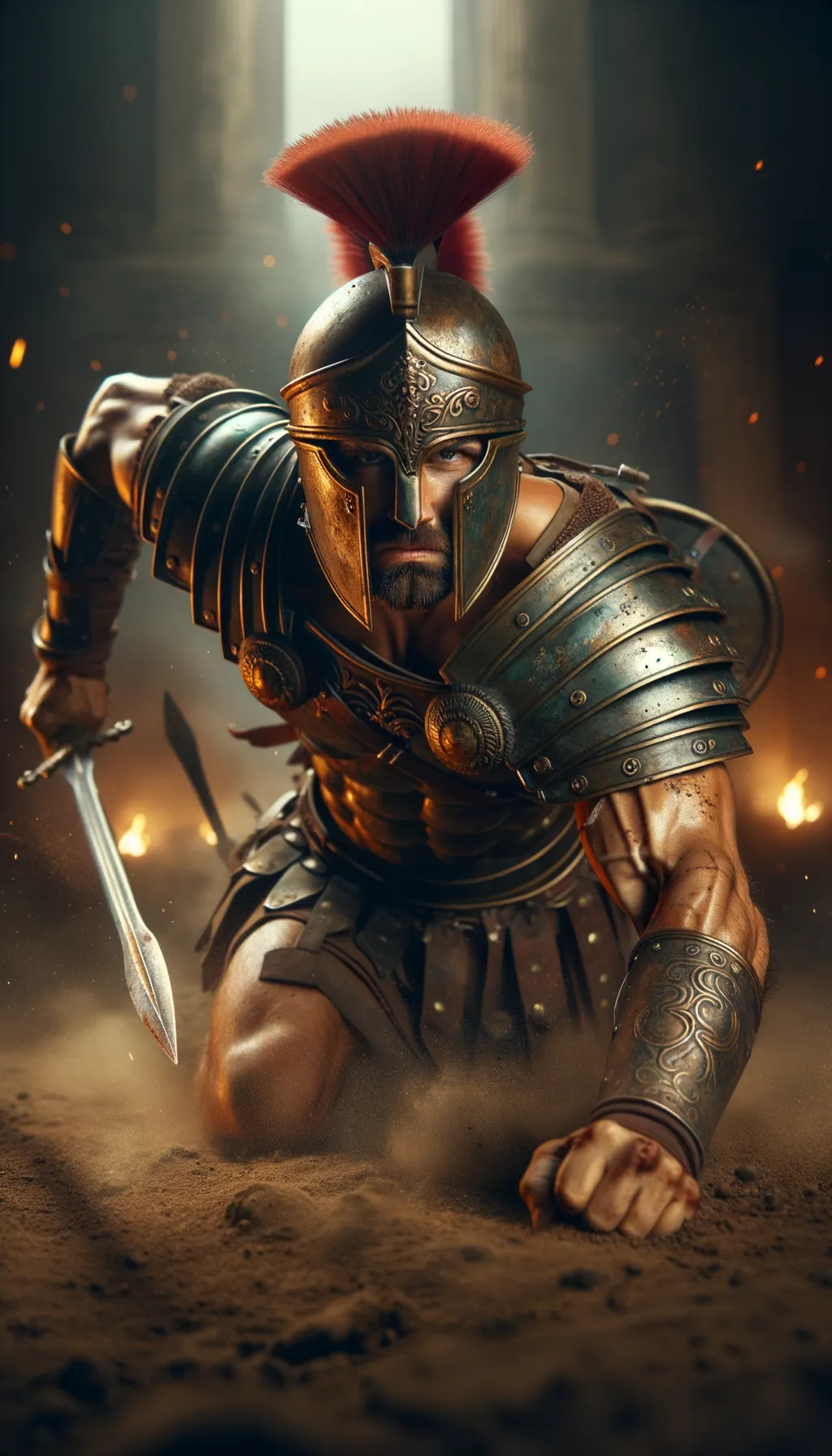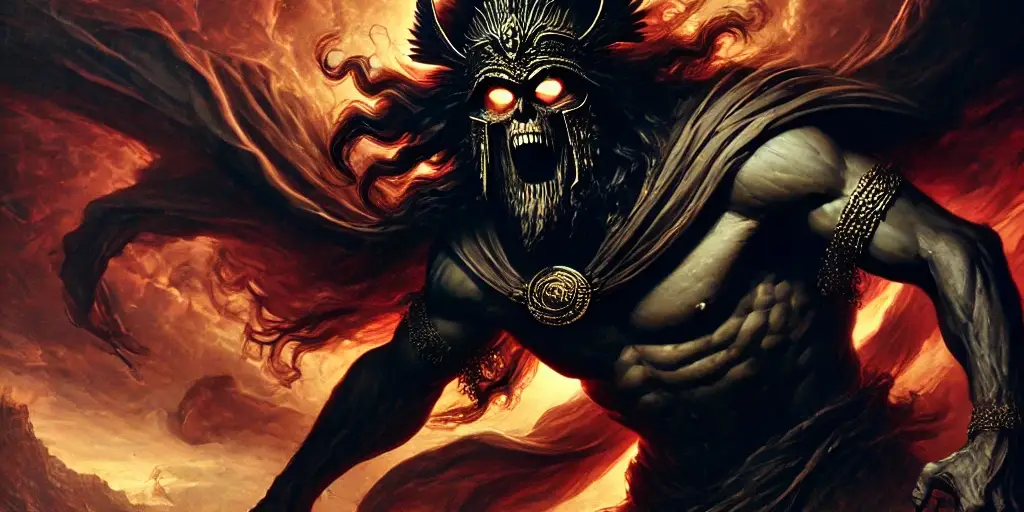
In the vast annals of Greek mythology, where gods and goddesses, heroes, and monsters intertwine in a dance of legends and myths, we find Phobos, a peculiar and often overlooked figure. Less well known than Zeus or Hercules, Phobos nevertheless offers a fascinating perspective on the ancient Greek mind and the importance they placed on the concepts of fear and terror. This article delves into his history, exploring his origin, his role in ancient legends, and his lasting influence on contemporary culture.
Phobos: An Unusual Character in Greek Mythology
The god Phobos, whose name literally means “fear” in Greek, is one of the many minor deities that populate Greek mythology. Unlike the better-known deities, he is not primarily worshipped or feared, but rather symbolizes a very specific and powerful human emotion: absolute terror. In that role, he represents the fear that paralyzes, the horror that consumes all reasoning and strength.
The Greek God of Fear and Horror
When we speak of Phobos, we are dealing with the personification of fear and horror in ancient Greece. As such, he is invoked in times of war to instill paralyzing panic in the enemy. This panic, according to ancient belief, could demoralize and disorganize enemy forces, making them easier to conquer. In this sense, he is a formidable ally, capable of changing the course of battles with his mere presence.
The Origins of Phobos: Son of Ares and Aphrodite
Phobos is the son of Ares, the god of war, and Aphrodite, the goddess of love, providing a fascinating contrast in his lineage. While his father represents violence and destruction, his mother embodies beauty and desire. From this seemingly incongruous union comes Phobos, a god who combines the darkest aspects of both parents: the horror of war and the terror that can be born of love.
His Brother Deimos: The Personification of Terror
In his task of personifying fear, Phobos is not alone. He has a brother, Deimos, who represents terror. These two gods are invoked in times of war to sow panic and confusion in enemy ranks. They are often depicted together, generally accompanying their father Ares on the battlefield.
The Depiction of Phobos in Ancient Art
In ancient art, Phobos is often depicted as a terrifying young man, with bloodshot eyes and a wild appearance. He is sometimes shown with wings, suggesting the speed with which fear can spread. In other depictions, Phobos appears alongside his father Ares, usually in battle scenes.
The Symbolism of Phobos in Ancient Greek Literature
In ancient Greek literature, Phobos often appears in the liminal spaces between reality and the underworld. He is an omnipresent figure in descriptions of battles, where his presence is felt through the fear and terror he instills. Although rarely the protagonist of the stories, his influence is felt throughout many epic narratives, as a constant reminder of the horrors of war.
His Role in Homeric Epic: The Iliad and the Odyssey
In Homer’s two great epics, the Iliad and the Odyssey, Phobos plays a fundamental role. He accompanies his father Ares in battle, instilling fear and terror in the hearts of warriors. In the Iliad, he is described as a constant companion of Ares, and in the Odyssey, his presence is felt in the numerous battle scenes.
The Cult of Phobos: Did Formal Worship Exist?
Unlike other Greek gods, there does not seem to have been a formal cult of Phobos. His function was more that of an entity invoked in times of war than that of a god worshipped and offered sacrifices. However, his presence in legends and ancient art suggests he was an important figure in the mindset of the ancient Greeks.
The Role of Phobos in War and Combat
In times of war, the ancient Greeks invoked Phobos to sow fear and confusion among their enemies. This reflects the importance the Greeks placed on the psychological aspect of war. With Phobos at their side, they hoped to demoralize their enemies and cause them to abandon the fight.
From Mythology to Contemporary Culture
Although Phobos is a lesser-known figure in Greek mythology, his influence endures to this day. His name has become a generic term for irrational or intense fear, and his figure has been adopted in various forms of art and entertainment, from literature to video games.
The Martian Moon That Bears His Name
The impact of Phobos is not limited to mythology and culture. In astronomy, Phobos is the name of one of Mars’s two natural satellites. This small celestial body, discovered in 1877, bears the name of the Greek god of fear in honor of his ability to instill terror.
The Persistent Influence of Phobos on Our Society
Phobos, though often overlooked in the broader context of Greek mythology, is an intriguing figure who deserves more attention. His role as the personification of fear and horror offers insight into how the ancient Greeks understood and confronted these emotions. Moreover, his presence in contemporary culture and astronomy demonstrates that, although the gods of Olympus may have faded from memory, their influence endures in our modern society.
Subscribe
If you want to receive stories, curiosities, and legends of the most fascinating creatures of classical mythology in your inbox, just fill out this form.
Continue reading
If you liked this article, you like mythology. And in this case, we have much more to offer you. Discover new adventures, heroes, nymphs, gods, battles, teachings… Just click on the button.
Tiresias, the Blind Prophet
One of the most intriguing and multifaceted characters in Greek mythology is Tiresias, the blind prophet of Thebes. This seer, who spent seven years as a woman before becoming a man again, plays a fundamental role in several literary works, including tragedies by...
The Sacrifice of Iphigenia
Greek mythology is full of heroes, gods, and complex characters, each with their own stories and lessons. One of these figures, perhaps somewhat less well known, is Iphigenia, the unfortunate daughter of Agamemnon and Clytemnestra. Although her story is tragic, her...
Erysichthon, Insatiable Hunger
The ancient stories of Greek mythology have fascinated humanity for thousands of years. Their narratives, full of gods, heroes, mythical creatures, and moral lessons, have influenced many cultures and remain relevant to this day. In this article, we will focus on one...
The Myth of Philomela and Procne
Today we discuss the myth of Philomela and Procne. It is a tragic and moving story from ancient Greek mythology, notable both for the rawness of its details and for its powerful symbolism. It is the story of two sisters, bound by unbreakable ties of loyalty and love,...

Leda and the Swan
Greek mythology is full of astonishing stories that have left an indelible mark on culture and art over the centuries. One of the most intriguing and controversial tales is that of "Leda and the Swan." The story of the seduction of the mortal Leda by the god Zeus...

Who Was the Goddess Atalanta?
Atalanta, an iconic figure in Greek mythology, is famous for her tireless speed and sharp wit. In a world dominated by men, she emerged as a heroine, defying conventional norms and forging her own path. In every tale about her life, her resilience and her ability to...
What Is the Story of Pygmalion and Galatea?
The names Pygmalion and Galatea resonate in the collective imagination. They are two figures who have inspired poets, writers, and artists throughout the centuries. The love story between the sculptor and his creation is one of the most moving and fascinating in Greek...

Nereus, the Old God of the Sea
Greek mythology is a vast mosaic of gods, heroes, and legendary entities, each with its own narrative and singular character. One of these gods is Nereus, an ancient sea deity who, although less well known than Poseidon, plays an important role in the Greek pantheon....

The Graeae, One Eye and One Tooth
Greek mythology, full of gods, heroes, creatures, and legends, is a vast world that continues to spark fascination today. In this broad pantheon, the Graeae are three figures often overshadowed by better-known characters. Yet these sisters, endowed with a single eye...

mitologiaclasica.com is a website dedicated to exploring and popularizing the fascinating richness of mythology, offering a vast compendium of stories, characters, and legends.
Explore
Greek Mythology
Roman Mythology
Norse Mythology
Egyptian Mythology
Hindu Mythology
Chinese Mythology
Japanese Mythology
Celtic Mythology
Privacy Policy
Privacy Policy
Copyright mitologiaclasica.com