The ancient stories of Greek mythology have fascinated humanity for thousands of years. Their narratives, full of gods, heroes, mythical creatures, and moral lessons, have influenced many cultures and remain relevant to this day. In this article, we will focus on one of these tales, that of Erysichthon, a king whose greed led him to suffer a divine punishment of epic proportions: insatiable hunger.
The Story of Erysichthon in Greek Mythology
Greek mythology is a collection of stories and legends that the ancient Greeks used to explain the world around them. These myths were full of gods and goddesses, heroes, and monsters, and told of epic adventures and heartbreaking tragedies. One such myth is that of Erysichthon, a king known for his excessive greed. Although not as famous as figures like Hercules or Perseus, the story of Erysichthon is a fascinating and dark tale about greed and its consequences.
Who Punished Erysichthon?
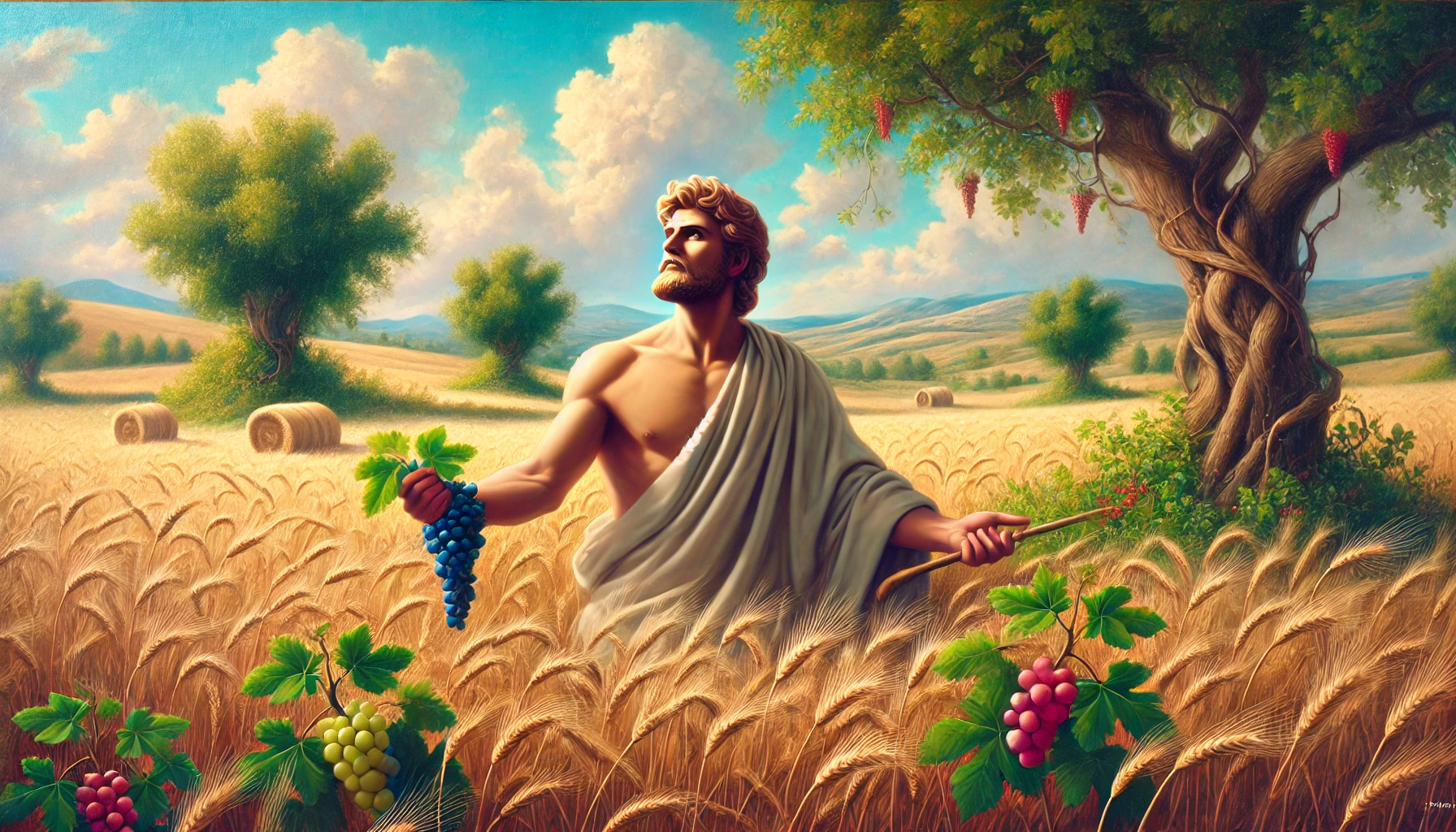
Erysichthon was a king whose greed led him to commit an act of impiety. Ignoring the warnings, he cut down a sacred oak dedicated to the goddess Demeter, in order to build himself a banquet hall. This act of greed and ruthless disregard for what was sacred enraged Demeter, who decided to punish him for his arrogance. The goddess imposed a punishment fitting his crime: an insatiable hunger that would lead to his own ruin.
The Origin of Erysichthon in Ancient Mythology
Erysichthon is a character who appears in several sources of ancient mythology. His story appears in Ovid’s “Metamorphoses,” where he is a tyrannical and greedy king. Despite his wealth and power, he is an extremely greedy man, willing to sacrifice even the sacred in his pursuit of personal satisfaction. This portrait of Erysichthon as a corrupt and greedy man has persisted over the centuries, serving as a symbol of the consequences of extreme greed.
Erysichthon’s Offense Against the Goddess Demeter
Erysichthon’s act of cutting down a tree sacred to Demeter was considered a grave offense in ancient Greece. Trees were symbols of the gods and goddesses, and damaging one was an act of sacrilege. Erysichthon, in his greed, ignored this fact and offended Demeter, a goddess known both for her generosity and her severity. His contempt for the sacred and his disrespect toward the goddess ultimately led to his downfall.
The Divine Punishment: Erysichthon’s Insatiable Hunger
As punishment for his offense, Demeter decided to give Erysichthon an insatiable hunger. No matter how much he ate, he would never feel satisfied. This insatiable hunger was a fitting punishment for his crime, as it reflected his greed and endless desire for more. Despite his abundance and authority, Erysichthon was reduced to a desperate man, unable to relieve his craving.
Myths and Legends: The Role of the Nymphs in the Story of Erysichthon
The nymphs play an important role in the story of Erysichthon. It was they who warned him about the consequences of cutting down the sacred oak, and it was they who informed Demeter of his crime. In addition, a nymph named Limos, the personification of hunger, was sent by Demeter to inflict his punishment. Thus, the nymphs, like many female figures in Greek mythology, play a crucial role in the fate of heroes and villains.
The Sale of Mestra: The Dramatic Fate of Erysichthon’s Daughter
Desperate because of his insatiable hunger, Erysichthon goes so far as to sell his own daughter, Mestra, to obtain food. However, Mestra is saved by Poseidon, who grants her the gift of shapeshifting to escape her owners. Despite this, Mestra’s fate becomes one of the most tragic aspects of Erysichthon’s story, as she is forced to live a life of slavery and suffering because of her father’s greed.
Mestra and Poseidon: An Unexpected Twist in the Plot
The gift of shapeshifting that Poseidon grants Mestra adds an unexpected twist to the story. This gift allows Mestra to repeatedly escape from those who buy her, allowing Erysichthon to sell her again and again to satisfy his hunger. However, this twist also underscores the tragic nature of the story, as Mestra finds herself trapped in a cycle of slavery and escape, unable to find true freedom.
Reflections on the Myth of Erysichthon
The myth of Erysichthon is a dark tale that illustrates the consequences of greed and contempt for the sacred. Through his insatiable hunger, Erysichthon is reduced to nothing, showing how greed can lead to self-destruction. In addition, Mestra’s story highlights the terrible consequences innocent people can suffer when caught up in the greed of others.
His Role in Ancient Literature and Art
The punishment appears in various forms of ancient art and literature. His story is told in Ovid’s “Metamorphoses,” and there are also references to him in the works of Callimachus and Apollonius of Rhodes. In art, Erysichthon is often depicted in the act of cutting down the sacred tree or suffering from his insatiable hunger, highlighting the punishment his greed brought upon him.
Parallels Between Erysichthon and Other Greek Myths
The myth of Erysichthon has parallels with other tales from Greek mythology, especially those dealing with greed and its consequences. For example, the myth of Tantalus also tells the story of a king who is punished with insatiable hunger for offending the gods. These parallels reflect the values and beliefs of ancient Greece and how they viewed greed and disrespect toward the divine.
Lessons and Morals of the Story
The legend of Erysichthon offers multiple teachings and lessons. It teaches about the dangers of greed and shows how it can lead to self-destruction. It also warns about the consequences of not respecting the sacred and the divine. In addition, through the tragic story of Mestra, the myth highlights the terrible consequences that innocent people can suffer because of others’ greed.
A Powerful Tale
The myth of Erysichthon is a powerful, captivating tale that makes us reflect on human nature and the consequences of our actions. Through his greed and lack of respect, he becomes an example of how our actions can have devastating consequences, not only for ourselves, but also for those around us. Although his story may seem extreme, the lessons it offers are invaluable, reminding us of the importance of respecting the sacred and reining in our excessive ambitions.
Subscribe
If you want to receive stories, curiosities, and legends of the most fascinating creatures of classical mythology in your inbox, just fill out this form.
Continue reading
If you liked this article, you like mythology. And in this case, we have much more to offer you. Discover new adventures, heroes, nymphs, gods, battles, teachings… Just click on the button.
The Revenge of Clytemnestra
The queen of Mycenae, Clytemnestra, stands as one of the most intriguing and complex figures in Greek mythology. Her story, which has been explored in literature and art over the centuries, is a saga of love, betrayal, revenge, and tragedy. In this article, we will...

The Gorgons, the Three Monstrous Sisters
In the vast array of mythological beings that inhabit the legends of ancient Greece, the Gorgons hold a particularly terrifying place. These female beings, whose name comes from the ancient Greek word "gorgós," meaning "fierce" or "terrible," are famous mainly for...

Iris, the Messenger of the Gods
Greek mythology, rich in stories, characters, and symbolism, has fascinated humanity for thousands of years. Among the gods and goddesses who populate these stories, one figure stands out for her connection to the sky, the gods, and humans: Iris, the messenger of the...

Who Was Tyndareus?
Greek mythology is a vast universe full of stories and characters that have influenced Western culture in countless ways. Among these characters, one of the most important is Tyndareus, king of Sparta. His life, full of intrigue and conflict, is a perfect example of...

Cadmus, the Phoenician Hero
In the tales of Greek mythology, we find countless characters who have left their mark on history and culture. Among them, a figure who stands out is Cadmus, the Phoenician hero who became the legendary founder of the city of Thebes. In this article, we will explore...

The Curse of Phaedra
In the vast cosmos of Greek mythology, Phaedra represents a luminous and tragic figure. Her name is synonymous with forbidden passion, deceit, and revenge, and her story has inspired generations of playwrights, novelists, and psychologists. In this article, we will...

The Myth of Ixion
In the following article, we will explore the myth of Ixion, his story, and the impact he has had on Greek culture and beyond. Greek mythology is full of colorful characters and impressive adventures. Its pages are adorned with tales of love, betrayal, courage, and...

What Are Greek Tragedies?
Greek tragedies are a form of theater that originated in ancient Greece. The tragic and moving stories these dramas present have captivated audiences for thousands of years. In this article, we'll explore the history, characters, themes and legacy of Greek tragedies....

Monstruos femeninos en la mitología griega
La mitología griega está repleta de criaturas extraordinarias que han cautivado la imaginación de generaciones. Dentro de estas criaturas, los monstruos femeninos tienen un rol específico, simbolizando fuerzas originarias y encarnando miedos antiguos. Estas entidades,...

mitologiaclasica.com is a website dedicated to exploring and popularizing the fascinating richness of mythology, offering a vast compendium of stories, characters, and legends.
Explore
Greek Mythology
Roman Mythology
Norse Mythology
Egyptian Mythology
Hindu Mythology
Chinese Mythology
Japanese Mythology
Celtic Mythology
Privacy Policy
Privacy Policy
Copyright mitologiaclasica.com