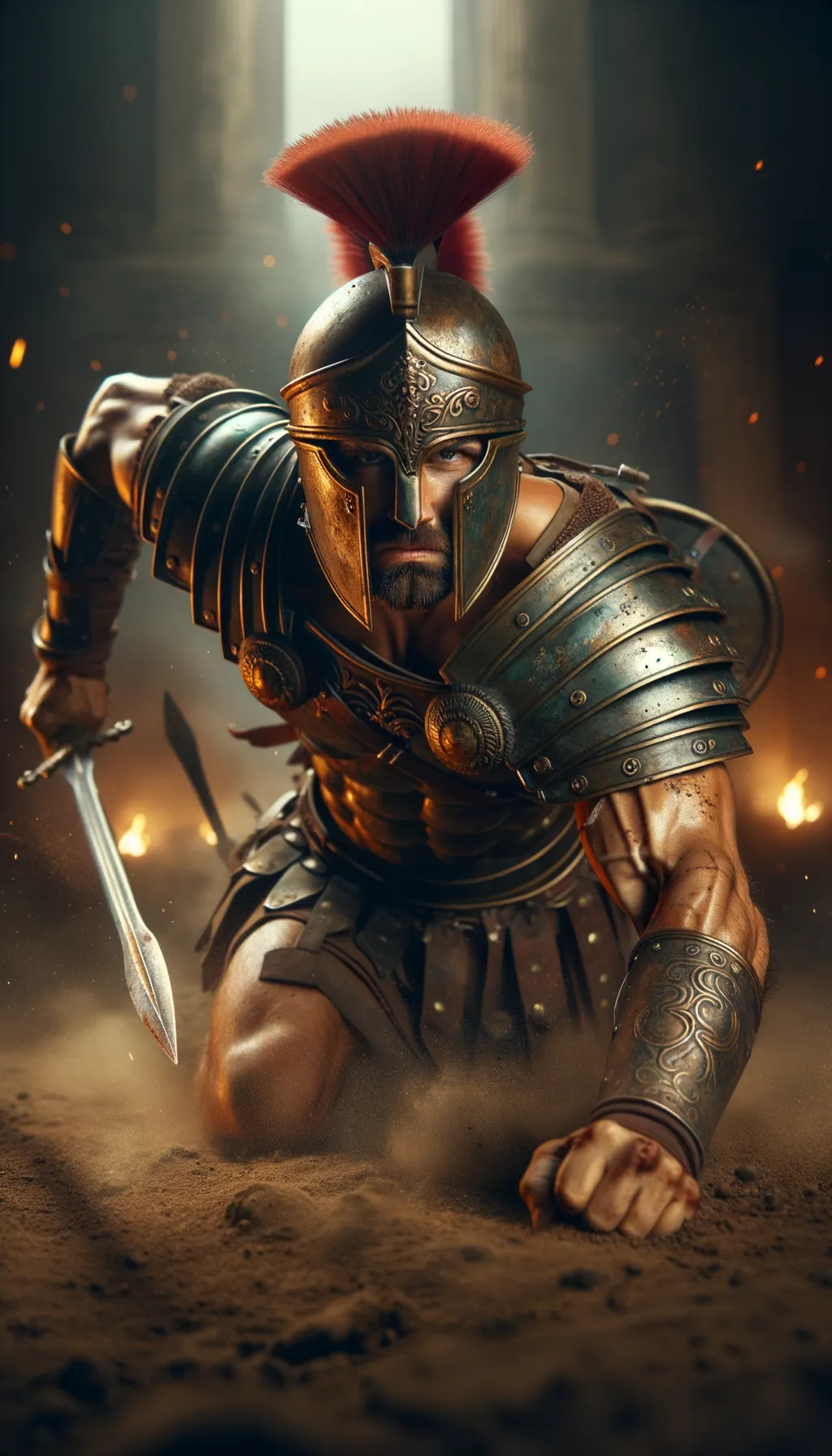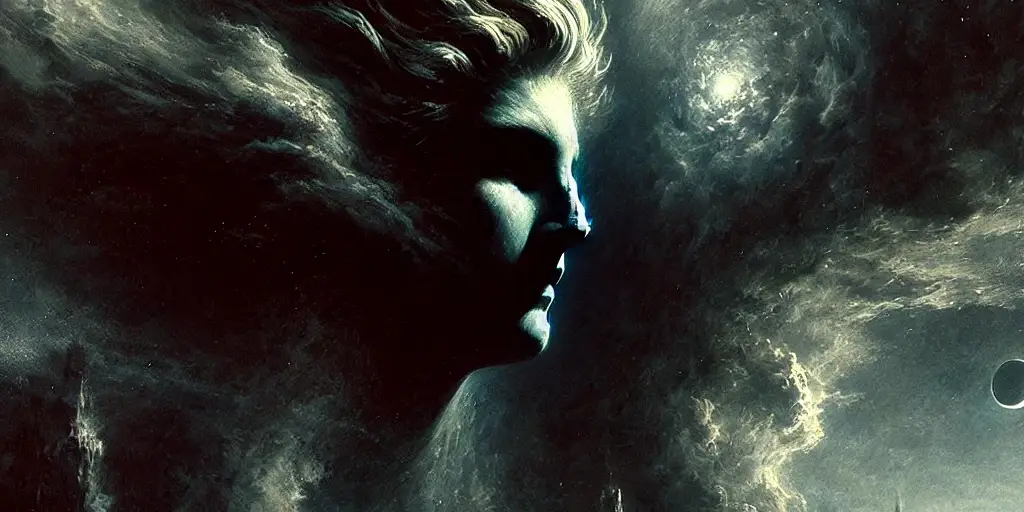
Erebus, a mysterious and enigmatic figure in Greek mythology, has fascinated historians, archaeologists, and mythology enthusiasts for centuries. His role in the Greek cosmos, his relationship with other gods and goddesses, and his lasting influence on contemporary popular culture form a fascinating and complex subject. In this article, we will explore the legend of Erebus in depth, from his dark origins to his role in the afterlife according to Greek mythology.
A Look at Greek Mythology
It is clear that Erebus is a figure who, although less well known than contemporaries such as Zeus or Hades, plays an important role in Greek mythology. Associated with darkness and shadows, he is an omnipresent figure, a god whose realm is the dark abyss where souls go after death. It is not clear how widely worshipped or feared he was among the ancient Greeks, but his role in Greek cosmology is undeniable.
The God of Shadow and Darkness: Erebus
His name means “deep darkness” or “shadow”; and as such, Erebus is the god of darkness and shadows in Greek mythology. According to ancient legends, he dwells in the depths of Tartarus, a place of infinite darkness located deep within the Earth. His realm is a place of shadows and darkness, a place of silence and stillness.
Who Were the Parents of Erebus?
According to Greek cosmogony, the first gods emerged from Chaos, the primordial void. Among them was Erebus, the personification of darkness and shadows. Alongside him arose entities such as Gaia (Earth) and Nyx (Night). Although versions vary, most accounts agree that Erebus was the son of Chaos, making him one of the first beings to exist.
Throughout the myths, he appears as an abstract entity rather than a god with defined characteristics and personality. His name reinforces his association with shadows and gloom. However, despite his ethereal nature, Erebus played an important role in the creation of the Greek cosmos.
The Function of Erebus in the Greek Cosmos
In Greek cosmology, Erebus was the place the dead had to pass through immediately after dying, before reaching the underworld ruled by Hades. He was described as a dark and shadowy place, a space in between life and death. It was also thought that Erebus lay somewhere beneath the earth, reinforcing the idea that it was a kind of antechamber to the underworld.
In addition to his mythological function, Erebus also had a cosmogonic role. Together with Nyx, his sister and consort, he fathered a series of abstract entities that personified different aspects of the world, such as Day, Air, and Sleep. In this way, he contributed to the balance and order of the cosmos.
The Descendants of Erebus: The Personification of Shadows
From the union between Erebus and Nyx were born numerous deities representing different aspects of the natural and supernatural world. These include Aether (the upper air, the bright sky) and Hemera (Day). They were also the parents of the Moirai, who controlled the fate of gods and men, and of the Keres, goddesses of violent death.
They also fathered Hypnos (Sleep) and Thanatos (non-violent Death), both recurring figures in Greek myths. In addition, Moros (Doom), Nemesis (Retribution), Apate (Deceit), and the Moirai (Fate) are also counted among their offspring. All of them, in one way or another, are personifications of shadows, darkness, and the inevitable.
Nyx and Erebus: The Union of Darkness and Night
The relationship between Erebus and Nyx is a key element in Greek mythology. They are described as siblings, arising from the same origin, Chaos, but also as a couple, joined in a primordial union that gave rise to many of the abstract forces that govern the world.
The union between darkness (Erebus) and night (Nyx) carries strong symbolism. Both represent the unknown, the hidden, and the unfathomable. But they also represent duality and balance: where there is light, there is also darkness; where there is day, there is also night.
Aether and Hemera: The Luminous Children of Erebus
Despite being the personification of darkness, Erebus is the father of two deities associated with light: Aether and Hemera. Aether, whose name means “pure, bright air,” is the personification of the upper sky, the space through which the gods and the souls of the just move. Hemera, for her part, personifies Day.
These two children of Erebus and Nyx symbolize the transition from darkness to light, and reinforce the idea that Erebus is not simply a negative entity, but also a necessary element for the balance of the cosmos.
Depictions and References
References to Erebus are frequent in ancient Greek and Latin literature. In Homer’s “Iliad,” for example, Erebus is mentioned as the dark place through which the dead passed to reach the underworld. In Hesiod’s “Theogony,” the story of his origin is told and his descendants are detailed.
In Virgil’s epic poem “The Aeneid,” Erebus also plays an important role as the dark and shadowy place through which the dead must pass. The presence of Erebus in these works underscores his importance as a symbolic figure of darkness and shadow.
His Role in the Afterlife
The role of Erebus in the underworld is fundamental. He is considered a kind of dark antechamber or corridor that souls must pass through to reach the abode of Hades, god of the underworld. In that sense, Erebus is the first “face” souls encounter after death, underscoring his fearsome and overwhelming nature.
However, despite his association with death and darkness, he is not a malevolent god. In Greek mythology, death was not necessarily seen as something negative, but as a natural part of the cycle of life. In this sense, Erebus, as the personification of darkness and shadows, also represents transition and change.
Myths and Legends Associated with Erebus
Despite his central role in Greek cosmogony, there are not many specific myths about Erebus. However, his presence is constant in the stories dealing with the underworld and the afterlife. In these narratives, he often appears more as a place than as a character, a shadowy and mysterious zone that souls must pass through to reach the realm of Hades.
In addition, as the father of several important deities in Greek mythology, Erebus is indirectly involved in many myths. For example, as the father of Thanatos and the Keres, he is linked to stories about death and the fate of human beings.
Influence on Contemporary Popular Culture
Although Erebus is not as well known as other Greek gods, his influence can be seen in various manifestations of contemporary popular culture. In fantasy literature, for example, the figure of Erebus is often used to represent darkness and shadows. In video games, films, and television series, Erebus has also appeared as a dark realm or even as a character.
In astronomy, an asteroid discovered in 1973 was named after Erebus. In geography, the name Erebus has also been used to name one of Antarctica’s most active volcanoes. These examples demonstrate that, despite his antiquity, his figure remains relevant today.
A Fundamental Piece of Greek Mythology
In short, although Erebus is not as well known as Zeus or Hades, his role in Greek mythology is essential. As the personification of darkness and shadows, he represents fundamental aspects of the world and the human condition.
Moreover, as the progenitor of several entities, he contributes to the rich fabric of Greek mythology. His offspring include deities representing everything from day and air to death and sleep, reinforcing the importance of Erebus’s role in the cosmos.
Finally, the fact that Erebus continues to be a reference point in contemporary culture demonstrates the endurance of Greek myths and their ability to continue captivating the human imagination.
For all these reasons, Erebus deserves his place in the pantheon of Greek mythology. As the personification of darkness, he reminds us that even in shadows, meaning and purpose can be found. And although his realm is dark and mysterious, it is full of wonders and mysteries yet to be discovered.
Subscribe
If you want to receive stories, curiosities, and legends of the most fascinating creatures of classical mythology in your inbox, just fill out this form.
Continue reading
If you liked this article, you like mythology. And in this case, we have much more to offer you. Discover new adventures, heroes, nymphs, gods, battles, teachings… Just click on the button.
Tiresias, the Blind Prophet
One of the most intriguing and multifaceted characters in Greek mythology is Tiresias, the blind prophet of Thebes. This seer, who spent seven years as a woman before becoming a man again, plays a fundamental role in several literary works, including tragedies by...
The Sacrifice of Iphigenia
Greek mythology is full of heroes, gods, and complex characters, each with their own stories and lessons. One of these figures, perhaps somewhat less well known, is Iphigenia, the unfortunate daughter of Agamemnon and Clytemnestra. Although her story is tragic, her...
Erysichthon, Insatiable Hunger
The ancient stories of Greek mythology have fascinated humanity for thousands of years. Their narratives, full of gods, heroes, mythical creatures, and moral lessons, have influenced many cultures and remain relevant to this day. In this article, we will focus on one...
The Myth of Philomela and Procne
Today we discuss the myth of Philomela and Procne. It is a tragic and moving story from ancient Greek mythology, notable both for the rawness of its details and for its powerful symbolism. It is the story of two sisters, bound by unbreakable ties of loyalty and love,...
Leda and the Swan
Greek mythology is full of astonishing stories that have left an indelible mark on culture and art over the centuries. One of the most intriguing and controversial tales is that of "Leda and the Swan." The story of the seduction of the mortal Leda by the god Zeus...
Who Was the Goddess Atalanta?
Atalanta, an iconic figure in Greek mythology, is famous for her tireless speed and sharp wit. In a world dominated by men, she emerged as a heroine, defying conventional norms and forging her own path. In every tale about her life, her resilience and her ability to...
What Is the Story of Pygmalion and Galatea?
The names Pygmalion and Galatea resonate in the collective imagination. They are two figures who have inspired poets, writers, and artists throughout the centuries. The love story between the sculptor and his creation is one of the most moving and fascinating in Greek...
Nereus, the Old God of the Sea
Greek mythology is a vast mosaic of gods, heroes, and legendary entities, each with its own narrative and singular character. One of these gods is Nereus, an ancient sea deity who, although less well known than Poseidon, plays an important role in the Greek pantheon....

The Graeae, One Eye and One Tooth
Greek mythology, full of gods, heroes, creatures, and legends, is a vast world that continues to spark fascination today. In this broad pantheon, the Graeae are three figures often overshadowed by better-known characters. Yet these sisters, endowed with a single eye...
mitologiaclasica.com is a website dedicated to exploring and popularizing the fascinating richness of mythology, offering a vast compendium of stories, characters, and legends.
Explore
Greek Mythology
Roman Mythology
Norse Mythology
Egyptian Mythology
Hindu Mythology
Chinese Mythology
Japanese Mythology
Celtic Mythology
Privacy Policy
Privacy Policy
Copyright mitologiaclasica.com