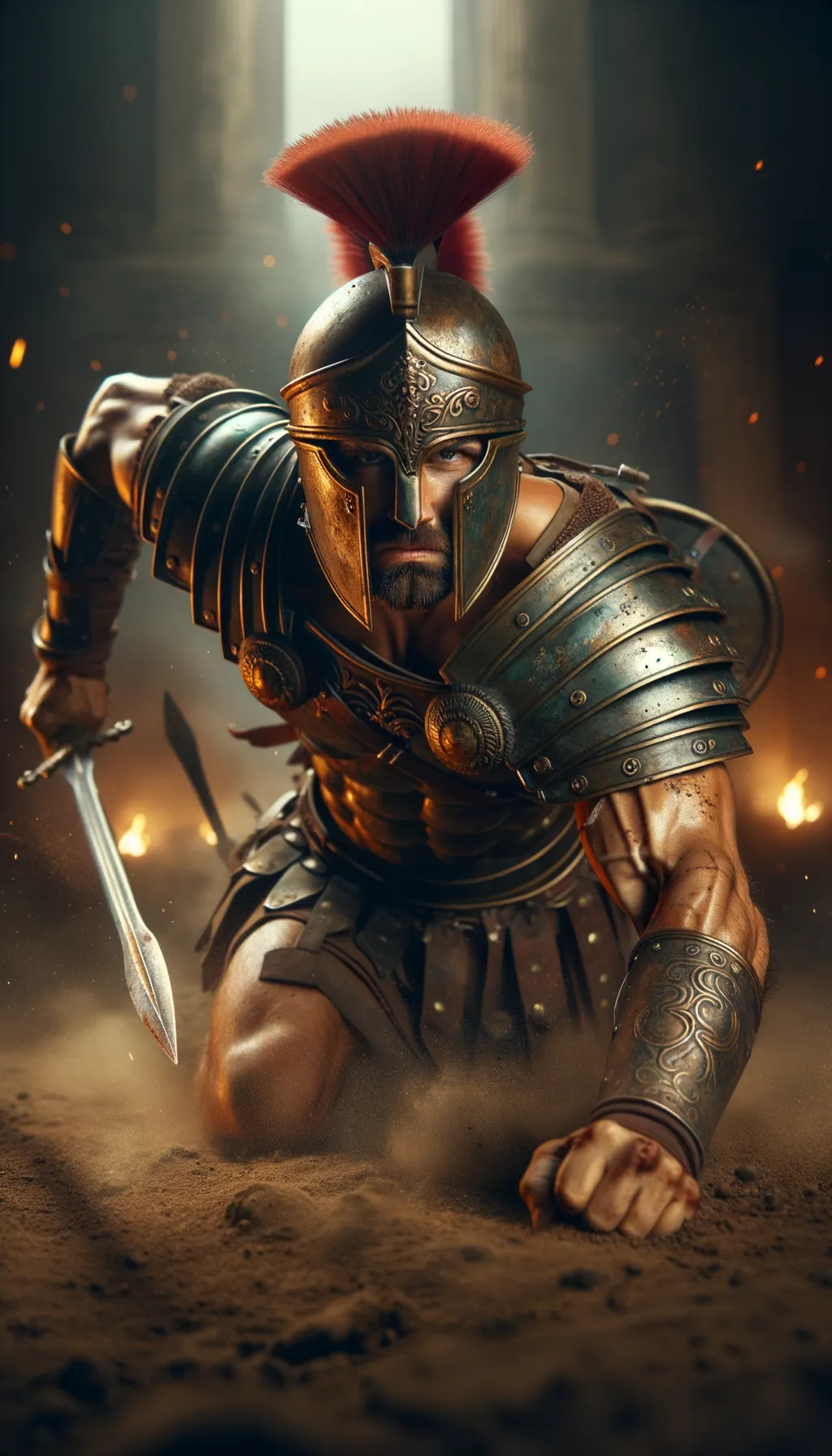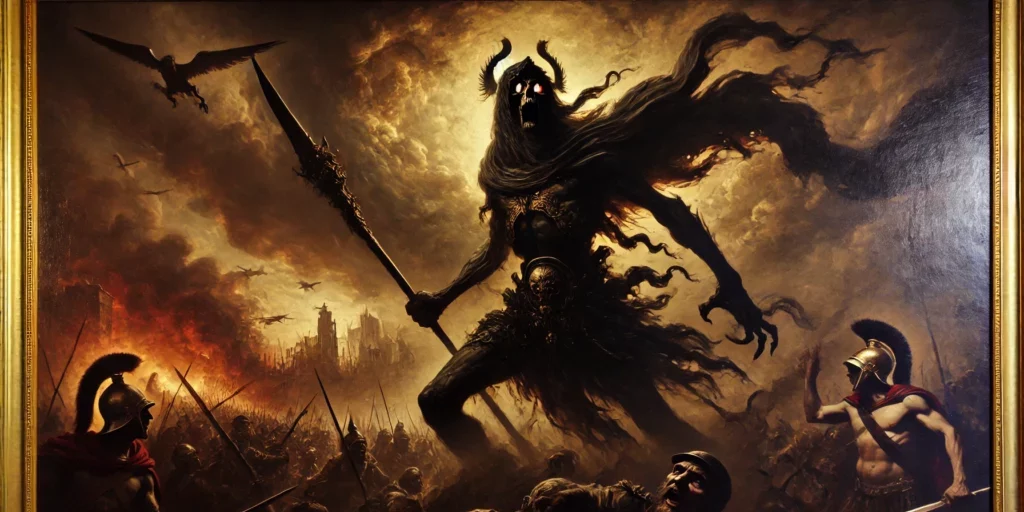
If we venture into the fascinating universe of Greek mythology, we find Deimos, one of the least explored deities but with undeniable relevance. Deimos, whose name means “dread,” is an enigmatic god linked to the darkest and most frightening aspects of human experience. In this set of sections, we will unravel the myth of Deimos, his origin, his interpretation, and his legacy, in a journey from ancient Greece to outer space.
Deimos, the God of Terror in Greek Mythology
In Greek mythology, Deimos is the god who personifies terror and fear in combat, an abstract concept the ancient Greeks considered fundamental in war. As the son of Ares, god of war, and Aphrodite, goddess of love, he embodies the terrible tension that arises in battle. He is often depicted alongside his brother Phobos, god of panic, and both are inseparable companions of their father Ares on the battlefield.
The Birth of Deimos: Son of Ares and Aphrodite
The birth of Deimos is set within the passionate and tumultuous romance between Ares and Aphrodite. From this union came Deimos and Phobos, representing terror and fear respectively. Although both gods are less well known than their famous parents, their role in Greek mythology is crucial. While Ares embodies the destruction and violence of war, Deimos and Phobos personify the fear and terror it causes in combatants.
The Personification of Dread in Mythology
It is no coincidence that Deimos represents dread. In Greek culture, fear was considered an inseparable part of human experience, especially in the context of battle. When warriors clashed on the battlefield, the presence of Deimos was felt intensely. It was he who instilled terror in the hearts of men, destabilizing and weakening them, becoming a decisive element in the outcome of war.
Who Are Phobos and Harmonia?
Deimos is not the only child of Ares and Aphrodite. Alongside him were born Phobos, god of panic, and Harmonia, goddess of concord and harmony. Phobos and Deimos are generally inseparable and act as a terrifying duo on the battlefield. Harmonia, on the other hand, represents the peaceful and loving side of her mother Aphrodite, being responsible for restoring peace and harmony after war.
The Role of Terror on the Battlefield
In Greek mythology, Deimos and Phobos are constant figures on the battlefield, accompanying their father Ares in war. Deimos, as the personification of terror, has the power to instill fear in the hearts of men. This fear could, in many cases, be a decisive factor in battle. Deimos, then, was not merely a passive spectator of war, but an active participant who could tip the scales in favor of one side or the other.
6. Deimos in Ancient Literature: References and Depictions
Despite his importance, references to Deimos in ancient literature are scarce. However, his presence is felt in a few key texts.
- He plays a role in the Theogony, where Deimos and Phobos are described as sons of Ares and Aphrodite, and their ability to confuse warriors on the battlefield is mentioned.
- He also appears in the Iliad alongside Phobos and Eris, spurring on the combatants of both sides during the Trojan War.
- In The Shield of Heracles, Deimos and Phobos rescue Ares after he is defeated by Heracles, driving his chariot toward Olympus.
- And finally, in the Dionysiaca, Deimos and Phobos act as Ares’s charioteers during his war against Dionysus.
Artistic Depictions in Antiquity
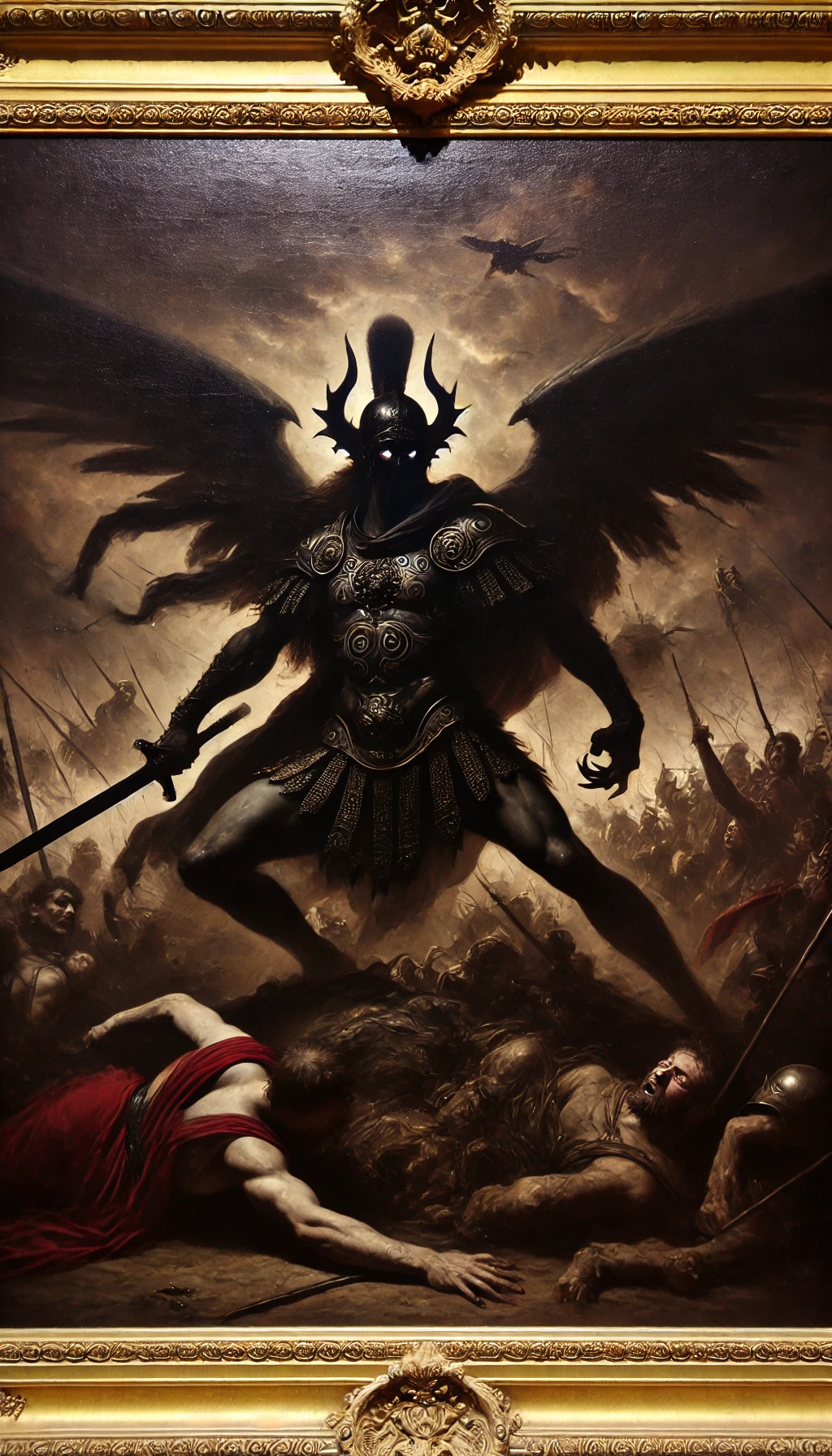
The figure of Deimos, despite his abstract nature, has been depicted in several works of art from ancient Greece. Artists often portrayed him alongside his brother Phobos, both accompanying their father Ares. They were depicted as young warriors, clad in armor and helmet, and often carrying a spear or sword. These depictions, though stylized, attempted to convey the terrible nature of the fear and terror the brothers embodied.
The Inseparable Companions of Ares
In Greek mythology, Deimos and Phobos are closely linked to their father, Ares. Ancient texts describe these lesser gods as constant companions of Ares in war, plunging enemies into terror and fear. This constant presence of both in battle reinforces the view of war as a terrifying and destabilizing experience.
Influence and Meaning in Ancient Astrology
In ancient Greek astrology, Deimos does not have a prominent role like the gods of Olympus. However, it is possible the ancient Greeks considered his influence on those born under certain signs or in moments of great conflict. Perhaps they interpreted that such individuals might be more inclined to experience fear or to be influenced by terror.
Recognition and Legacy
The figure of Deimos has transcended time, and even today, he remains a relevant figure in popular culture. His name is mentioned in books, films, and video games, always associated with the idea of terror and fear. Moreover, his legacy is not limited to the cultural sphere. In the world of astronomy, one of Mars’s moons was named in his honor.
The Moon Deimos: A Tribute to Greek Mythology in Space
In 1877, the American astronomer Asaph Hall made a significant discovery by identifying the two moons of Mars, which he named Phobos and Deimos. This act followed the tradition of naming celestial bodies after mythological figures.
In this way, Deimos, the Greek god of terror, found his place among the stars, forming a tribute to his power and his influence on ancient Greek beliefs. By naming this moon in honor of Deimos, Hall not only paid homage to Greek mythology but also highlighted the connection between astronomy and the rich cultural heritage of ancient Greece.
A Mysterious Character Still to Be Fully Discovered
Despite the richness and depth of Greek mythology, Deimos remains an enigmatic and mysterious figure. Although information about him is limited, his role in Greek mythology and his constant presence in war make him a fascinating figure that sparks our interest and curiosity. Perhaps, in the future, scholars will be able to uncover more details about this abstract and terrifying god.
With this exploration, we have taken a look at one of the darkest and most emotional aspects of Greek mythology: fear. From his origin as the son of Ares and Aphrodite, to his presence on the battlefield and his legacy in space, Deimos reminds us of the importance the ancient Greeks placed on fear and terror in their view of the world. Although he remains an enigmatic figure, he offers us a unique window into the psychology and culture of ancient Greece.
Subscribe
If you want to receive stories, curiosities, and legends of the most fascinating creatures of classical mythology in your inbox, just fill out this form.
Continue reading
If you liked this article, you like mythology. And in this case, we have much more to offer you. Discover new adventures, heroes, nymphs, gods, battles, teachings… Just click on the button.
The Revenge of Clytemnestra
The queen of Mycenae, Clytemnestra, stands as one of the most intriguing and complex figures in Greek mythology. Her story, which has been explored in literature and art over the centuries, is a saga of love, betrayal, revenge, and tragedy. In this article, we will...

The Gorgons, the Three Monstrous Sisters
In the vast array of mythological beings that inhabit the legends of ancient Greece, the Gorgons hold a particularly terrifying place. These female beings, whose name comes from the ancient Greek word "gorgós," meaning "fierce" or "terrible," are famous mainly for...

Iris, the Messenger of the Gods
Greek mythology, rich in stories, characters, and symbolism, has fascinated humanity for thousands of years. Among the gods and goddesses who populate these stories, one figure stands out for her connection to the sky, the gods, and humans: Iris, the messenger of the...

Who Was Tyndareus?
Greek mythology is a vast universe full of stories and characters that have influenced Western culture in countless ways. Among these characters, one of the most important is Tyndareus, king of Sparta. His life, full of intrigue and conflict, is a perfect example of...

Cadmus, the Phoenician Hero
In the tales of Greek mythology, we find countless characters who have left their mark on history and culture. Among them, a figure who stands out is Cadmus, the Phoenician hero who became the legendary founder of the city of Thebes. In this article, we will explore...

The Curse of Phaedra
In the vast cosmos of Greek mythology, Phaedra represents a luminous and tragic figure. Her name is synonymous with forbidden passion, deceit, and revenge, and her story has inspired generations of playwrights, novelists, and psychologists. In this article, we will...

The Myth of Ixion
In the following article, we will explore the myth of Ixion, his story, and the impact he has had on Greek culture and beyond. Greek mythology is full of colorful characters and impressive adventures. Its pages are adorned with tales of love, betrayal, courage, and...

What Are Greek Tragedies?
Greek tragedies are a form of theater that originated in ancient Greece. The tragic and moving stories these dramas present have captivated audiences for thousands of years. In this article, we'll explore the history, characters, themes and legacy of Greek tragedies....

Monstruos femeninos en la mitología griega
La mitología griega está repleta de criaturas extraordinarias que han cautivado la imaginación de generaciones. Dentro de estas criaturas, los monstruos femeninos tienen un rol específico, simbolizando fuerzas originarias y encarnando miedos antiguos. Estas entidades,...

mitologiaclasica.com is a website dedicated to exploring and popularizing the fascinating richness of mythology, offering a vast compendium of stories, characters, and legends.
Explore
Greek Mythology
Roman Mythology
Norse Mythology
Egyptian Mythology
Hindu Mythology
Chinese Mythology
Japanese Mythology
Celtic Mythology
Privacy Policy
Privacy Policy
Copyright mitologiaclasica.com