A Magical and Mysterious World
Celtic mythology is a fascinating universe full of supernatural creatures, gods and legendary heroes. Its stories, passed down orally from generation to generation, reveal a deep connection with nature and the elements, and a worldview in which the magical and the everyday intertwine. The Sidhe are part of this magical and mysterious world, dwelling on the boundaries between the visible and the hidden.
The Celtic pantheon is full of complex and often contradictory characters, which reflect the diversity and richness of life itself. Within this pantheon, the Sidhe occupy a special place, being at once seductive and fearsome, beautiful and terrifying. Their ambiguous and shifting nature reflects the very essence of the Celtic world, a world where light and darkness, life and death, intertwine in an eternal cycle.
The Sidhe: Spirits and Fairies of the Celtic Tradition
In the Celtic tradition, the term Sidhe (pronounced “shee”) refers to a type of supernatural creature, often associated with fairies and nature spirits. They are generally regarded as beings of great beauty and power, capable of changing shape and of moving between the visible and invisible worlds.
The Sidhe are famous for their love of music and dance, and are often credited with magical powers, such as the ability to grant gifts or curses, or to influence human dreams and emotions. However, they can also be capricious and vengeful, and it is believed that they may steal children or carry people off to the Otherworld.
Who Are the Sidhe?
In Celtic mythology, the Sidhe are often described as the ancient gods and goddesses of Ireland, who withdrew to the Otherworld when humans arrived on the island. According to some versions, the Sidhe are the descendants of the Tuatha Dé Danann, a race of supernatural beings who ruled Ireland before the arrival of humans.
They are usually associated with the burial mounds and hills where they are believed to dwell. Their presence is felt in wild places, on the margins between civilisation and untamed nature. Although they are invisible to most humans, it is said that they can appear to those who have the gift of second sight. It is also said that they may be seen at certain times of the year, such as the eve of Samhain, when the veil between the worlds grows thinner.
The Dwelling of the Sidhe: The Otherworld in Celtic Mythology
The Otherworld is a central place in Celtic mythology, an invisible yet omnipresent realm that exists alongside the human world. It is believed to be the home of the Sidhe, as well as of the spirits of the dead and of other magical creatures. It is often described as a place of great beauty and abundance, where time flows differently and its inhabitants are immortal.
Access to the Otherworld is often hidden or protected by magical enchantments. It can be found in special places, such as hills, burial mounds, lakes or islands. However, it can also be dangerous for humans, since those who enter it may become lost or trapped, or may be transformed by the experience.
Main Types of Sidhe:
There are many kinds of Sidhe, depending on their nature or behaviour. Some are beings of light, associated with beauty, creativity and inspiration, while others are darker, associated with sickness, death and fear.
- Banshee (Bean Sidhe): Supernatural women who announce imminent deaths with their characteristic lamentations. Her name means “woman of the sidhe” in Irish.
- Leanan Sídhe: Known as the “lover of the fairies”, this female figure inspires artists and poets, but at a high cost. She can bring great happiness and creativity to a mortal, but in exchange she drastically shortens their life.
- Cat Sith: These sidhe take the form of large black cats, usually with a white patch on the chest. They are mysterious creatures associated with magic and the Otherworld.
- Cú Sith: In Scottish mythology, these sidhe appear as enormous dogs, the size of bulls. They are feared for their association with death, since they are believed to carry off the souls of the dead.
These types of sidhe represent different aspects of Celtic mythology, from omens of death to artistic inspiration and animal manifestations of supernatural powers. Each has its own characteristics and roles in folklore, contributing to the rich mythological tradition of Ireland and Scotland.
The Queen of the Sidhe: The Powerful Morrigan
Morrigan is one of the most prominent figures in Celtic mythology, often regarded as the queen of the Sidhe. She is known as a goddess of war and death, but also of fertility and sovereignty. She is usually depicted as a beautiful and fearsome woman, or as a crow, an animal associated with war and death.
In many stories, Morrigan plays a key role, influencing the outcome of battles and the fates of heroes. Although she is a fearsome figure, she is also respected and revered, and her power is celebrated in many Celtic festivals and rituals.
The Dark Side of the Sidhe: Banshees and Other Unsettling Spirits
Just as there are Sidhe of light and beauty, there are also dark and fearsome Sidhe. Among them are the Banshees, female spirits known for their chilling wail, which is said to foretell death. The Banshees are tragic figures, condemned to mourn the dead because of some curse or tragedy in their past.
Other dark Sidhe include the Sluagh, malevolent spirits of the dead who fly through the night sky in search of souls to carry to the Otherworld, and the Dullahan, headless riders who bear an omen of death.
Encounters with the Sidhe: Stories and Legends
There are many stories and legends about encounters with the Sidhe. Some tell of people who are carried off to the Otherworld, where they live wonderful or terrible adventures. Others speak of people who receive gifts or curses, or who learn magical secrets from them.
These stories often teach lessons about respect for nature and for the supernatural. They remind us of the importance of keeping promises and of the dangers of arrogance and greed. They also reflect the Celtic belief in a world full of magic and mystery, where the supernatural is a natural part of life.
From Literature to Film
In literature, the Sidhe appear as magical beings of great beauty and power. They are able to influence human affairs in mysterious and sometimes unsettling ways. One of the most famous depictions of the Sidhe in literature is in George R. R. Martin’s novel series “A Song of Ice and Fire”, where it is hinted that the mysterious Children of the Forest are inspired by them.
In film, meanwhile, the Sidhe appear in various forms, from the elegant and haughty spirits of the animated film “The Secret of Kells” to the capricious and mischievous creatures of “Labyrinth”. Often these depictions capture the dual essence of these beings.
How Did the Celts Interact with the Sidhe? Rituals and Customs
The ancient Celts maintained a complex relationship with the Sidhe. Recognising their power and their potential both to help and to harm, the Celts developed a series of rituals and customs to honour these beings and secure their favour. These rituals often involved offerings of food and drink, and were performed at sacred sites, such as fairy mounds, which were believed to be the entrances to the realms of the Sidhe.
Besides these rituals, the Celts also held a range of beliefs and customs. For example, it was believed that the Sidhe could influence the weather and the fertility of the land, and that they could grant gifts or curses to those who offended or favoured them. These beliefs often shaped the everyday conduct of the Celts, from farming to social interactions.
Their Influence on Modern Spirituality
Many people, especially those with Celtic roots, still honour the Sidhe through rituals and offerings. Furthermore, the figure of the Sidhe has influenced the emerging New Age spirituality, which often incorporates elements of Celtic mythology and tradition. In this context, they are beings of light, messengers of the divine and spiritual guides.
A Rich Element of Celtic Mythology
With their blend of beauty, mystery and power, the Sidhe are a fascinating and complex figure within Celtic mythology. Their constant presence in literature, film and popular culture demonstrates their enduring appeal, and their role in Celtic rituals and customs illustrates the profound influence they exercised on the everyday life of the ancient Celts.
While they may be characters of a distant past, their legacy lives on in the present, influencing modern spirituality and continuing to fascinate people with their beauty and mystery. Like the Sidhe themselves, the fascination with these beings seems immortal, transcending the barriers of time and culture to touch something deep and universal in the human psyche.

Subscribe
If you would like to receive stories, curiosities and legends about the most fascinating creatures of classical mythology in your inbox, just fill in this form.
Keep reading
If you enjoyed this article, you love mythology. And in that case, we have a lot more to offer you. Discover new adventures, heroes, nymphs, gods, battles, teachings… Just click the button.
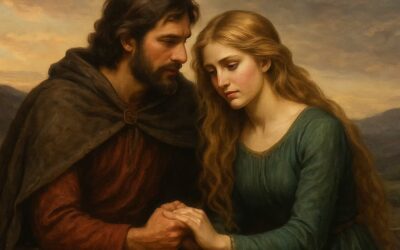
The Tragic Love of Deirdre and Naoise
Within the vast corpus of Celtic mythology, few tales resonate with the same emotional force as the myth of Deirdre and Naoise. This story of love, betrayal, and fate is one of the most moving in the Ulster Cycle, a collection of Irish legends centered on heroes,...

What Are the Main Myths of Celtic Mythology?
Celtic mythology is a rich source of stories and legends that take us to an ancient world full of heroes, deities, magical creatures and supernatural events. It arises from the beliefs of the Celtic peoples who inhabited Europe during the Iron Age. It is complex and...

Manannán mac Lir, the son of the sea
Today we're going to learn about one of the most prominent figures in Celtic mythology. We're talking about Manannán mac Lir, the son of the sea. A god linked to sailors, storms, tides... and in general, to any concept close to the maritime world. He is, without a...

Cath Maige Tuired, Two Epic Battles
Celtic mythology is a great Pandora's box full of stories, legends, and myths that have survived through the ages, largely thanks to ancient texts and manuscripts that have been translated and studied. One text in particular, "Cath Maige Tuired," or the Battle of Mag...

Who was Rhiannon?
Today we're going to talk about Rhiannon, a goddess of the moon and fertility whose story transcends the bounds of oral tradition to influence contemporary culture and art. Her story, full of love, sacrifice, and redemption, is a testament to the enduring power of...

Fir Bolg: The First Inhabitants of Ireland
Ireland is a country with a rich and fascinating history, shaped by the myths and legends of its ancient inhabitants. A distinguished chapter of this mythical history is that of the Fir Bolg, considered the first inhabitants of the island according to Celtic...

Epona, the Celtic goddess of horses
Epona, the Celtic Goddess associated with horses, fertility and nature, left her mark on culture and society. Depicted in various forms, such as riding a horse or feeding foals, Epona is also associated with death according to Celtic mythology. Her influence has...

Dagda, the mighty god of the Irish Celtic mythology
Dagda is a powerful god in Irish Celtic mythology. He is part of the Tuatha Dé Danann, the gods of Ireland. He possesses an imposing figure and is renowned for his wisdom and strength. Dagda participated in battles and had love affairs with other gods. All this, we...
mitologiaclasica.com is a website dedicated to exploring and sharing the fascinating richness of mythology, offering a vast compendium of stories, characters and legends.
Explore
Greek Mythology
Roman Mythology
Norse Mythology
Egyptian Mythology
Hindu Mythology
Chinese Mythology
Japanese Mythology
Celtic Mythology
Privacy Policy
Privacy Policy
Copyright mitologiaclasica.com