Today we’re going to learn about one of the most prominent figures in Celtic mythology. We’re talking about Manannán mac Lir, the son of the sea. A god linked to sailors, storms, tides… and in general, to any concept close to the maritime world. He is, without a doubt, a major figure, essential to understanding the pantheon of the ancient Celts. In this article we will look at everything that makes this character a true reference point in Ireland.
Manannán mac Lir: the god of the sea
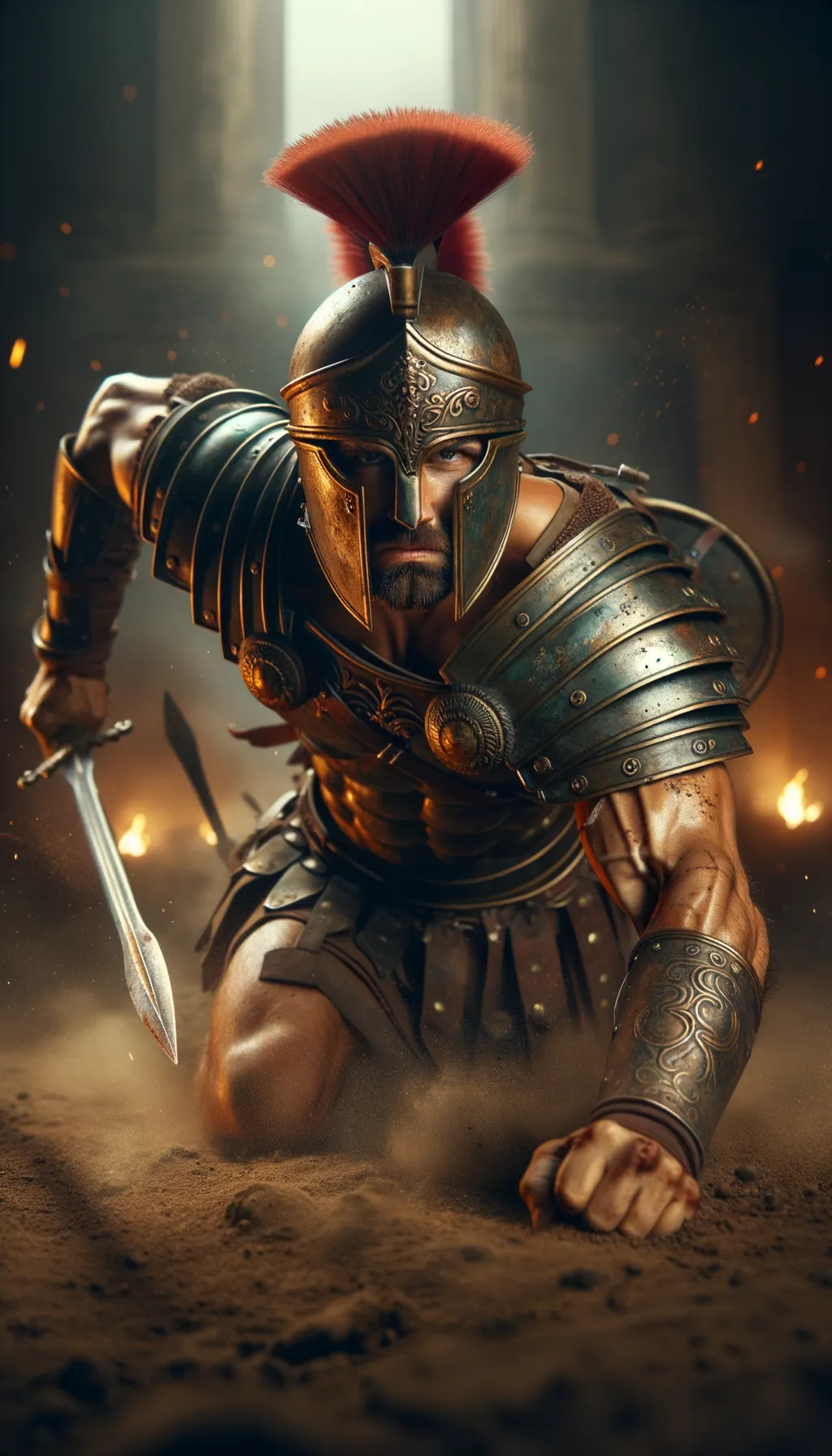
If we had to describe Manannán mac Lir based on the depictions we find of him, we would define him as a manly and majestic figure, with a long beard and a cloak of swirling mist that changes colour. A true warrior who stands out for his presence. And to complete the scene, the landscape around him should always include some maritime touch.
The god of the sea is also the guardian of the gates of the Otherworld, the supernatural dimension where gods and spirits find their dwelling.
Origin of Manannán mac Lir
One of the questions we often ask ourselves when faced with a figure of this stature is: where does he come from? His association with the sea is clear, but it is also useful to turn to etymology to find those origins. Manannán mac Lir literally translates as “Manannán, son of Lir”. And yes, you’re not mistaken if you’re thinking that Lir is a deity also associated with the sea.
Legend has it that Manannán was born in the kingdom of Mag Mell, located in the depths of the sea. That is unmistakable proof of his connection to the ocean and the reason behind his abilities to control everything related to the sea. In fact, his association with water is so close that it is not unusual to see his figure linked to that of the fish-man, or to see him depicted riding upon the waves.
The sea is his realm and his element. From there, Manannán rules justly. Yes, because another trait of the son of the sea is his great wisdom and integrity. This is continually reflected in the many legends and tales in which he is the protagonist.
Another curious fact is that, besides being a figure of reference for sailors, he also holds sway over farmers, who venerated him in the British Isles as well.
What supernatural powers does Manannán mac Lir have?
We could highlight a few more, but we will focus on four powers that define him as a special deity. The first, as we have seen above, is his ability to command the weather and the tides at will. Summoning storms, stirring up the sea, or, on the contrary, calming the currents and soothing the waves, are among his abilities.
The second power is possibly the most characteristic: his cloak of mist. It is known as the “Féth Fiada”, and it grants him the ability to wrap himself in it and transform into different shapes. And as if that were not enough, it also allows him to become invisible and go completely unnoticed.
Let’s move on to the third power. And rather than a power of his own, it is a companion that complements his powers. We are talking about a magical horse that answers to the name Enbarr, capable of galloping over both land and sea.
Finally, another “tool” at his disposal that we identify as a fourth power. Manannán mac Lir sails in a ship called the Wave Sweeper (or Scuabtuinne), which sets course and sails wherever he wishes.
Where is the home of Manannán mac Lir?
To find the dwelling of Manannán mac Lir we have to travel to the British Isles, between the islands of Great Britain and Ireland, where the Isle of Man stands. According to Celtic mythology, that is precisely where the god of the sea lives, in an imposing castle permanently surrounded and protected by his cloak of mist.
Yes, intuition still holds true here. The Isle of Man owes its name to Manannán. In fact, to leave no doubt, the sea god appears on its coat of arms. What’s more, every 5th of July a great festival is held on the island in his honour. It is “Tynwald Day”, a day on which all the island’s inhabitants pay tribute to their patron.
Where does the name “Manannán” come from?
The name “Manannán” is very popular throughout all regions of Celtic influence. It frequently appears as a personal name, but also in place names and in local products. It comes from Old Irish. It is a derivation of “manann”, which translates as “of the sea”. As you can see, everything fits together like the pieces of a perfect puzzle.
Irish texts and poems
If we turn to written testimony, we can clearly see that Manannán mac Lir is a recurring reference in Celtic texts. One of the most important poems is devoted to recounting his feats. It is called “Lebor Gabála Érenn”, or in other words, The Book of the Taking of Ireland.
But this is not the only reference. He also appears in the “Immram Brain”, the Voyage of Bran. His role in this tale is to accompany the hero Bran on his journey to the Otherworld.
Last but not least, Manannán is part of a wide variety of oral tradition stories that have been passed down from generation to generation, whether as folk tales or Celtic legends.
Playing at being immortal
We’ve saved the best for last. Who wants to be immortal? Manannán Lir is also considered the guardian of a mythical place where its inhabitants never grow old or fall ill: the Land of Youth. And with this responsibility comes another power that makes the god of the sea a truly special being. Do you dare to guess what we’re talking about? Indeed, Manannán Lir has the ability to grant immortality to mortal beings.
How is that done? If we take a look at some Celtic legends dealing with the subject, Manannán grants it simply by giving magic apples to heroes. In fact, he himself can be considered immortal, and even something more, because he is able to travel from the world of mortals to the Otherworld and back again. He crosses the threshold that separates life from death at will, and as many times as he wishes. Not bad, don’t you think?

Subscribe
If you want to receive in your mailbox stories, curiosities and legends of the most fascinating creatures of classical mythology just fill in this form.
Continue reading
If you liked this article, you like mythology. And in this case, we have much more to offer you. Discover new adventures, heroes, nymphs, gods, battles, teachings… Just click on the button.
The Tragic Love of Deirdre and Naoise
Within the vast corpus of Celtic mythology, few tales resonate with the same emotional force as the myth of Deirdre and Naoise. This story of love, betrayal, and fate is one of the most moving in the Ulster Cycle, a collection of Irish legends centered on heroes,...

What Are the Main Myths of Celtic Mythology?
Celtic mythology is a rich source of stories and legends that take us to an ancient world full of heroes, deities, magical creatures and supernatural events. It arises from the beliefs of the Celtic peoples who inhabited Europe during the Iron Age. It is complex and...

Epona, the Celtic goddess of horses
Epona, the Celtic Goddess associated with horses, fertility and nature, left her mark on culture and society. Depicted in various forms, such as riding a horse or feeding foals, Epona is also associated with death according to Celtic mythology. Her influence has...

Dagda, the mighty god of the Irish Celtic mythology
Dagda is a powerful god in Irish Celtic mythology. He is part of the Tuatha Dé Danann, the gods of Ireland. He possesses an imposing figure and is renowned for his wisdom and strength. Dagda participated in battles and had love affairs with other gods. All this, we...

mitologiaclasica.com is a website dedicated to explore and spread the fascinating richness of mythology, offering a vast compendium of stories, characters and legends.
Explore
Greek Mythology
Roman Mythology
Norse Mythology
Egyptian Mythology
Hindu Mythology
Chinese Mythology
Japanese Mythology
Celtic Mythology
Privacy Policy
Privacy Policy
Copyright mitologiaclasica.com