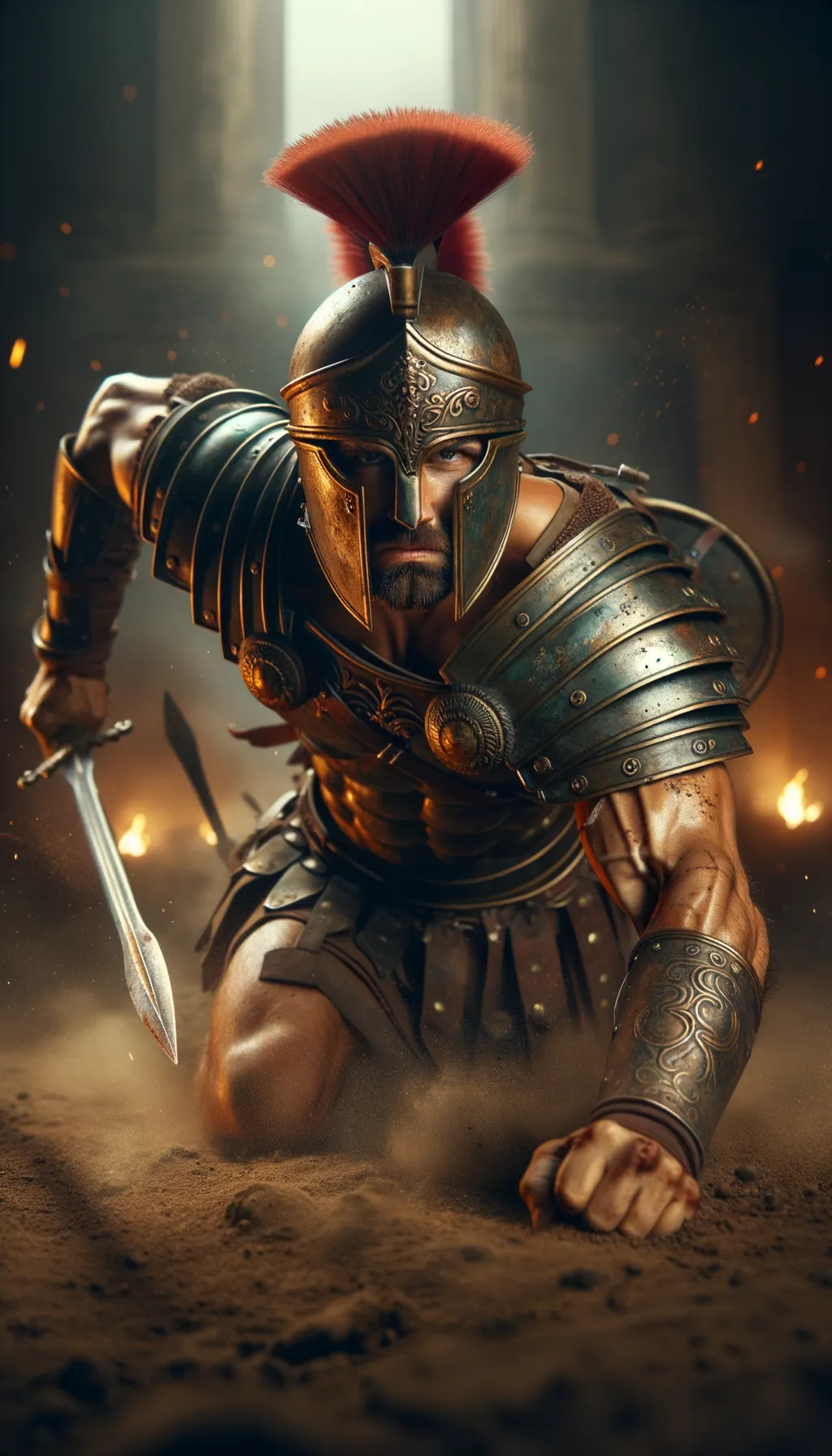
Main myths of Celtic mythology
Celtic myths developed from the Celtic peoples who lived in areas that are now Ireland, Scotland, Wales, England, France and Germany, from around 500 BC until the arrival of Christianity. Like many ancient mythologies, the Celts left no written records of their beliefs and rituals, so much of what we know about their mythology comes from the Romans, medieval manuscripts and oral tradition.
The Celts saw the world as a magical place full of gods and spirits, and believed in reincarnation and the existence of other worlds beyond the mortal realm. Their mythology revolves around nature, animals and epic heroes, and although it varies from region to region, there are common themes we can find in most Celtic stories.
Who are the Celtic gods?
The Celts worshipped a variety of gods and goddesses, each with their own domain and characteristics. Among the best-known Celtic gods are Lugh, god of all the arts; Morrigan, goddess of war and death; Brigid, goddess of fire, poetry and medicine; and Dagda, the supreme god, associated with fertility and abundance.
In addition to these, there were numerous local deities, and Celtic pantheons varied between different tribes and regions. The Celts also honored the spirits of nature and their ancestors, and are believed to have practiced animism, the belief that all objects and creatures have a spirit.
Creation myths in Celtic mythology
Creation myths in Celtic mythology are varied and often center on nature and the role of the gods and goddesses. One of the best-known myths is that of the creation of humanity by the gods Dagda and Morrigan, who formed the first humans out of stones.
Another myth tells that the world was created from the body of a giant, with the mountains formed from his bones and the rivers from his blood. In another, the world was born from the union of the sky goddess and the earth god. Although these stories vary, they all emphasize the close relationship between the Celts and nature, and the belief in divine intervention in the creation of the world.
The myth of Cú Chulainn: Celtic hero
Cú Chulainn is one of the most prominent figures in Celtic mythology. Known as the “Irish Hercules”, the stories of his heroic deeds, his supernatural strength and his intense loyalty are a fundamental element of Celtic literature. The myth of Cú Chulainn recounts his transformation from a boy named Setanta into an invincible warrior, after killing a fierce guard dog with his own bare hands.
Cú Chulainn’s life is filled with battles and challenges, but also with love and honor. His relationship with Emer, whom he marries after overcoming a series of trials, is an example of the importance of love and fidelity in Celtic mythology. His tragic end, in which a young man dies in combat, underscores the courage and heroism that distinguishes the characters of Celtic mythology.
The druids: key figures in the myths of Celtic mythology
The druids played a central role in Celtic society. They were regarded as sages, advisors and priests, intermediaries between the gods and the people. Celtic myths and legends often present druids as mysterious and powerful figures, possessing deep knowledge of the natural world and the spiritual realm.
They were responsible for interpreting signs and omens, and for performing rituals and sacrifices. Through their practices and teachings, the druids helped people understand their place in the world and their relationship with the gods. Their role in Celtic society reflects the importance of religion and spirituality in daily life.
The legend of Tristan and Isolde
The legend of Tristan and Isolde is one of the most famous love stories in Celtic mythology. This tale of love and tragedy tells the story of Tristan, a knight, and Isolde, an Irish princess, whose forbidden love defies social conventions and sets off a series of unfortunate events.
Despite the numerous versions of this story, they all agree in highlighting the passion and devotion Tristan and Isolde have for each other. Through their tribulations and sacrifices, the legend of Tristan and Isolde reflects the Celtic ideals of honor, courage and true love.
The Three Realms in Celtic cosmogony
Celtic cosmogony consists of three realms: the sky, the earth and the underworld. Each of these realms is home to different beings and deities, and has a specific role in the order of the universe. The sky is the realm of the gods and goddesses, the earth is the domain of humans and animals, and the underworld is the place of spirits and supernatural forces.
These three realms are not separate, but are intimately connected. Celtic myths and legends often describe journeys between these realms and the interaction between the creatures and deities that inhabit them. This cosmogony reflects the Celtic view of the universe as an interconnected whole, in which every being has a place and a purpose.
Stories of love and betrayal in Celtic myths
Stories of love and betrayal are a common theme in Celtic mythology. These stories often present heroes and heroines in situations of emotional conflict, fighting for their loved ones amid insurmountable obstacles and challenges to their loyalty. These tales reflect the complexity of human relationships and the inevitable intersection of love and pain.
One of the most notable examples is the story of Deirdre and Naoise, in which Deirdre is forced to marry King Conchobar, despite being in love with Naoise. This story of unrequited love and betrayal is an example of how Celtic myths explore the limits of love, loyalty and sacrifice.
Celtic festivals and their mythical meaning
Celtic celebrations and festivals played an important role in daily life, marking the passing of the seasons and celebrating the connection between man and nature. These festivals often have a mythical meaning, linked to the gods and deities of Celtic mythology.
For example, Samhain, celebrated at the end of autumn, was considered the time when the veil between the world of the living and that of the dead grew thinner. During this festival, rituals were carried out to honor the dead and predict the future. These celebrations reflect the importance of natural cycles and the relationship between the human and the divine in Celtic culture.
Myth and symbolism of animals
Animals hold a prominent place among the myths of Celtic mythology, representing a variety of meanings and symbolisms. The raven, for example, is a symbol of war and death, but also of wisdom and prophecy. The deer, on the other hand, is a symbol of fertility and abundance.
These and other animals often appear in Celtic myths and legends, either as companions of the gods and heroes, or as manifestations of the deities themselves. The role of animals in Celtic mythology reflects the Celts’ view of nature as a living, sacred entity, full of meaning and power.
The relevance of nature in Celtic myths
Nature plays a crucial role in Celtic myths. Rivers, mountains, forests and other elements of nature are often the setting for mythical stories, and sometimes even characters in their own right. Nature is seen as a sacred and powerful entity, a source of life and wisdom.
This reverence for nature is reflected in the way the Celts lived and understood the world. Trees, for example, were considered sacred and were credited with magical properties. Rivers and springs were seen as the dwelling place of goddesses and nymphs. The importance of nature in Celtic mythology shows the deep connection between the Celts and their environment.
The influence of the myths of Celtic mythology today
Celtic mythology is still alive today, influencing literature, art, music and popular culture. Celtic myths and legends tell us of a world full of heroism, love, tragedy and the deep connection between man and nature. Through its stories and symbols, Celtic mythology offers us a vision of life that is both mystical and deeply human.

Subscribe
If you want to receive in your mailbox stories, curiosities and legends of the most fascinating creatures of classical mythology just fill in this form.
Continue reading
If you liked this article, you like mythology. And in this case, we have much more to offer you. Discover new adventures, heroes, nymphs, gods, battles, teachings… Just click on the button.
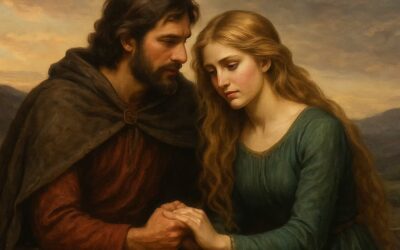
The Tragic Love of Deirdre and Naoise
Within the vast corpus of Celtic mythology, few tales resonate with the same emotional force as the myth of Deirdre and Naoise. This story of love, betrayal, and fate is one of the most moving in the Ulster Cycle, a collection of Irish legends centered on heroes,...

Manannán mac Lir, the son of the sea
Today we're going to learn about one of the most prominent figures in Celtic mythology. We're talking about Manannán mac Lir, the son of the sea. A god linked to sailors, storms, tides... and in general, to any concept close to the maritime world. He is, without a...

Epona, the Celtic goddess of horses
Epona, the Celtic Goddess associated with horses, fertility and nature, left her mark on culture and society. Depicted in various forms, such as riding a horse or feeding foals, Epona is also associated with death according to Celtic mythology. Her influence has...

Dagda, the mighty god of the Irish Celtic mythology
Dagda is a powerful god in Irish Celtic mythology. He is part of the Tuatha Dé Danann, the gods of Ireland. He possesses an imposing figure and is renowned for his wisdom and strength. Dagda participated in battles and had love affairs with other gods. All this, we...
mitologiaclasica.com is a website dedicated to explore and spread the fascinating richness of mythology, offering a vast compendium of stories, characters and legends.
Explore
Greek Mythology
Roman Mythology
Norse Mythology
Egyptian Mythology
Hindu Mythology
Chinese Mythology
Japanese Mythology
Celtic Mythology
Privacy Policy
Privacy Policy
Copyright mitologiaclasica.com