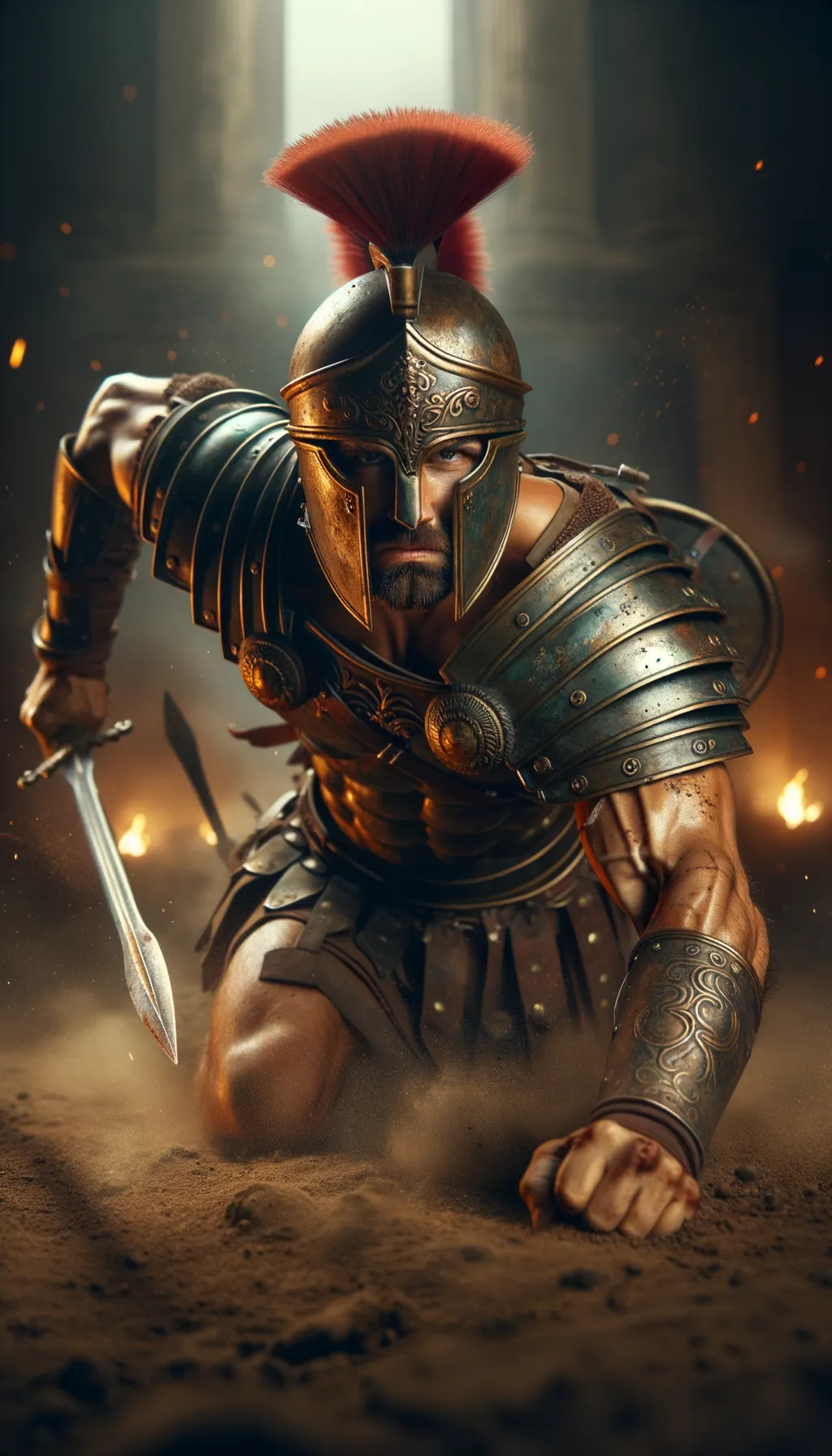
In the vast world of Greek mythology, Tyche, the goddess of luck and fortune, holds a special place. Because of her ability to grant wealth and prosperity, she became a deeply venerated deity in ancient Greece. In this essay, we will investigate her intriguing character, from her origin and position on Olympus, to her presence in art and literature, and her impact on modern mythology.
Who was the Greek goddess of luck?
Tyche is the personification of fortune and prosperity in Greek mythology. Her name means precisely that, “luck” in Greek, reflecting her role as the deity who brings good or bad luck to mortals.
While some Greek deities were feared or respected, she was beloved for her ability to grant fortune and prosperity. Her influence was so great that many of the ancient Greeks considered her responsible for all the random aspects of life, from success in war to wealth and poverty.
Daughter of the Oceanid Electra
According to Greek mythology, Tyche is the daughter of the Oceanid Electra and Zeus, king of the gods. Electra, one of the 3,000 daughters of the titans Oceanus and Tethys, stood out among her sisters for her beauty and kindness. When Electra united with Zeus, she gave birth to Tyche, a goddess who inherited her mother’s kindness and her father’s power. From birth, she showed an incredible ability to influence the luck and fortune of mortals.
What was Tyche’s place on Olympus?
Despite her origin as the daughter of an Oceanid, Tyche was accepted on Olympus, the home of the Greek gods. However, unlike the other Olympian goddesses, Tyche had no throne of her own. Instead, she was said to wander through Olympus, distributing luck as she pleased. This fact reflects the capricious nature of fortune in Greek mythology: it was something that could change quickly, and that could not be controlled by either the gods or mortals.
The appearance of Tyche according to the ancient Greeks
The goddess Tyche is often depicted in Greek art as a beautiful woman, carrying a cornucopia in one hand and a ship’s rudder in the other. The cornucopia, full of fruits and grains, symbolizes the prosperity Tyche can grant, while the rudder represents her control over the fortune of mortals. She is sometimes depicted with wings, suggesting her ability to move quickly and change people’s luck without warning.
What are Tyche’s divine powers and abilities?
As goddess of luck, Tyche has the ability to grant good or bad fortune to mortals. However, her power is not limited to this. She is also the goddess of prosperity, capable of granting wealth and abundance. Moreover, she is believed to have the ability to influence events in the world, from victories in war to changes in the weather. This variety of powers makes Tyche one of the most influential and venerated goddesses in ancient Greece.
Tyche’s role in Greek stories and legends
Tyche often appears in Greek stories and legends, where her influence can change the course of events. For example, in the story of the hero Jason and the Argonauts, it is said that it was Tyche who decided the outcome of their dangerous quest for the golden fleece. In other legends, she appears to grant luck to heroes at their moment of greatest need, or to punish those who dare to defy the gods.
What are the differences between Tyche and Fortuna?
In Roman mythology, Tyche is known as Fortuna. Although both goddesses share many common traits, there are also important differences. While Tyche is a capricious goddess, who grants luck randomly, Fortuna is a more stable goddess, who grants luck based on the virtue and morality of individuals. Moreover, Fortuna has a more prominent place in Roman religion, with numerous temples and festivals dedicated to her.
Temples and cults dedicated to Tyche in ancient Greece
Although she was not one of the main goddesses of the Greek pantheon, Tyche was venerated throughout ancient Greece. There were numerous temples and shrines dedicated to her, where the Greeks would go to ask for good luck and prosperity. She was also a central figure in various festivals and celebrations, where tributes and offerings were made to her to win her favor.
Influence on Greek literature and philosophy
The figure of Tyche was not only important in Greek religion and mythology, but also played a prominent role in the literature and philosophy of ancient Greece. Greek poets and philosophers often debated the nature of Tyche and her influence on human life. Some saw her as a random force, while others argued that she granted luck based on the virtue and morality of individuals.
Ancient art: sculptures, paintings and coins
The image of Tyche was a wellspring of inspiration for the artists of ancient Greece. Depictions of her can be found in a wide variety of works of art, from sculptures and paintings to jewelry and coins. These works often depict Tyche with her classic attributes, such as the cornucopia and the ship’s rudder. Some of the most famous depictions can be found on coins of ancient Greece. Her image was frequently used to symbolize the prosperity and fortune of the city.
The relevance of Tyche in contemporary Greek mythology
Although Greek mythology is an ancient tradition, the figure of Tyche remains relevant in contemporary culture. Tyche continues to be a popular figure in literature and art. She is often depicted as a goddess of luck and fortune. Moreover, her influence can be seen in modern language, where her name is used as a synonym for luck and fortune.
Persistence in today’s popular culture
Despite the centuries that have passed since ancient Greece, the figure of Tyche continues to be relevant in our culture. Whether in art, literature or philosophy, the goddess of luck and fortune continues to have an impact on our daily lives. Although at first glance Greek mythology may seem distant and belonging to remote times, the continued presence of Tyche in our culture demonstrates the endurance and relevance of these narratives and figures in contemporary society.
The goddess of fortune and luck
From her legendary origin as the daughter of an Oceanid, one of the primordial water nymphs in Greek mythology, to her prominent position on Olympus, the home of the Greek gods, Tyche, the deity who personifies fortune and luck, continues to be a deeply captivating figure of great importance. Her presence extends from her depiction in various artistic and literary expressions to her significant influence on contemporary mythology, where her role remains a subject of study and admiration. Through her story, we can see how the ancient Greeks viewed fortune and prosperity, and how these ideas have influenced our culture and thought.

Subscribe
If you want to receive in your mailbox stories, curiosities and legends of the most fascinating creatures of classical mythology just fill in this form.
Continue reading
If you liked this article, you like mythology. And in this case, we have much more to offer you. Discover new adventures, heroes, nymphs, gods, battles, teachings… Just click on the button.

What Are Greek Tragedies?
Greek tragedies are a form of theater that originated in ancient Greece. The tragic and moving stories these dramas present have captivated audiences for thousands of years. In this article, we'll explore the history, characters, themes and legacy of Greek tragedies....

Monstruos femeninos en la mitología griega
La mitología griega está repleta de criaturas extraordinarias que han cautivado la imaginación de generaciones. Dentro de estas criaturas, los monstruos femeninos tienen un rol específico, simbolizando fuerzas originarias y encarnando miedos antiguos. Estas entidades,...

Dione, la madre de Afrodita
En las vastas y complejas historias que conforman la mitología griega, la figura de Dione se destaca como una de las más intrigantes y misteriosas. Aunque su papel y origen son objeto de debate entre los estudiosos, su importancia es innegable. En este artículo,...

Pan: mitad hombre, mitad cabra
En el rincón más remoto de la mitología griega, donde los dioses y las criaturas mitológicas se mezclan en un baile eterno de leyendas y relatos, encontramos a Pan. Este personaje, conocido como el dios de los pastores y los rebaños, ha dejado una huella profunda en...

¿Qué libros de mitología griega leo?
La mitología griega ha sido una fuente inagotable de inspiración a lo largo de la historia, desde las antiguas tragedias griegas hasta la literatura contemporánea. Sus dioses, héroes y seres mitológicos han inspirado a artistas, escritores y cineastas, y continúan...

The Pleiades: Who Were the Seven Sisters?
In the vastness of the firmament, few constellations capture the imagination like the Pleiades, also known as the Seven Sisters. This group of stars, visible to the naked eye, has fascinated humanity for millennia, weaving its story into modern mythology and...
Nemesis, the Goddess of Vengeance
In Greek mythology, there are numerous gods and goddesses, each with their own legends, powers, and unique personalities. Among the best known are Zeus, Athena, and Hades, however, there is a goddess whose influence and power are equally compelling: Nemesis, the...

Jason and the Argonauts
Greek mythology is full of daring heroes, divine beings, and terrifying monsters, and stories of courage, love, and tragedy. One of the most famous and exciting of these stories is that of "Jason and the Argonauts." In this article, we will explore in depth Jason's...

Semele, the Mortal Princess Who Won Zeus’s Heart
Greek mythology, famous for its intrigues, conflicts, and relationships between gods and humans, provides us with fascinating narratives that have left an indelible mark on culture and literature around the world. One of these stories is that of Semele, the mortal who...
mitologiaclasica.com is a website dedicated to explore and spread the fascinating richness of mythology, offering a vast compendium of stories, characters and legends.
Explore
Greek Mythology
Roman Mythology
Norse Mythology
Egyptian Mythology
Hindu Mythology
Chinese Mythology
Japanese Mythology
Celtic Mythology
Privacy Policy
Privacy Policy
Copyright mitologiaclasica.com